Cable Twist Waist: Form, Benefits, Sets, Tips & FAQ
Learn how to do the Cable Twist Waist exercise with proper form. Build obliques, rotational core strength, waist control, and trunk stability with step-by-step cues.
Cable Twist Waist
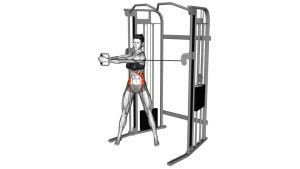
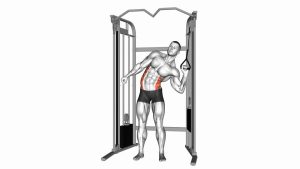
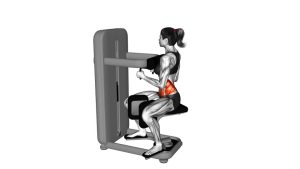
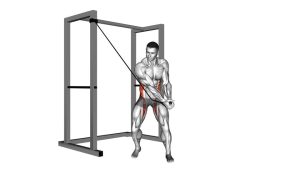
The Cable Twist Waist works best when the movement is smooth, deliberate, and controlled. The cable provides constant resistance, which means your obliques must work during both the twist and the return phase. Your arms should act mostly as a guide, while your torso performs the rotation. Keep your ribs down, brace your core, and avoid letting the cable pull you out of position.
Quick Overview
| Body Part | Core |
|---|---|
| Primary Muscle | Obliques |
| Secondary Muscle | Rectus abdominis, transverse abdominis, spinal stabilizers, shoulders |
| Equipment | Cable machine and single D-handle attachment |
| Difficulty | Beginner to Intermediate |
Sets & Reps (By Goal)
- Core activation: 2–3 sets × 10–12 reps per side using light weight and slow control.
- Muscle building: 3–4 sets × 10–15 reps per side with moderate resistance.
- Rotational strength: 3–5 sets × 6–10 reps per side with a heavier but controlled load.
- Core endurance: 2–4 sets × 15–20 reps per side using smooth continuous reps.
- Athletic warm-up: 1–2 sets × 8–12 reps per side before sports or compound lifting.
Progression rule: Increase resistance only when you can rotate without swinging your hips, arching your back, or pulling mainly with your arms. Clean control is more important than heavy weight.
Setup / Starting Position
- Set the cable height: Adjust the pulley to about chest or mid-torso level.
- Attach the handle: Use a single D-handle or short cable handle for a firm two-hand grip.
- Stand sideways to the machine: Your shoulder should face the cable stack.
- Grip with both hands: Hold the handle in front of your torso with arms extended but elbows slightly soft.
- Set your stance: Place feet about shoulder-width apart with knees slightly bent.
- Brace your core: Keep ribs down, chest tall, shoulders relaxed, and spine neutral.
- Create cable tension: Step away from the machine until the cable is lightly loaded before starting.
Your body should feel stable before the first rep. If the weight pulls you toward the machine before you move, reduce the load or widen your stance.
Execution (Step-by-Step)
- Start tall: Hold the handle in front of your torso with arms extended and core braced.
- Begin the rotation: Rotate your torso away from the cable stack while keeping your hips mostly stable.
- Move as one unit: Let your chest, shoulders, arms, and handle travel together instead of pulling with only your arms.
- Control the end range: Rotate until you feel your obliques working strongly, but stop before your lower back twists excessively.
- Pause briefly: Hold the peak position for a moment while keeping the ribs down and shoulders relaxed.
- Return slowly: Let the cable guide you back under control without snapping or losing posture.
- Repeat all reps: Finish one side, then turn around and repeat the same number of reps on the opposite side.
Pro Tips & Common Mistakes
Pro Tips
- Use a controlled tempo: Rotate for 1–2 seconds, pause briefly, then return for 2–3 seconds.
- Keep your hips quiet: A small amount of natural movement is fine, but the torso should lead the exercise.
- Brace before every rep: Lightly tighten your abs as if preparing for contact.
- Keep shoulders down: Avoid shrugging or letting the traps take over.
- Train both sides evenly: Always match reps and resistance from left to right.
Common Mistakes
- Using too much weight: Heavy weight often turns this into a shoulder pull or hip swing.
- Letting the cable snap back: The return phase is just as important as the twist.
- Over-rotating the lower back: Stop at a controlled range where your core stays braced.
- Bending the elbows too much: This reduces the core challenge and shifts work to the arms.
- Leaning backward: Stay tall and stacked instead of arching to move the weight.
FAQ
What muscles does the Cable Twist Waist work?
The main muscles worked are the obliques. It also trains the rectus abdominis, transverse abdominis, spinal stabilizers, and shoulders because your trunk must rotate and resist the cable at the same time.
Is the Cable Twist Waist good for building obliques?
Yes. Because the cable keeps tension on the core throughout the movement, it is very effective for training the obliques. Use controlled reps and moderate resistance instead of swinging heavy weight.
Should my hips move during the exercise?
Your hips may move slightly, but they should not dominate the exercise. For most core-focused versions, keep the lower body stable and rotate mainly through the torso.
How heavy should I go on Cable Twist Waist?
Use a weight that allows clean control for every rep. If you need to jerk, lean, bend your elbows hard, or twist your lower back aggressively, the weight is too heavy.
Can beginners do the Cable Twist Waist?
Yes. Beginners can perform it safely with light resistance, slow reps, and a short controlled range of motion. It is better to master posture and control first before increasing the load.
Is this exercise good for athletes?
Yes. The Cable Twist Waist builds rotational strength and trunk control, which can support sports that involve swinging, throwing, punching, turning, or changing direction.
Recommended Equipment
- Cable Machine D-Handle Attachment — ideal for a secure two-hand grip during cable twist variations.
- Adjustable Cable Machine / Functional Trainer — useful for performing cable twists, wood chops, rows, and other core exercises.
- Resistance Bands with Door Anchor — a home-friendly alternative if you do not have access to a cable machine.
- Core Training Exercise Mat — helpful for warm-ups, mobility drills, and floor-based core work.
- Weightlifting Gloves / Grip Support — improves handle control if your grip slips during cable exercises.
Choose equipment that allows smooth cable movement and stable resistance. For this exercise, control and consistent tension matter more than maximum load.