Chest Raise and Rotate: Proper Form, Shoulder Benefits, Sets & FAQ
Learn how to perform the Chest Raise and Rotate with proper form to improve shoulder mobility, posture, and upper-back activation. Includes setup, step-by-step execution, sets by goal, common mistakes, FAQs, and recommended equipment.
Chest Raise and Rotate
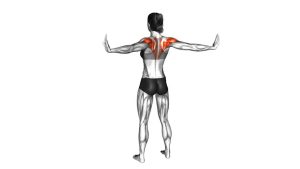
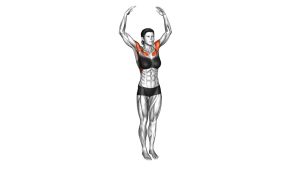
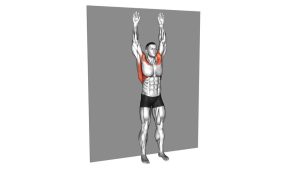
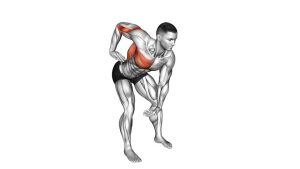
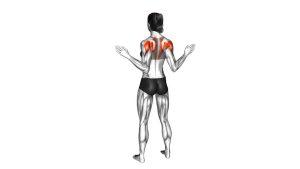
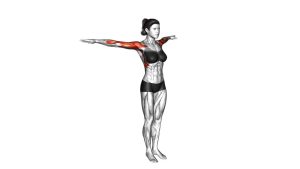
This drill works best with light effort, clean posture, and controlled movement. You should feel the upper back, rear delts, and muscles around the shoulder blades engaging as the chest opens. Keep the ribs stacked, the neck relaxed, and the movement smooth from start to finish.
Quick Overview
| Body Part | Shoulders |
|---|---|
| Primary Muscle | Posterior deltoids (rear shoulders) |
| Secondary Muscle | Middle trapezius, rhomboids, rotator cuff, upper chest stabilizers |
| Equipment | None (optional: light resistance band, yoga mat, light dumbbells) |
| Difficulty | Beginner (great for warm-ups, posture work, and shoulder prep) |
Sets & Reps (By Goal)
- Warm-up / activation: 2–3 sets × 8–12 reps (slow and controlled, 30–45 sec rest)
- Posture / mobility practice: 2–4 sets × 10–15 reps (light effort, 30–60 sec rest)
- Shoulder prep before upper-body training: 2–3 sets × 6–10 reps (focus on clean range and control)
- Rehab-style motor control: 2–3 sets × 8–10 reps with a 1–2 second pause in the open position
Progression rule: Add smoother range, better pauses, or a few extra reps before adding any resistance. This movement should stay precise and comfortable.
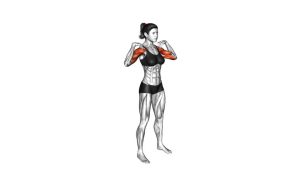
Setup / Starting Position
- Stand tall: Place your feet about hip- to shoulder-width apart and keep your weight balanced evenly.
- Set your torso: Brace the core lightly, keep the ribs down, and maintain a neutral spine.
- Bring the arms up: Bend the elbows to about 90 degrees with the hands in front of the chest.
- Relax the shoulders: Keep them down and away from the ears before starting the raise.
- Start controlled: Think “open the chest and rotate outward” rather than “throw the arms back.”
Tip: A mirror can help you keep both arms even and avoid shrugging or twisting through the torso.
Execution (Step-by-Step)
- Lift the elbows outward: Raise the upper arms until they approach shoulder height while keeping the elbows bent.
- Rotate outward: As the arms rise, externally rotate the shoulders so the forearms move toward a “goalpost” position.
- Open the chest: Gently pull the shoulder blades back without arching the lower back.
- Pause briefly: Hold the top for 1–2 seconds while keeping the neck relaxed and the shoulders down.
- Return with control: Reverse the motion slowly, bringing the arms back to the start position without collapsing posture.
Pro Tips & Common Mistakes
- Lead with posture: Keep the chest open and ribs controlled instead of flaring the torso.
- Don’t shrug: The traps should not dominate the movement.
- Rotate, don’t just lift: The outward shoulder rotation is a key part of the drill.
- Stay smooth: Avoid jerking into the top position or rushing the return.
- Keep the neck relaxed: Don’t poke the head forward or tense the jaw.
- Use small clean reps first: Better mechanics are more valuable than bigger range.
- Optional progression: Add a light mini band or very light dumbbells only after mastering the bodyweight version.
FAQ
What muscles does the Chest Raise and Rotate work?
It mainly targets the rear delts, while also training the middle traps, rhomboids, and rotator cuff to support better shoulder positioning and posture.
Is this a strength exercise or a mobility drill?
It is primarily a mobility and activation drill. It can improve shoulder control and posture, but it is usually best performed with light effort rather than heavy loading.
When should I use this exercise?
It works well in a warm-up, posture routine, or shoulder-prep circuit before pressing, rowing, or upper-body workouts.
Should I use weights for this movement?
Most people should learn it without resistance first. Once form is solid, very light dumbbells or a mini band can add challenge without losing control.
What if I feel pinching in the front of my shoulder?
Reduce the range of motion, slow down, and make sure you are not shrugging or forcing the rotation. If pinching continues, stop the exercise and reassess your shoulder mechanics.
Recommended Equipment (Optional)
- Resistance Bands Set — useful for shoulder activation, warm-ups, and light progression work
- Mini Loop Bands — great for adding gentle outward tension and improving shoulder control
- Yoga / Exercise Mat — useful if you include this drill in a floor-based mobility or warm-up routine
- Light Neoprene Dumbbells — optional for advanced progression once bodyweight control is easy
- Posture Corrector Brace — optional awareness tool for posture habits, not a replacement for training
Tip: Choose tools that support lighter, cleaner reps. For this exercise, better posture and control matter more than extra load.