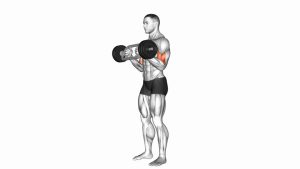
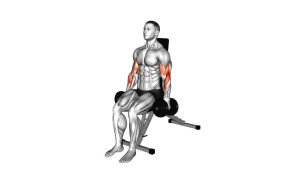
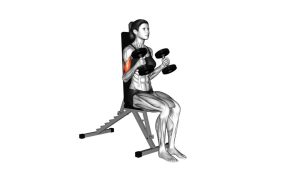
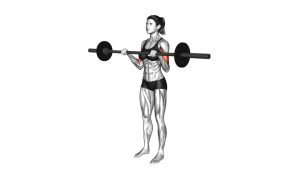
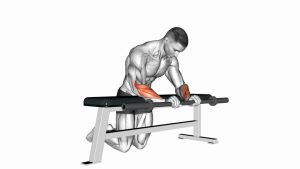
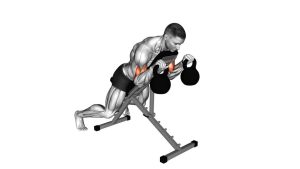
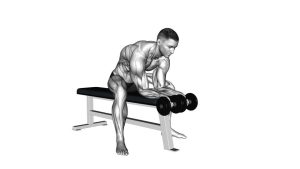
Dumbbell One-Arm Seated Neutral Wrist Curl: Form, Sets, Tips & FAQ
Learn how to perform the Dumbbell One-Arm Seated Neutral Wrist Curl with proper form. Discover forearm-focused benefits, setup, step-by-step execution, sets by goal, common mistakes, FAQs, and recommended equipment.
Dumbbell One-Arm Seated Neutral Wrist Curl
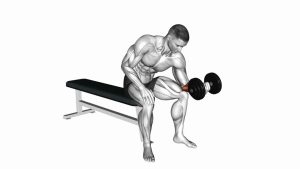
This exercise works best with strict form, controlled tempo, and a weight you can manage without swinging. The goal is to isolate the wrist joint while keeping the elbow, shoulder, and torso quiet. You should feel the forearm working through a smooth curl and controlled stretch, not the upper arm taking over.
Quick Overview
| Body Part | Forearms |
|---|---|
| Primary Muscle | Brachioradialis and wrist flexors |
| Secondary Muscle | Finger flexors and forearm stabilizers |
| Equipment | Single dumbbell and flat bench or seat |
| Difficulty | Beginner |
Sets & Reps (By Goal)
- Muscle growth: 3–4 sets × 10–15 reps per arm with 45–75 seconds rest
- Forearm endurance: 2–4 sets × 15–20 reps per arm with 30–60 seconds rest
- Grip support / accessory work: 2–3 sets × 8–12 controlled reps per arm after pulling or arm training
- Technique focus: 2–3 sets × 10–12 reps with a slower lowering phase and light weight
Progression rule: Increase reps first, then load in small increments. If the wrist starts swinging or the forearm lifts off the thigh, the dumbbell is too heavy.
Setup / Starting Position
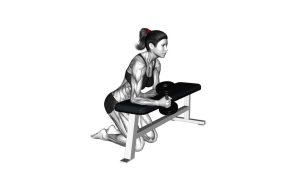
- Sit on a bench or stable seat: Keep your posture tall and your feet planted firmly on the floor.
- Hold one dumbbell in a neutral grip: Your palm should face inward, like a hammer curl grip.
- Support your forearm on your thigh: Rest the working forearm securely on the same-side thigh near the knee.
- Let the wrist hang slightly off the edge: This gives the wrist room to move freely through the curl.
- Start in a slight stretch: Allow the hand to lower a bit so the wrist begins in mild extension.
Tip: Keep your elbow and upper arm relaxed. The forearm should stay anchored so only the wrist does the work.
Execution (Step-by-Step)
- Brace the setup: Sit still, grip the dumbbell firmly, and keep the forearm planted on the thigh.
- Flex the wrist upward: Curl the dumbbell by raising the hand toward the forearm without moving the elbow.
- Squeeze at the top: Pause briefly when you reach peak wrist flexion.
- Lower under control: Slowly return the dumbbell to the start, letting the wrist move back into a gentle stretch.
- Repeat smoothly: Maintain a controlled tempo and avoid bouncing between reps.
Pro Tips & Common Mistakes
- Use strict isolation: Keep the forearm glued to the thigh so the wrist does the work.
- Do not rush the lowering phase: A slow eccentric improves forearm tension and control.
- Keep the grip neutral: Avoid rotating the wrist excessively during the rep.
- Do not go too heavy: Heavy cheating turns this into a sloppy arm movement instead of a forearm exercise.
- Train both sides evenly: Match reps and control from arm to arm.
- Avoid painful range: Mild stretch is good; joint discomfort is not.
FAQ
What does the neutral grip change in this wrist curl?
The neutral grip changes the forearm angle and can make the movement feel more natural for some lifters. It helps emphasize the forearm muscles differently than a fully supinated wrist curl and can be a useful variation for grip and forearm development.
Should I use heavy or light weight for this exercise?
Start lighter than you think. This is a small-joint isolation movement, so control matters more than load. If your elbow lifts or the dumbbell swings, the weight is too heavy.
Where should I feel the exercise?
You should feel it mainly in the forearm, especially around the wrist flexors and brachioradialis area. You should not feel sharp pain in the wrist joint.
Can beginners use this exercise?
Yes. It is beginner-friendly as long as you use a manageable dumbbell and keep the movement strict. It is an effective accessory exercise for arm and grip training.
When should I place this exercise in my workout?
It usually works best near the end of an upper-body, arm, or forearm session after bigger pulling and curling exercises are done.
Recommended Equipment (Optional)
- Adjustable Dumbbell — lets you make small load increases for strict forearm progression
- Flat Weight Bench — provides a stable seat and support for controlled wrist curl setup
- Wrist Wraps — optional support if your wrists feel unstable during accessory work
- Forearm Grip Strengthener — useful for pairing grip-focused work with wrist curl training
- Massage Ball for Forearm Recovery — helps with soft tissue recovery after high-volume forearm sessions
Tip: Use accessories to support training quality, not to replace proper load selection and good technique.