Dynamic 90/90 Hip Twist: Hip Mobility Form, Benefits, Sets & Tips
Learn the Dynamic 90/90 Hip Twist for better hip mobility, rotation control, and lower-body movement quality with form cues, sets, tips, FAQs, and gear.
Dynamic 90/90 Hip Twist
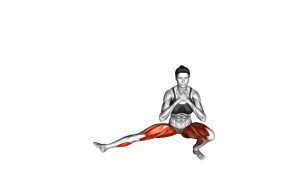
This exercise starts in a seated 90/90 position with both knees bent. Then, the legs rotate across the body until they land in the opposite 90/90 position. Throughout the drill, the goal is to keep the movement smooth, controlled, and centered through the hips rather than forcing the knees or twisting aggressively through the lower back.
In the uploaded video, the performer moves rhythmically from side to side while staying seated on the floor. The torso remains mostly upright, the hands appear to help with balance, and the hips rotate as the legs switch positions. Therefore, this guide focuses on controlled hip rotation, steady posture, and clean 90/90 transitions.
Quick Overview
| Body Part | Legs |
|---|---|
| Primary Muscle | Hip rotators, especially the deep external rotators and internal rotators |
| Secondary Muscle | Glutes, adductors, hip flexors, and trunk stabilizers |
| Equipment | Bodyweight only; optional exercise mat |
| Difficulty | Beginner to intermediate, depending on hip mobility |
Sets & Reps (By Goal)
- Mobility warm-up: 2–3 sets × 6–10 switches per side with a smooth tempo.
- Hip control practice: 3–4 sets × 5–8 slow switches per side with a brief pause in each 90/90 position.
- Daily movement reset: 1–2 sets × 6–12 total switches using an easy, comfortable range.
- Pre-squat or pre-lunge prep: 2 sets × 8–10 controlled switches before training.
Progression rule: First improve smoothness and control. After that, increase range only if the hips move freely without knee pressure or lower-back compensation.
Setup / Starting Position
- Sit on the floor: Begin in a seated position with your torso tall and your hands available for balance.
- Set the first 90/90 shape: Place one leg in front with the knee bent, then position the other leg behind you with the knee also bent.
- Keep your feet relaxed: Let the legs rest naturally on the floor or close to the floor without forcing the knees downward.
- Brace lightly: Keep your ribs stacked over your pelvis so the movement comes mostly from the hips.
- Use your hands as needed: Place your hands behind or beside you if balance is difficult.
Tip: If sitting upright feels difficult, place your hands farther behind you. As your hips loosen, gradually sit taller with less hand support.
Execution (Step-by-Step)
- Start in 90/90: Sit tall with one shin angled in front and the opposite leg bent behind you.
- Begin the twist: Rotate both knees toward the opposite side in one smooth motion.
- Pass through the center: Let the hips rotate while the knees travel across your body. Keep the motion controlled instead of dropping the legs quickly.
- Land on the other side: Settle into the opposite 90/90 position with both knees bent again.
- Reset your posture: Lift your chest gently and keep the spine long before switching back.
- Repeat rhythmically: Continue alternating side to side while keeping the hips, knees, and torso calm.
Pro Tips & Common Mistakes
- Move from the hips first: Let the hip joints rotate instead of dragging the knees aggressively across the floor.
- Keep the torso tall: A slight lean may happen, but avoid collapsing backward or rounding heavily through the spine.
- Control the landing: Do not let the legs drop quickly into the next 90/90 position.
- Avoid knee pressure: If the knees feel stressed, make the angles wider and use more hand support.
- Use a steady rhythm: Smooth repetitions are better than fast, sloppy switches.
- Do not force depth: Mobility improves best when the range stays comfortable and repeatable.
- Pause when needed: A short pause on each side helps you regain posture and improve control.
FAQ
What is the Dynamic 90/90 Hip Twist good for?
The Dynamic 90/90 Hip Twist helps train hip rotation, seated mobility, and lower-body movement control. It is especially useful before leg workouts, athletic drills, or any session that needs better hip range.
Should I feel this exercise in my hips?
Yes. You may feel a stretch or mobility challenge around the hips, glutes, and inner thighs. However, you should not feel sharp pain in the knees, hips, or lower back.
Can beginners do the Dynamic 90/90 Hip Twist?
Yes, beginners can do it if they use a small range and support themselves with their hands. Additionally, moving slower makes the exercise easier to control.
Why do my knees lift during the switch?
Some knee lift can happen when hip mobility is limited. Instead of forcing the knees down, keep the movement comfortable and focus on smooth hip rotation.
How often should I do this hip mobility drill?
You can perform it several times per week as part of a warm-up or mobility routine. For daily practice, keep the effort light and avoid pushing into painful ranges.
Recommended Equipment
- Exercise Mat — adds floor comfort for seated hip mobility drills.
- Yoga Blocks — useful for hand support if sitting upright is difficult.
- Mobility Ball — helpful for gentle glute and hip soft-tissue work before mobility practice.
- Foam Roller — useful for warming up the hips, quads, and glutes before floor drills.
- Resistance Bands for Legs — great for pairing with glute activation and hip stability exercises.
Tip: Equipment is optional for this exercise. However, a comfortable mat and light support tools can make the drill easier to control.