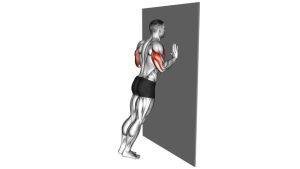
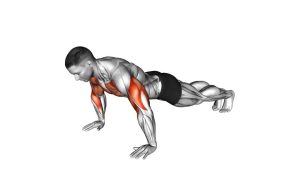
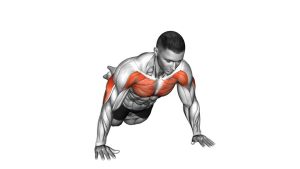
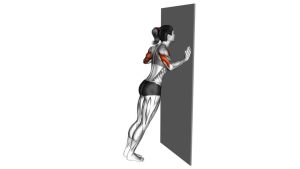
Hand-by-Hand Push-Up: Form, Muscles Worked, Sets, Tips & FAQ
Learn how to do the Hand-by-Hand Push-Up with proper form. Discover muscles worked, setup, execution, sets by goal, common mistakes, FAQs, and recommended equipment for chest-focused training.
Hand-by-Hand Push-Up
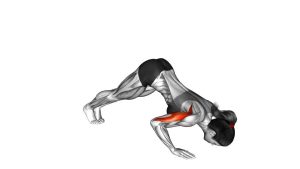
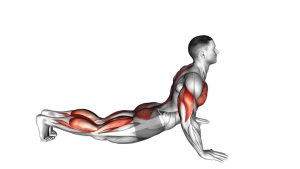
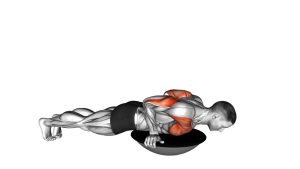
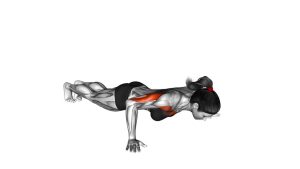
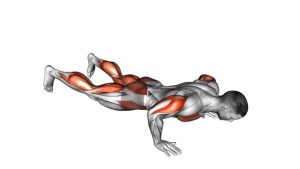
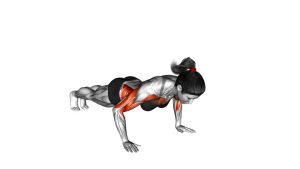
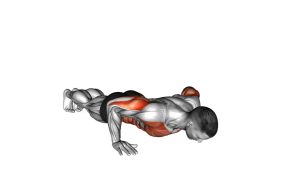
This exercise is best performed with a controlled tempo and a strong plank position. The chest remains the main driver, but the uneven hand transition forces each side to work harder independently. You should feel the pecs, triceps, and shoulders working while your core resists twisting. If your hips rotate too much or your shoulders collapse during the hand change, slow the rep down and reduce the pace.
Quick Overview
| Body Part | Chest |
|---|---|
| Primary Muscle | Pectoralis major |
| Secondary Muscle | Triceps brachii, anterior deltoids, serratus anterior, core stabilizers |
| Equipment | Bodyweight only |
| Difficulty | Intermediate |
Sets & Reps (By Goal)
- Muscle building: 3–4 sets × 6–12 reps per side transition
- Strength endurance: 2–4 sets × 10–16 total reps
- Movement control: 2–3 sets × 5–8 slow reps with a deliberate top-hand switch
- Bodyweight chest finisher: 2–3 sets close to technical failure while maintaining clean alignment
Progression rule: Master a stable plank and smooth side-to-side transitions before adding volume. Progress by slowing the eccentric, pausing at the bottom, or increasing total reps.
Setup / Starting Position
- Start in a high plank: Place your hands under the upper chest area with feet slightly wider than hip-width for balance.
- Create a rigid body line: Keep your head, torso, hips, and legs aligned from top to bottom.
- Brace the core: Tighten the abs and glutes lightly so the hips do not twist during the rep.
- Position one hand to lead: Begin with one hand slightly more dominant while the other assists the movement.
- Set the shoulders: Keep the shoulder blades controlled and the chest open without shrugging.
Tip: A slightly wider foot stance usually makes the alternating hand transfer more stable and easier to control.
Execution (Step-by-Step)
- Lower into the push-up: Bend the elbows and bring the chest toward the floor while keeping the torso square.
- Pause near the bottom: Stop just before losing posture or shoulder position.
- Press back up: Drive through both hands, with slightly more emphasis on the dominant side.
- Transition the hands at the top: Shift the lead so the opposite hand becomes more dominant for the next rep.
- Repeat on the other side: Lower again under control and continue alternating smoothly from rep to rep.
Pro Tips & Common Mistakes
- Keep the body square: Do not let the hips twist as the hands alternate.
- Control the top transition: The hand-by-hand switch should be smooth, not rushed.
- Use a full-body plank: This is not just a chest drill; your core must stay active throughout.
- Don’t flare the elbows excessively: Let the elbows track naturally without turning it into a shoulder-dominant press.
- Avoid collapsing at the bottom: Lower under control and keep the chest proud.
- Regress if needed: Elevate the hands on a bench or box if floor control is not strong enough yet.
FAQ
What muscles does the Hand-by-Hand Push-Up work most?
It mainly targets the chest, especially the pectoralis major, while the triceps, anterior deltoids, and core stabilizers assist throughout the movement.
Is this harder than a regular push-up?
Yes. The alternating hand transition increases the stability demand and creates a more unilateral challenge than a standard push-up.
Can beginners do this exercise?
Most beginners should first master regular push-ups or incline push-ups. Once basic plank control and pressing strength are solid, this variation becomes much safer and more effective.
How do I make it easier?
Perform it on an incline using a bench, box, or sturdy elevated surface. You can also slow the movement down and reduce the range until your control improves.
What is the biggest mistake in this exercise?
The most common problem is rotating the hips or shifting too aggressively during the hand change. The movement should stay controlled, with the torso as stable as possible.
Recommended Equipment
- Push-Up Handles — can reduce wrist strain and improve pressing comfort
- Push-Up Board — useful for hand placement variety and upper-body training structure
- Resistance Band Set — helpful for warm-ups, chest activation, and accessory pressing work
- Exercise Mat — adds comfort for hands and supports floor-based training
- Parallettes / Push-Up Bars — great for wrist-friendly pressing and deeper bodyweight variations
Choose equipment that improves comfort, grip, and consistency rather than making the movement unstable.