Dumbbell Seated Bent-Arm Lateral Raise: Form, Sets, Tips & FAQ
Learn the Dumbbell Seated Bent-Arm Lateral Raise for stronger rear delts and better shoulder control. Includes setup, step-by-step form, sets by goal, common mistakes, FAQs, and recommended equipment.
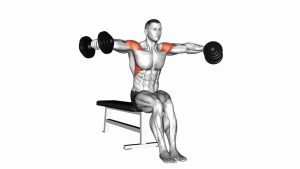
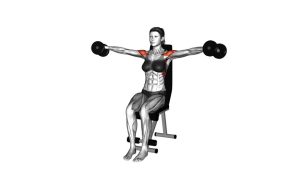
Dumbbell Seated Bent-Arm Lateral Raise
This exercise is ideal for lifters who want to improve rear shoulder development, support better shoulder balance, and add detail to upper-back-focused training days. Because the movement is performed seated and bent forward, it limits body swing and encourages smoother reps. Focus on lifting with the elbows, not flinging the dumbbells upward.
Quick Overview
| Body Part | Rear Shoulders |
|---|---|
| Primary Muscle | Rear deltoids (posterior delts) |
| Secondary Muscle | Middle trapezius, rhomboids, rotator cuff stabilizers |
| Equipment | Dumbbells and a flat bench |
| Difficulty | Beginner to Intermediate |
Sets & Reps (By Goal)
- Muscle growth: 3-4 sets × 10-15 reps with controlled tempo and 45-75 sec rest
- Shoulder control / accessory work: 2-4 sets × 12-18 reps using lighter weights and strict form
- End-of-workout burn: 2-3 sets × 15-20 reps with short 30-45 sec rest
- Technique practice: 2-3 sets × 8-12 reps with slow, deliberate execution
Progression rule: Increase reps first, then load. If you have to swing the torso or shrug the shoulders to finish reps, the weight is too heavy.
Setup / Starting Position
- Sit on a flat bench: Place your feet flat on the floor for stability.
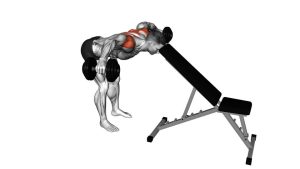
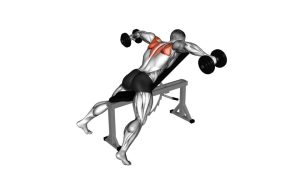
- Lean forward: Hinge at the hips so your torso is angled forward while keeping your spine neutral.
- Hold dumbbells at your sides: Let the weights hang below your shoulders near your lower legs.
- Keep a soft bend in the elbows: Maintain that elbow angle throughout the rep instead of straightening and bending repeatedly.
- Set the shoulders: Keep the neck long, chest stable, and shoulders down away from the ears.
Tip: Think of your torso as fixed and strong so the shoulder joint can do the work without momentum.
Execution (Step-by-Step)
- Start from the bottom: Dumbbells hang under the shoulders with your torso leaned forward and core braced.
- Lift out to the sides: Raise the upper arms in a wide arc while keeping the elbows slightly bent.
- Lead with the elbows: Think about moving the elbows outward and upward instead of flicking the hands.
- Pause near shoulder height: Stop when your upper arms are roughly parallel to the floor or just below, depending on comfort and control.
- Lower slowly: Bring the dumbbells back down under control without dropping them or losing posture.
- Repeat smoothly: Keep tension on the rear delts through every rep and avoid bouncing at the bottom.
Pro Tips & Common Mistakes
- Use lighter weights than you think: Rear delt work is about precision, not ego lifting.
- Keep the bend in the elbows consistent: Don’t turn the movement into a pressing or rowing pattern.
- Do not shrug: Elevating the shoulders shifts the work toward the upper traps.
- Avoid torso swing: Stay planted on the bench and move only at the shoulders.
- Control the lowering phase: The eccentric portion helps build more tension and better technique.
- Stop at clean range: You do not need to force the dumbbells excessively high to make the exercise effective.
FAQ
What muscle does the seated bent-arm lateral raise target most?
The main target is the rear deltoid, which is the back portion of the shoulder. The mid traps and rhomboids assist, especially as the arms move outward and upward.
Why use a bent arm instead of a straight arm?
A bent arm shortens the lever and makes the movement easier to control. That usually helps lifters keep better form and maintain more direct tension on the rear delts.
How heavy should I go on this exercise?
Use a weight that lets you lift with smooth control and no swinging. For most people, this is lighter than their side lateral raise or row weight.
Can beginners do this movement?
Yes. It is a solid beginner-friendly rear delt exercise as long as the weight stays light enough to control and the torso position remains stable.
Should I feel this in my traps?
Some trap assistance is normal, but the rear delts should be doing most of the work. If you mainly feel the neck and upper traps, reduce the load and focus on keeping the shoulders down.
Recommended Equipment
- Adjustable Dumbbells — practical for progressing rear delt work without needing a full rack
- Flat Weight Bench — provides a stable seated position for strict reps
- Lifting Straps — optional if grip fatigue limits your higher-rep shoulder work
- Resistance Bands Set — useful for warm-ups, shoulder activation, and extra rear delt volume
- Foam Roller — helpful for upper-back mobility work before shoulder sessions
Tip: Pair this movement with rows, face pulls, and other rear-delt-friendly accessories for better shoulder balance and posture support.