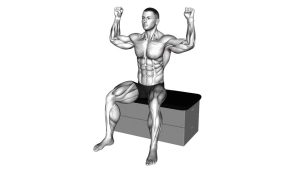
Palm-Up – Palm-Down Rotation: Shoulder Rotation Form, Benefits, Sets & FAQ
Learn how to perform the Palm-Up / Palm-Down Rotation for better shoulder mobility, rotator cuff control, and joint stability. Includes setup, step-by-step execution, sets by goal, mistakes, FAQs, and recommended equipment.
Palm-Up / Palm-Down Rotation
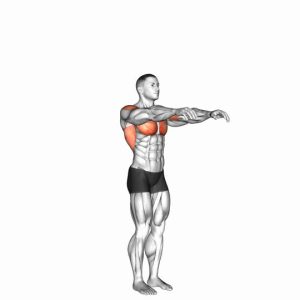
This exercise is best treated as a quality-focused mobility and activation drill. You should feel controlled movement around the shoulder joint, with the upper arms rotating while the chest stays open and the shoulders stay down. It works well in warm-ups, shoulder-health routines, and light corrective sessions where the goal is better movement rather than heavy loading.
Quick Overview
| Body Part | Shoulders |
|---|---|
| Primary Muscle | Deltoids and rotator cuff (especially infraspinatus, teres minor, and subscapularis) |
| Secondary Muscle | Upper traps, rhomboids, and scapular stabilizers |
| Equipment | None |
| Difficulty | Beginner |
Sets & Reps (By Goal)
- Warm-up / activation: 2–3 sets × 10–15 controlled reps
- Shoulder mobility practice: 2–4 sets × 8–12 reps with slow tempo
- Corrective / rehab-style control: 2–3 sets × 6–10 reps with a brief pause in each end position
- Upper-body prep before training: 1–2 sets × 10–12 reps
Progression rule: First improve control, posture, and smooth rotation. Only then increase total reps, pause time, or add very light external resistance.
Setup / Starting Position
- Stand tall: Keep your feet about hip-width apart with the ribs stacked over the hips.
- Raise the arms: Extend both arms straight out to the sides at shoulder height, forming a “T” position.
- Lock in posture: Keep the chest open, shoulders down, and neck relaxed.
- Straight elbows: Maintain straight arms without stiffening or hyperextending the elbows.
- Start neutral: Begin with the palms facing down or slightly forward.
Tip: If holding the arms perfectly level is too difficult, slightly lower them below shoulder height until you can control the movement cleanly.
Execution (Step-by-Step)
- Brace lightly: Tighten the core just enough to stop the torso from leaning or twisting.
- Rotate to palm-up: Turn the arms so the palms rotate upward toward the ceiling by moving from the shoulder joint.
- Keep the arms fixed: Do not let the elbows bend, the shoulders shrug, or the arms drift forward or backward.
- Reverse the motion: Rotate the arms back so the palms turn downward toward the floor.
- Repeat smoothly: Continue alternating between palm-up and palm-down with steady control and no momentum.
Pro Tips & Common Mistakes
- Move slowly: Fast reps reduce control and make the drill less useful for shoulder function.
- Don’t shrug: Keep the shoulders down and away from the ears.
- Keep elbows straight: Bending the arms changes the drill and reduces clean shoulder rotation.
- Rotate from the shoulders: Avoid simply flipping the hands or twisting the wrists.
- Stay tall: No leaning back, rib flare, or torso rotation to fake more range.
- Use a comfortable range: Small, pain-free rotations are better than forcing range into a pinchy position.
FAQ
What does the Palm-Up / Palm-Down Rotation work?
It primarily trains the shoulder rotators and improves control of internal and external rotation. It also helps the deltoids and scapular stabilizers maintain arm position during the movement.
Is this a strength exercise or a mobility drill?
It is mainly a mobility and activation drill. It can support strength training, but the main purpose is cleaner shoulder movement, better joint awareness, and improved warm-up quality.
Should I feel this in the rotator cuff?
Yes, you may feel light muscular work around the back and front of the shoulder. The sensation should feel controlled, not aggressive. Sharp pain or pinching is a sign to reduce range or stop.
Can beginners use this in a warm-up?
Yes. It is a beginner-friendly drill and works well before upper-body sessions, especially before shoulder pressing, rowing, pulldowns, or general mobility work.
How can I make it harder?
First slow the tempo and add pauses in the end positions. After that, very light tools like mini bands, light dumbbells, or other low-load shoulder-control variations can increase difficulty without sacrificing form.
Recommended Equipment (Optional)
- Resistance Bands for Shoulder Training — useful for rotator cuff activation, pull-aparts, and light shoulder warm-up work
- PVC Pipe / Mobility Stick — great for shoulder pass-throughs, mobility prep, and posture drills
- Yoga or Exercise Mat — useful for floor-based shoulder mobility, stretching, and controlled warm-up work
- Light Dumbbells — helpful for progressing into light shoulder raises, rotations, and stability drills
- Shoulder Pulley — useful for rehab-style shoulder mobility and gentle range-of-motion practice
Tip: Choose equipment that supports control and comfort. This movement responds best to light resistance, precise mechanics, and consistent practice rather than heavy loading.