Plank Walk-Up Exercise: Form, Core Benefits, Sets, Tips & FAQ
Learn how to do the Plank Walk-Up with proper form to build core strength, shoulder stability, triceps endurance, and anti-rotation control.
Plank Walk-Up
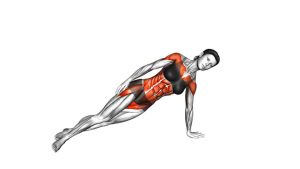
The Plank Walk-Up is an excellent choice when you want a core exercise that also challenges upper-body endurance. It combines the anti-extension demand of a plank with the pressing action of a push-up. As a result, it builds trunk control, shoulder stability, and triceps strength at the same time. However, the exercise only works well when the hips stay quiet and the spine remains neutral. If the lower back sags, the hips swing side to side, or the shoulders collapse, the movement becomes less effective and more stressful.
Quick Overview
| Body Part | Core |
|---|---|
| Primary Muscle | Rectus abdominis, transverse abdominis, and obliques |
| Secondary Muscle | Shoulders, triceps, chest, serratus anterior, glutes, and hip stabilizers |
| Equipment | No equipment required; optional exercise mat |
| Difficulty | Intermediate because it requires core control, shoulder strength, and anti-rotation stability |
Sets & Reps (By Goal)
- Core stability: 3–4 sets of 6–10 reps per side with slow, controlled transitions.
- Upper-body endurance: 3–5 sets of 10–16 total reps with a steady rhythm.
- Fat-loss conditioning: 30–45 seconds per set for 3–5 rounds, while keeping clean form.
- Beginner progression: 2–3 sets of 4–6 reps per side from the knees or with hands elevated.
- Advanced control: 4 sets of 8–12 reps while alternating the leading arm every repetition.
Progression rule: First, increase control and reduce hip movement. After that, add reps or time. Finally, make the exercise harder by narrowing your feet, slowing the tempo, or adding a short pause in each plank position.
Setup / Starting Position
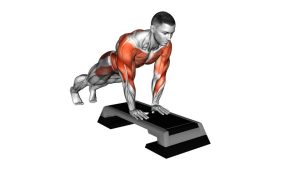
- Start in a high plank: Place your hands under your shoulders and extend both legs behind you.
- Set your feet: Keep your feet about hip-width apart. A wider stance makes balance easier, while a narrow stance increases core demand.
- Brace your core: Pull your ribs down slightly and tighten your abs as if preparing for a light punch.
- Align your body: Keep a straight line from head to heels. Your hips should not sag or lift too high.
- Engage your glutes: Lightly squeeze your glutes to help protect the lower back and keep the pelvis stable.
- Set the shoulders: Push the floor away gently so the shoulder blades stay stable instead of collapsing inward.
Before starting, choose which arm will lead first. Then, alternate the leading arm from rep to rep or switch sides after each set. This keeps the exercise balanced and prevents one shoulder from doing more work.
Execution (Step-by-Step)
- Begin in a strong high plank: Keep your hands under your shoulders, your legs straight, and your core tight. Look slightly ahead of your hands so your neck stays neutral.
- Lower one arm to the floor: Bend one elbow and place that forearm down. Keep the elbow under the shoulder, and avoid dropping your chest suddenly.
- Lower the second arm: Bring the other forearm down until you are in a full forearm plank. At this point, both elbows should be under the shoulders.
- Stabilize briefly: Pause for a moment and squeeze your abs, glutes, and thighs. Meanwhile, keep your hips square to the floor.
- Press one hand back up: Place one palm under the shoulder and push through the floor. Try not to twist the torso as you rise.
- Return the second hand: Press the other hand into the floor until both arms are straight again in the high plank.
- Repeat with control: Continue for the target reps. However, change the leading arm regularly so both sides work evenly.
Pro Tips & Common Mistakes
- Move slowly first: A controlled rep is more useful than a fast rep with twisting hips.
- Keep your elbows under your shoulders: This protects the shoulders and improves force transfer.
- Do not let the lower back sag: Brace your abs and squeeze your glutes before every arm movement.
- Avoid shifting too far forward: Keep your body balanced so your wrists and shoulders do not take unnecessary pressure.
- Alternate the lead arm: Leading with only one side can create uneven shoulder and core loading.
- Use a wider foot stance if needed: This reduces rotation and helps you learn better control.
- Do not rush the press-up: Press firmly through the palm and finish with the arm stacked under the shoulder.
- Keep your neck neutral: Do not look too far forward or tuck your chin aggressively.
- Breathe during the movement: Exhale as you press up, and inhale during the controlled lowering phase.
FAQ
What muscles does the Plank Walk-Up work?
The Plank Walk-Up mainly works the abs, obliques, and deep core muscles. In addition, it trains the shoulders, triceps, chest, serratus anterior, glutes, and hip stabilizers. Because the arms move one at a time, the obliques work especially hard to prevent rotation.
Is the Plank Walk-Up good for abs?
Yes. It is very effective for abs because it challenges the core to resist movement rather than simply create movement. Therefore, it builds stability, control, and endurance. For best results, keep the hips level and avoid rushing the reps.
Is the Plank Walk-Up beginner-friendly?
It can be beginner-friendly when modified. Start from the knees, place your hands on a bench, or widen your feet. Once you can control your hips and shoulders, progress to the full floor version.
Why do my hips move side to side?
Hip movement usually happens because the core is not resisting rotation strongly enough. To fix this, widen your feet, slow down, squeeze your glutes, and press the floor away with control. Also, alternate the lead arm to keep both sides balanced.
How many Plank Walk-Ups should I do?
Most people can start with 2–3 sets of 6–10 total reps. However, quality matters more than volume. Stop the set when your hips swing, your lower back sags, or your shoulders lose position.
Recommended Equipment
- Thick Exercise Mat — helps protect the elbows, wrists, and knees during plank variations.
- Non-Slip Yoga Mat — improves grip so your hands and forearms stay stable while moving.
- Wrist Support Wraps — useful if your wrists need extra support during high plank positions.
- Push-Up Handles — can reduce wrist extension during the high plank phase for some users.
- Core Sliders — helpful for pairing this exercise with additional anti-rotation and plank-based core drills.
Tip: Equipment is optional for this exercise. However, a good mat can make the forearm plank phase more comfortable and help you maintain better technique.