Standing Side Bend: Proper Form, Benefits, Sets, Tips & FAQ
Learn the Standing Side Bend to train obliques, improve lateral core control, and stretch the side body with safe step-by-step form tips.
Standing Side Bend
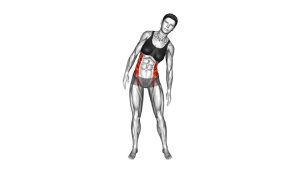
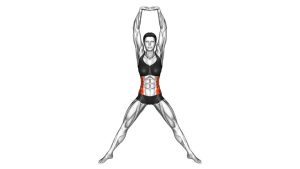
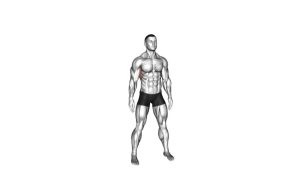
The Standing Side Bend is best used as a warm-up drill, mobility movement, light core exercise, or recovery-friendly side-body stretch. Because it requires no equipment, it works well for home workouts, beginner routines, posture sessions, and quick desk-break mobility. When performed correctly, the exercise teaches your torso to move side to side while your hips stay grounded and your spine remains controlled.
Although the movement looks easy, quality matters. A good repetition starts with a tall posture, a long reach through the arm, and a smooth bend to one side. The ribs should move without twisting forward or backward. The hips should stay stable, and the feet should remain firmly connected to the floor.
Quick Overview
| Body Part | Core |
|---|---|
| Primary Muscle | Obliques |
| Secondary Muscle | Quadratus lumborum, latissimus dorsi, transverse abdominis, spinal stabilizers |
| Equipment | No equipment required |
| Difficulty | Beginner |
Sets & Reps (By Goal)
- Mobility warm-up: 2–3 sets × 8–12 reps per side with a slow, relaxed tempo.
- Core activation: 2–4 sets × 10–15 reps per side while keeping the hips stable.
- Side-body stretch: 2–3 sets × 20–30 seconds per side using a gentle hold.
- Beginner control practice: 1–3 sets × 6–10 reps per side with a smaller range of motion.
- Workout finisher: 2–3 sets × 15–20 controlled reps per side without rushing.
Progression rule: First improve posture, range control, and breathing. After that, progress by slowing the tempo, adding a longer pause, or holding a light dumbbell only if your torso stays aligned.
Setup / Starting Position
- Stand tall: Place your feet about hip-width apart. Keep your weight balanced through both feet.
- Stack your posture: Keep your ribs over your pelvis, your chest open, and your neck long.
- Position your arms: Raise one arm overhead, place one hand on your hip, or let one hand slide lightly along the thigh.
- Brace gently: Engage your core without holding your breath. The stomach should feel lightly active, not rigid.
- Set your gaze: Look forward and keep your head aligned with your torso.
Before bending, think about growing tall through the crown of your head. This small cue helps prevent collapsing into the lower back. It also encourages the side body to lengthen before the torso moves.
Execution (Step-by-Step)
- Start from a tall stance: Stand upright with your shoulders relaxed and your feet planted firmly.
- Reach upward first: If one arm is overhead, lengthen through the fingertips before bending.
- Bend to the side: Move your torso laterally toward one side. Keep the motion smooth and controlled.
- Keep your hips steady: Do not push your hips far out to the opposite side. A small natural shift is fine, but avoid leaning from the pelvis only.
- Avoid rotation: Keep your chest facing forward. Do not twist your ribs toward the floor or ceiling.
- Pause briefly: Hold the end position for one to two seconds while breathing calmly.
- Return with control: Use your obliques to bring your torso back to the starting position.
- Repeat evenly: Complete all reps on one side, or alternate sides depending on your workout goal.
Pro Tips & Common Mistakes
Pro Tips
- Lengthen before you bend: Reach tall first so the movement feels spacious instead of compressed.
- Move in one plane: Keep the bend directly to the side. This improves oblique control and reduces twisting.
- Use slow breathing: Exhale as you bend. Inhale as you return to center.
- Control the return: Do not bounce back upright. The return phase trains the core just as much as the bend.
- Keep both feet grounded: Stable feet help your core control the movement better.
Common Mistakes
- Collapsing into the lower back: This often happens when the person tries to bend too far.
- Twisting the torso: Rotation changes the movement and reduces the focus on lateral flexion.
- Shrugging the shoulder: Keep the raised shoulder relaxed and avoid pulling it toward the ear.
- Pushing the hips too far sideways: The torso should bend, but the pelvis should remain mostly stable.
- Using momentum: Fast reps reduce control and may irritate the spine.
FAQ
What muscles does the Standing Side Bend work?
The Standing Side Bend mainly works the obliques. It also involves the quadratus lumborum, transverse abdominis, spinal stabilizers, and latissimus dorsi. The movement can also stretch the side body, especially when one arm reaches overhead.
Is the Standing Side Bend good for beginners?
Yes. It is beginner-friendly because it uses bodyweight and does not require complex coordination. Beginners should keep the range small at first and focus on slow, clean movement.
Should I use a dumbbell for Standing Side Bends?
You can use a light dumbbell once your bodyweight form is strong. However, beginners should master the no-equipment version first. Adding weight too early may cause lower-back compression or poor hip shifting.
Where should I feel this exercise?
You should feel light work through the obliques and a gentle stretch along the opposite side of the torso. You should not feel sharp pain, pinching, or pressure in the lower back.
Can Standing Side Bends reduce waist fat?
Standing Side Bends can strengthen and tone the side-core muscles, but they do not directly burn fat from one specific area. For fat loss, combine strength training, cardio, proper nutrition, and consistent activity.
How often can I do Standing Side Bends?
You can perform them 3–5 times per week as a light mobility or core drill. If you use added resistance, train them 2–3 times per week and allow recovery between sessions.
Recommended Equipment
- Exercise Mat — useful for warm-ups, stretching, and core sessions before or after side bends.
- Light Dumbbells Set — optional progression for loaded side bends once bodyweight control is solid.
- Pilates Ring — helpful for adding light upper-body engagement during standing core mobility drills.
- Resistance Bands Set — useful for pairing side bends with anti-rotation, rows, and standing core exercises.
- Foam Roller — helpful for thoracic mobility, lat release, and side-body preparation.
Choose equipment based on your goal. For mobility, keep the exercise bodyweight. For strength, add light resistance only when your hips, ribs, and spine stay controlled.