Seated Shoulder Press and Hip Abduction on a Pad: Form, Muscles Worked, Sets & Tips
Learn how to perform the seated shoulder press and hip abduction on a pad with proper form. Discover muscles worked, setup, step-by-step execution, sets by goal, mistakes to avoid, FAQs, and recommended equipment.
Seated Shoulder Press and Hip Abduction on a Pad
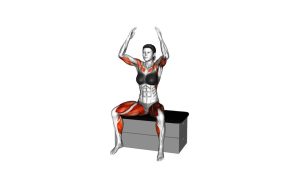
This exercise works best when the upper and lower body move in sync. The pressing portion develops shoulder strength, while the seated abduction portion helps activate the outer hips and improve pelvic control. Because both actions happen at the same time, the drill also trains coordination and trunk stability. Keep the chest tall, ribs stacked, and the motion controlled from start to finish.
Quick Overview
| Body Part | Shoulders / Glutes |
|---|---|
| Primary Muscle | Deltoids; gluteus medius and gluteus minimus |
| Secondary Muscle | Triceps, upper chest, deep core stabilizers, hip external rotators |
| Equipment | Padded bench or box; optional mini band, resistance band, or dumbbells |
| Difficulty | Beginner to Intermediate (easy unloaded, more challenging with tempo or resistance) |
Sets & Reps (By Goal)
- Movement prep / activation: 2–3 sets × 8–10 reps (slow tempo, light effort, 30–45 sec rest)
- Coordination and control: 2–4 sets × 8–12 reps (steady rhythm, 45–60 sec rest)
- Strength endurance: 3–4 sets × 10–15 reps (add dumbbells or a mini band, 45–75 sec rest)
- Rehab-style motor control: 2–3 sets × 6–8 reps (very controlled pace, no pain, 45–60 sec rest)
Progression rule: First improve timing, posture, and range quality. Then add a light mini band around the thighs, light dumbbells for the press, or slower eccentrics before increasing total volume.
Setup / Starting Position
- Sit tall on a pad or bench: Plant both feet flat on the floor with knees bent about 90 degrees.
- Stack your torso: Keep the ribcage down, chest open, and spine neutral. Avoid rounding or leaning back.
- Set the arms: Bring your hands to shoulder level with elbows bent, similar to the bottom of a shoulder press.
- Set the legs: Start with the knees in a neutral position. If using a mini band, place it above the knees.
- Brace lightly: Tighten the core just enough to stay stable without stiffening the neck or shoulders.
Tip: If your lower back arches when pressing, sit a little taller, reduce the load, and keep the ribs from flaring upward.
Execution (Step-by-Step)
- Start from the ready position: Hands near shoulder height, elbows under control, knees neutral, torso upright.
- Press and abduct together: Drive the arms upward overhead while simultaneously moving the knees outward into hip abduction.
- Reach the top smoothly: Finish with the arms extended overhead without shrugging, while the knees move apart under control.
- Pause briefly: Hold the top position for a moment while keeping the core engaged and the head neutral.
- Lower and return together: Bring the arms back to shoulder level as the knees come back toward the start position.
- Repeat with rhythm: Keep every rep smooth, symmetrical, and controlled rather than fast or jerky.
Pro Tips & Common Mistakes
- Press straight up: Keep the path vertical rather than pushing too far forward.
- Move knees out, not feet: Let the hip joint do the work instead of rolling the feet or collapsing the arches.
- Stay tall on the seat: Avoid leaning back or arching hard through the lower spine during the press.
- Keep the shoulders down: Don’t shrug toward the ears as the arms rise overhead.
- Use matching tempo: The arms and knees should start and finish together for better coordination training.
- Start light: A mini band or very light dumbbells is usually enough until the movement pattern feels natural.
- Control the lowering phase: The return is where posture often breaks, so don’t rush it.
FAQ
What muscles does this exercise work most?
The main targets are the deltoids during the press and the glute medius/minimus during the seated hip abduction. The triceps and core also help stabilize the movement.
Is this a strength exercise or a coordination drill?
It can be both. Performed unloaded or lightly loaded, it works well as a coordination and activation drill. With dumbbells or stronger band tension, it becomes more of a strength-endurance exercise.
Should I use dumbbells, bands, or bodyweight only?
Start with bodyweight or a very light setup first. Once you can keep the torso stable and time both movements well, add light dumbbells for the press or a mini band above the knees for extra abduction resistance.
What if I feel this more in my neck than my shoulders?
That usually means you’re shrugging or using too much resistance. Lower the load, relax the upper traps, and think about pressing while keeping the shoulders away from the ears.
Can beginners use this exercise?
Yes. It’s beginner-friendly when done slowly with no external load. The key is controlling posture and coordination before turning it into a harder resistance exercise.
Recommended Equipment (Optional)
- Hip Abduction / Mini Loop Bands — ideal for adding light-to-moderate outward knee resistance during the seated abduction phase
- Resistance Bands Set — useful for scalable shoulder pressing and general activation work
- Adjustable Weight Bench — gives you a stable seated setup for pressing with good torso support and positioning
- Light Neoprene Dumbbells — great for progressing the shoulder press portion without overloading the movement
- Exercise Pad / Seat Cushion — helpful for comfort and posture when practicing the movement on firm surfaces
Tip: Choose equipment that lets you keep the rep smooth. Clean form and timing matter more than heavy loading for this exercise.