Side Plank Exercise: Proper Form, Core Benefits, Sets, Tips & FAQ
Learn how to perform the Side Plank with proper form to strengthen obliques, improve core stability, protect your spine, and build better body control.
Side Plank
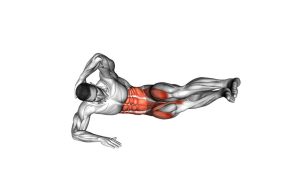
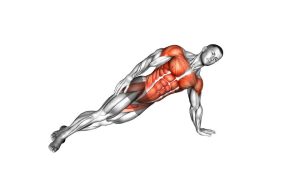
This version of the Side Plank is performed with the body supported on one straight arm and the outer edge of the lower foot. The top hand rests on the hip, which keeps the torso organized and makes it easier to check whether the body is rotating forward or backward. During the hold, the waist should stay lifted, the ribs should stay controlled, and the shoulder should remain stacked over the wrist. Because the movement is isometric, quality matters more than time. A clean 15-second hold is more useful than a long hold with sagging hips, twisted shoulders, or a collapsed support arm.
Quick Overview
| Body Part | Core |
|---|---|
| Primary Muscle | Obliques |
| Secondary Muscle | Transverse abdominis, rectus abdominis, quadratus lumborum, glute medius, deltoids, serratus anterior |
| Equipment | Bodyweight only; optional exercise mat |
| Difficulty | Beginner to Intermediate |
Sets & Reps (By Goal)
- Beginner core control: 2–3 sets × 10–20 seconds per side, resting 30–60 seconds between sides.
- Core endurance: 3–4 sets × 20–45 seconds per side, keeping the hips lifted and the breathing steady.
- Strength and stability: 3–5 sets × 30–60 seconds per side, using strict alignment and controlled tension.
- Warm-up activation: 1–2 sets × 10–20 seconds per side before lower-body, upper-body, or athletic training.
- Posture and trunk control: 2–3 sets × 15–30 seconds per side, focusing on ribs, pelvis, and shoulder stacking.
Progression rule: Add time only when every second looks clean. Once you can hold 45–60 seconds per side with stable hips, progress with a top-leg lift, reach-through, weighted side plank, or longer lever position.
Setup / Starting Position
- Lie on your side: Start on one side with your legs extended and your feet stacked. Keep the body long rather than curled.
- Place the support hand under the shoulder: Position the lower hand directly below the shoulder. Spread the fingers for a stronger base.
- Stack the joints: Keep the shoulder above the wrist, the hips stacked, and the top foot resting over the lower foot.
- Set the top arm: Place the top hand on your hip. This helps you feel whether the pelvis rotates or drops.
- Brace before lifting: Lightly tighten your abs and glutes before raising the hips. Avoid pushing the ribs forward.
- Keep the neck neutral: Look straight ahead. Do not let the head hang down or turn sharply upward.
If the straight-arm setup bothers your wrist or shoulder, perform the same exercise on your forearm. The core goal stays the same: create a strong line and resist sideways collapse.
Execution (Step-by-Step)
- Press through the support hand: Push the floor away gently so the shoulder does not sink toward the ear.
- Lift the hips: Raise your hips until your body forms one straight diagonal line from head to ankles.
- Stack the torso: Keep the chest open and the top shoulder directly above the bottom shoulder. Avoid rolling forward.
- Hold the position: Keep the waist lifted, the glutes lightly squeezed, and the ribs pulled down.
- Breathe under tension: Take controlled breaths without letting the hips drop or the shoulder collapse.
- Finish with control: Lower the hips slowly to the floor. Rest, reset, then repeat on the opposite side.
Pro Tips & Common Mistakes
- Do not let the hips sag: Hip drop is the most common mistake. Lift the bottom waist away from the floor and keep the obliques active.
- Keep the shoulder stacked: The support shoulder should stay above the wrist. If it drifts too far forward or backward, balance becomes harder.
- Avoid twisting the torso: Keep both shoulders and hips stacked. Rolling forward reduces oblique tension and can stress the shoulder.
- Brace, but do not hold your breath: Breathe slowly while keeping the trunk firm. Shallow panic breathing usually means the hold is too long.
- Use the glutes: Light glute tension helps keep the pelvis aligned and prevents the lower back from taking over.
- Shorten the hold if form breaks: A shorter perfect hold is better than a longer sloppy hold.
- Keep the neck relaxed: Your head should follow the line of your spine. Do not crane the neck or look down at the floor.
- Start with the easier side: If one side is weaker, train it first and match the same time on the stronger side.
FAQ
What muscles does the Side Plank work?
The Side Plank mainly works the obliques. It also trains the transverse abdominis, quadratus lumborum, glute medius, shoulder stabilizers, and deep trunk muscles that help keep the spine stable.
Is the Side Plank good for abs?
Yes. The Side Plank is excellent for building functional core strength. It does not use a crunching motion, but it trains the abs to resist side bending and maintain a strong trunk position.
How long should I hold a Side Plank?
Beginners can start with 10–20 seconds per side. Intermediate trainees can aim for 30–45 seconds. Advanced trainees may hold 45–60 seconds or use harder variations instead of simply adding more time.
Why do my hips drop during the Side Plank?
Hip drop usually happens when the obliques, glutes, or shoulder stabilizers fatigue. Reduce the hold time, use a knee-supported version, and focus on lifting the bottom waist away from the floor.
Should I do Side Planks on my hand or forearm?
Both versions are useful. The straight-arm version challenges the wrist and shoulder more. The forearm version is often more comfortable for beginners or anyone who wants less wrist pressure.
Can beginners do the Side Plank?
Yes, but beginners may need to start with the knees bent or use the forearm version. The goal is not to force a long hold. The goal is to keep the body aligned and controlled.
How often should I train Side Planks?
Most people can train Side Planks 2–4 times per week. If you use short, low-intensity holds for posture practice, you may include them more often as long as your shoulders, wrists, and lower back feel good.
Recommended Equipment (Optional)
- Exercise Mat — adds comfort for the hand, forearm, hip, and feet during side plank practice.
- Non-Slip Yoga Mat — helps keep the support hand and feet stable during bodyweight core holds.
- Wrist Support Wraps — useful if the straight-arm version creates mild wrist fatigue.
- Ankle Weights — can be used later for advanced side plank leg-lift progressions.
- Mini Resistance Bands — helpful for progressing glute and hip stability drills related to side plank control.
Choose equipment that improves comfort and control. The Side Plank does not require tools, but a stable mat can make the exercise easier to perform with clean technique.