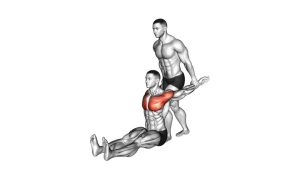
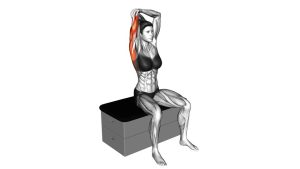
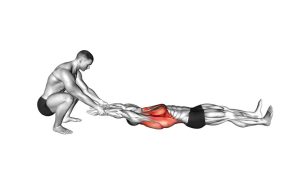
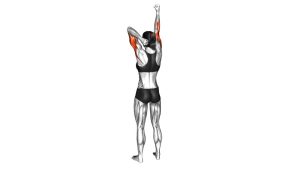
Supination Bar Suspension Stretch: Upper Arm Stretch, Form, Tips & FAQ
Learn the Supination Bar Suspension Stretch to stretch the biceps, forearms, and anterior shoulders using a supinated hanging position. Includes setup, form, sets, tips, FAQs, and equipment.
Supination Bar Suspension Stretch
This stretch is best for people who already have basic hanging tolerance and want to improve arm extension, supinated grip mobility, and biceps flexibility. Unlike a regular dead hang, the palms face toward you, which places the forearms in supination. As a result, the stretch becomes more specific to the biceps and the front side of the upper arms.
However, this position can feel intense quickly. For that reason, keep your shoulders controlled, avoid forcing the elbows into painful hyperextension, and use your feet for support whenever needed. In addition, begin with short holds before increasing time under tension.
Quick Overview
| Body Part | Arms |
|---|---|
| Primary Muscle | Biceps brachii, especially the long head |
| Secondary Muscle | Forearm supinators, brachialis, anterior deltoids, wrist flexors |
| Equipment | Pull-up bar, fixed horizontal bar, or suspension bar |
| Difficulty | Intermediate because it uses bodyweight tension and a demanding shoulder-elbow position |
Sets & Reps (By Goal)
- General upper-arm flexibility: 2–3 sets × 10–20 second holds
- Biceps mobility improvement: 3–4 sets × 15–30 second holds
- Warm-up before pulling or arm training: 1–2 sets × 8–15 second easy holds
- Cooldown after upper-body training: 2–3 sets × 20–40 second relaxed holds
- Beginner modification: 2 sets × 5–10 second supported holds with feet on the floor
Progression rule: First, increase support and control. Then, increase hold time gradually. Finally, reduce foot assistance only when the shoulders, elbows, and wrists feel comfortable.
Setup / Starting Position
- Choose a stable bar: Use a fixed bar that can safely support your bodyweight.
- Stand under the bar: Position your feet slightly in front of or directly under the bar.
- Take a supinated grip: Grip the bar with palms facing toward you.
- Set your hand width: Start around shoulder-width. However, adjust slightly wider if your shoulders need more space.
- Straighten the arms: Extend the elbows gently without aggressively locking them.
- Keep the chest open: Allow the front of the shoulders and upper arms to lengthen gradually.
- Use the feet for control: Keep toes or feet on the floor if the stretch feels too strong.
Tip: Before fully loading the stretch, test the grip and shoulder position with partial bodyweight. This makes the movement safer and easier to control.
Execution (Step-by-Step)
- Grip the bar firmly: Hold the bar with a supinated grip, palms facing toward your body. Then, wrap the thumbs securely around the bar if possible.
- Let the arms lengthen: Gradually straighten the elbows and allow the upper arms to stretch. Keep the movement slow instead of dropping into the position.
- Settle into suspension: Shift part of your bodyweight into the hands. Meanwhile, keep your feet lightly touching the ground if you need support.
- Open the chest slightly: Allow the shoulders to move into gentle extension. As a result, you should feel a stretch across the biceps and front of the arms.
- Hold without bouncing: Stay still, breathe slowly, and avoid swinging or forcing more range.
- Exit carefully: Bend the knees or step closer to the bar to reduce tension. Then, release the grip only after your bodyweight is supported again.
Pro Tips & Common Mistakes
- Use partial bodyweight first: This stretch becomes intense quickly, so keep your feet on the floor until your joints adapt.
- Do not bounce: Bouncing can overload the elbows, wrists, and shoulders. Instead, hold a calm, steady position.
- Avoid painful elbow lockout: Straight arms are important, but they should not feel jammed or forced.
- Keep the wrists comfortable: If the wrists feel strained, reduce supination slightly or use a wider grip.
- Control shoulder position: Allow a stretch, but avoid collapsing completely into the shoulder joints.
- Breathe slowly: Slow breathing helps reduce guarding and allows the stretch to deepen naturally.
- Exit before fatigue: Since grip fatigue can reduce control, finish each hold while you still feel stable.
Common Mistakes
- Dropping into the stretch too fast: This can shock the elbows and shoulders.
- Using too much bodyweight: More load is not always better for flexibility work.
- Letting the body swing: Swinging turns a controlled stretch into a risky hanging movement.
- Forcing the wrists: Supination should be strong but not painful.
- Ignoring shoulder pinching: Pinching is a sign to reduce range or stop.
FAQ
What muscles does the Supination Bar Suspension Stretch target?
It mainly targets the biceps brachii, especially because the elbows stay extended while the forearms remain supinated. In addition, it stretches the forearm supinators, wrist flexors, anterior deltoids, and the front of the shoulders.
Is this exercise safe for beginners?
It can be too intense for complete beginners if performed with full bodyweight. However, beginners can modify it by keeping both feet on the floor and using only a small amount of hanging tension.
Where should I feel the stretch?
You should feel the stretch through the front of the upper arms, biceps, forearms, and possibly the front of the shoulders. However, you should not feel sharp pain in the elbows, wrists, or shoulder joints.
How long should I hold the stretch?
Start with 10–20 seconds per set. Then, as your tolerance improves, gradually build toward 30–40 seconds. Quality and comfort are more important than maximum hold time.
Should my feet stay on the ground?
Yes, especially at first. Keeping the feet on the ground gives you control over the intensity. Once the stretch feels comfortable, you can slowly reduce foot assistance.
Can this help with tight biceps?
Yes. Because it combines elbow extension, shoulder extension, and forearm supination, it can create a strong biceps stretch. Nevertheless, it should be progressed gradually to avoid irritating the elbows or shoulders.
Recommended Equipment
- Doorway Pull-Up Bar — useful for performing supported hanging stretches at home
- Wall-Mounted Pull-Up Bar — provides a stable fixed bar for controlled suspension work
- Gymnastics Grips — helps protect the palms during longer hanging holds
- Liquid Chalk — improves grip security and reduces slipping on the bar
- Resistance Bands — can assist bodyweight control and reduce stretch intensity
Tip: Choose equipment that allows you to control bodyweight gradually. For this stretch, stability and comfort matter more than maximum loading.