Overhead Triceps Stretch: Proper Form, Benefits, Sets, Tips & FAQ
Learn how to do the Overhead Triceps Stretch with proper form to improve upper-arm flexibility and shoulder mobility. Includes setup, execution, sets by goal, common mistakes, FAQs, and recommended equipment.
Overhead Triceps Stretch
This stretch works best when performed with relaxed shoulders, steady breathing, and light pressure from the assisting hand. You should feel a smooth stretch through the back of the upper arm and possibly into the side of the shoulder or lat area, but not pinching in the shoulder joint or strain in the neck. Keep the ribcage stacked over the hips and avoid arching the lower back just to move the arm farther overhead.
Quick Overview
| Body Part | Triceps |
|---|---|
| Primary Muscle | Triceps brachii (especially the long head) |
| Secondary Muscle | Shoulders and lats (light stretch contribution) |
| Equipment | None; optional towel, yoga strap, or mobility strap |
| Difficulty | Beginner |
Sets & Reps (By Goal)
- General flexibility: 2–4 sets × 20–30 sec hold per side
- Post-workout recovery: 2–3 sets × 30–45 sec hold per side
- Warm-up mobility: 1–2 sets × 10–20 sec light hold per side
- Tight triceps / overhead restriction: 2–4 sets × 30–60 sec hold per side, gentle intensity
Progression rule: Increase hold time slightly before increasing stretch pressure. Better positioning and relaxation usually improve the stretch more than pulling harder.
Setup / Starting Position
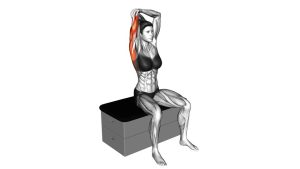
- Stand or sit tall: Keep your spine neutral, ribs stacked, and shoulders relaxed.
- Raise one arm overhead: Bring the working arm close to the side of your head.
- Bend the elbow: Let the hand travel down behind your head or upper back.
- Use the opposite hand: Place it on or just above the raised elbow.
- Stay stable: Keep the chest lifted naturally and avoid flaring the ribs.
Tip: If shoulder mobility is limited, perform the stretch seated or use a towel/strap for extra control without forcing range.
Execution (Step-by-Step)
- Lift the working arm overhead: Reach up while keeping the shoulder down away from the ear.
- Bend the elbow fully: Let the hand drop behind the head toward the upper back.
- Apply gentle pressure: Use the opposite hand to lightly guide the elbow inward and slightly back.
- Hold the stretch: Breathe slowly and keep the torso upright without leaning.
- Release with control: Ease out of the stretch slowly, then switch sides.
Pro Tips & Common Mistakes
- Keep the shoulder down: Don’t shrug toward the ear as you stretch.
- Don’t yank the elbow: Use light pressure only—aggressive pulling can irritate the shoulder.
- Avoid lower-back arching: Brace lightly through the core and keep the ribs from flaring.
- Think “length,” not force: Gentle breathing and posture usually make the stretch feel deeper.
- Use both sides evenly: Compare right and left mobility, but don’t force the tighter side.
- Best timing: This stretch fits well after upper-body workouts or during mobility sessions.
FAQ
What muscle does the overhead triceps stretch target most?
It mainly stretches the triceps brachii, especially the long head, because that portion is lengthened when the arm is overhead.
Should I feel this in my shoulder too?
A light stretch around the shoulder or lat can be normal, but you should not feel sharp pinching in the front or top of the shoulder joint.
Is this stretch good after triceps workouts?
Yes. It works well after pressing, dips, pushdowns, skull crushers, and overhead extension work when the upper arms feel tight.
How hard should I pull on the elbow?
Only gently. Stretching should feel mild to moderate. For most people, a controlled 4–6/10 intensity is enough.
Can beginners do this every day?
Usually yes, as long as the stretch is comfortable and not irritating the shoulder or neck. Keep it light and consistent.
Recommended Equipment (Optional)
- Yoga Strap / Stretching Strap — useful for assisted mobility work and controlled stretching
- Mobility Strap — helps improve range of motion without forcing shoulder position
- High-Density Foam Roller — useful for broader upper-body recovery and soft-tissue prep
- Resistance Bands Set — great for pairing mobility work with light shoulder activation
- Massage Ball / Peanut Massage Tool — can help with surrounding upper-back and shoulder tightness before stretching
Tip: Optional tools should make the stretch easier to control, not more aggressive. If a tool increases joint discomfort, stop using it.