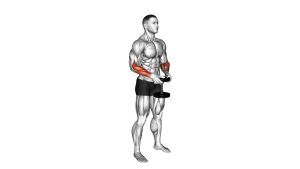
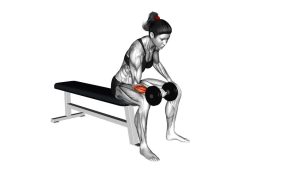
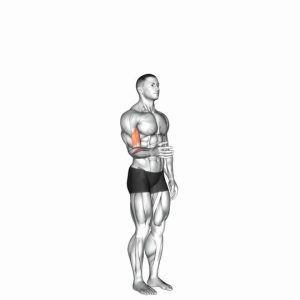
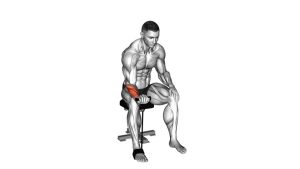
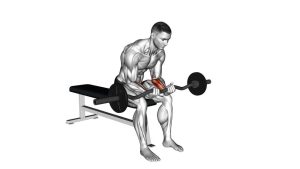
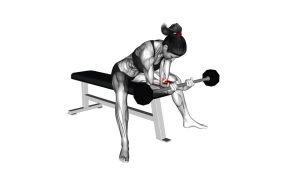
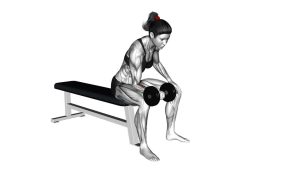
Dumbbell Lying Pronation on Floor: Forearm Form, Sets, Tips & FAQ
Learn the Dumbbell Lying Pronation on Floor to strengthen forearm pronators, improve wrist stability, and build better rotational control with step-by-step form, sets, tips, FAQs, and equipment.
Dumbbell Lying Pronation on Floor
This exercise is especially useful for building wrist control, improving forearm balance, and strengthening rotational stability for lifting, gripping, racket sports, climbing, martial arts, and general elbow resilience. Because the dumbbell creates leverage during rotation, use a light weight and focus on precision.
Quick Overview
| Body Part | Forearms |
|---|---|
| Primary Muscle | Forearm pronators — pronator teres and pronator quadratus |
| Secondary Muscle | Wrist flexors, wrist extensors, brachioradialis, grip stabilizers |
| Equipment | Light dumbbell and floor space; exercise mat optional |
| Difficulty | Beginner to Intermediate — easy to learn, but requires strict control |
Sets & Reps (By Goal)
- Forearm activation: 2 sets × 10–12 reps per side using a very light dumbbell
- Wrist stability: 3 sets × 8–12 reps per side with a 1–2 second pause at the end range
- Grip and forearm strength: 3–4 sets × 8–10 reps per side with slow eccentric control
- Rehab-style control: 2–3 sets × 6–10 reps per side using pain-free range only
- Warm-up before pulling/curling: 1–2 sets × 10 smooth reps per side
Progression rule: First improve control and range of motion. Then add a small amount of weight. Because the dumbbell acts like a lever, even a small increase can feel much harder.
Setup / Starting Position
- Lie on your side: Position your body comfortably on the floor with your legs stacked or slightly bent for balance.
- Support your head: Rest your head on your lower arm or on a small pillow so your neck stays relaxed.
- Place the working arm: Keep the working elbow close to your side, with the forearm positioned in front of your body.
- Grip the dumbbell: Hold the dumbbell in one hand with a neutral grip, thumb pointing upward at the start.
- Lock the upper arm: Keep the elbow and upper arm still so the movement comes from forearm rotation only.
- Start light: Use a dumbbell you can rotate slowly without wrist wobbling or shoulder movement.
Best starting cue: keep the elbow pinned and imagine the forearm rotating like a controlled dial.
Execution (Step-by-Step)
- Begin in neutral: Hold the dumbbell upright with your thumb facing upward and wrist straight.
- Brace gently: Keep your torso still, shoulder relaxed, and elbow fixed against your side.
- Rotate into pronation: Slowly turn the hand inward so the palm begins moving toward a downward-facing position.
- Control the dumbbell: Let the dumbbell tilt smoothly without dropping or swinging.
- Reach your comfortable end range: Stop when the forearm is fully pronated or when you reach a pain-free limit.
- Pause briefly: Hold for 1 second while keeping the wrist firm and the elbow still.
- Return slowly: Rotate back to the neutral starting position with full control.
- Repeat evenly: Complete all reps on one side, then switch arms and match the same tempo.
Pro Tips & Common Mistakes
Pro Tips
- Use a light dumbbell: This movement is about rotational control, not maximum load.
- Move slowly: A 2–3 second rotation down and 2–3 second return works well.
- Keep the wrist straight: Avoid bending the wrist forward, backward, or sideways during the rotation.
- Pause at the end range: A short hold increases control and strengthens the pronators more effectively.
- Train both sides: Match reps and tempo on each arm to prevent imbalance.
- Pair with supination work: Combine with dumbbell lying supination or hammer rotations for balanced forearm strength.
Common Mistakes
- Using too much weight: Heavy loading causes swinging and reduces pronator isolation.
- Moving from the shoulder: The upper arm should stay still; only the forearm should rotate.
- Letting the elbow drift: A floating elbow turns the exercise into a sloppy arm movement.
- Dropping the dumbbell: The lowering and return should both be controlled.
- Forcing range of motion: Rotate only through a comfortable, pain-free range.
- Rushing reps: Fast reps reduce tension and increase wrist irritation risk.
FAQ
What muscles does the Dumbbell Lying Pronation on Floor work?
It mainly targets the forearm pronators, especially the pronator teres and pronator quadratus. It also trains wrist stabilizers and grip control.
Is this exercise good for wrist stability?
Yes. Because the dumbbell challenges rotation, the wrist and forearm must stabilize throughout the movement. This makes it useful for improving control during gripping, pulling, curling, and sports movements.
How heavy should the dumbbell be?
Start very light. Many people only need a small dumbbell because the weight creates strong leverage during rotation. Choose a load that allows slow, clean reps without elbow movement or wrist pain.
Should my elbow move during the exercise?
No. Keep the elbow fixed close to your body. If the elbow moves, the shoulder and upper arm start helping, which reduces the focus on forearm pronation.
Can beginners do this exercise?
Yes, but beginners should use a very light dumbbell and a short range of motion at first. The movement should feel controlled, not strained.
Can this help with elbow or wrist discomfort?
It may help build forearm control when performed carefully, but it should not be used to push through pain. If you have persistent pain, nerve symptoms, or injury history, consult a qualified professional.
Recommended Equipment
- Adjustable Dumbbell Set — allows small weight changes for safe forearm progression
- Light Hex Dumbbells — stable, beginner-friendly dumbbells for wrist and forearm isolation work
- Forearm Wrist Roller — useful for building wrist flexor, extensor, and grip endurance
- Thick Exercise Mat — adds comfort when performing side-lying floor exercises
- Adjustable Grip Strengthener — complements pronation work by improving hand and grip strength
Tip: For this exercise, the most important item is a light dumbbell. Avoid using heavy weights until your rotation is smooth, controlled, and completely pain-free.