Band Side Bend: Proper Form, Oblique Benefits, Sets, Tips & FAQ
Learn the Band Side Bend for stronger obliques, better core control, and lateral trunk stability. Includes setup, steps, mistakes, FAQs, and equipment.
Band Side Bend
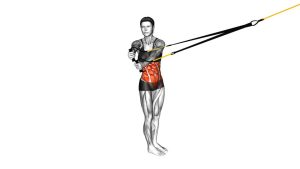
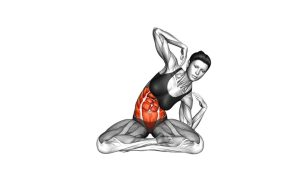
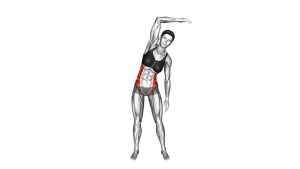
The Band Side Bend works best when the movement stays clean and deliberate. Stand tall, brace lightly, and bend from the trunk without twisting the shoulders or shifting the hips too much. The band should create smooth resistance from the side or from below, depending on the setup. During each rep, the obliques control the lowering phase and help pull the torso back to neutral.
This exercise can fit well into home workouts, warm-ups, core finishers, or accessory training after larger lifts. Because the resistance band becomes harder as it stretches, you should control the end range carefully. A smaller, cleaner side bend is usually better than a large bend with momentum.
Quick Overview
| Body Part | Core |
|---|---|
| Primary Muscle | Obliques |
| Secondary Muscle | Rectus abdominis, transverse abdominis, quadratus lumborum, spinal stabilizers |
| Equipment | Resistance band with low side anchor, foot anchor, or secure band attachment point |
| Difficulty | Beginner to Intermediate |
Sets & Reps (By Goal)
- Beginner technique: 2–3 sets × 10–12 reps per side with light band tension.
- Oblique strength: 3–4 sets × 10–15 reps per side with moderate resistance.
- Core endurance: 2–4 sets × 15–20 reps per side using a smooth, steady tempo.
- Warm-up activation: 1–2 sets × 8–10 controlled reps per side before core or lower-body work.
- Hypertrophy accessory work: 3–4 sets × 12–18 reps per side with a 1-second squeeze at the top.
Progression rule: Add reps first, then increase band tension. Do not progress if you lose control, rotate your torso, or feel the movement mostly in the lower back instead of the side waist.
Setup / Starting Position
- Anchor the band low: Attach the resistance band to a low anchor point beside you, or secure it under the foot on the same side as the working hand.
- Stand tall: Place your feet about hip-width apart. Keep your knees soft, ribs stacked, and pelvis neutral.
- Hold the band: Grip the band with the hand closest to the anchor. Let the arm hang down naturally without turning the exercise into an arm pull.
- Set your posture: Keep your chest open, shoulders relaxed, and head aligned with your spine.
- Brace lightly: Tighten your midsection as if preparing for a small push. Avoid holding your breath before the movement starts.
Your starting position should feel stable before the first rep. If the band pulls you off balance, use a lighter band or step closer to the anchor.
Execution (Step-by-Step)
- Begin from neutral: Stand upright with the band under light tension and your torso stacked over your hips.
- Bend to the side: Slowly lower your torso sideways toward the band side. Move through the waist, not by collapsing the shoulders.
- Control the stretch: Let the opposite side of your torso lengthen while keeping your hips steady and your chest facing forward.
- Pause briefly: Stop at a comfortable range where you still control the band and your spine.
- Return to upright: Use your obliques to pull your torso back to the starting position. Avoid snapping upward.
- Reset before the next rep: Stand tall again, breathe, and repeat with the same smooth path.
Pro Tips & Common Mistakes
Pro Tips
- Keep the tempo smooth: Lower for 2–3 seconds, pause briefly, then return with control.
- Think “side waist,” not “arm pull”: Your hand holds the band, but your obliques move the torso.
- Keep your chest forward: This helps reduce twisting and keeps the focus on lateral flexion.
- Use moderate range: A clean half-to-three-quarter range is better than a deep uncontrolled bend.
- Train both sides evenly: Perform the same reps and resistance on each side for balanced core development.
Common Mistakes
- Using momentum: Swinging the torso reduces oblique tension and increases stress on the lower back.
- Twisting the trunk: Rotation changes the exercise and makes it less effective for side-core control.
- Pulling with the arm: The arm should stay mostly passive while the torso performs the bend.
- Leaning forward: Keep the movement sideways. Forward bending shifts tension away from the target muscles.
- Overstretching at the bottom: Stop before your spine loses control or your hips start drifting too much.
FAQ
What muscles does the Band Side Bend work?
The Band Side Bend mainly targets the obliques. It also involves the transverse abdominis, rectus abdominis, quadratus lumborum, and smaller spinal stabilizers that help control side bending.
Is the Band Side Bend good for building obliques?
Yes. It is a useful exercise for strengthening the side abs when performed with control. For best results, use a moderate band, avoid momentum, and focus on a strong contraction when returning to upright.
Should I go very low during each side bend?
No. You do not need an extreme range of motion. Bend only as far as you can control without twisting, collapsing, or feeling pressure in the lower back.
Can beginners do the Band Side Bend?
Yes. Beginners can use a light resistance band and a smaller range of motion. The key is to learn the movement slowly before increasing band tension.
How do I make the Band Side Bend harder?
You can use a thicker band, step farther from the anchor, slow the lowering phase, add a pause at the bottom, or perform more reps. Increase only one difficulty factor at a time.
Why do I feel this exercise in my lower back?
You may be bending too far, using too much resistance, or losing your brace. Reduce the range, slow down, and focus on moving from the side waist instead of the lower spine.
Recommended Equipment
- Resistance Bands Set — gives multiple tension levels for beginner, intermediate, and advanced side bends.
- Door Anchor for Resistance Bands — helps create a stable low side anchor for smoother band positioning.
- Resistance Band Anchor Strap — useful for securing bands around sturdy posts, racks, or low anchor points.
- Exercise Mat — provides a stable non-slip surface for home core training.
- Resistance Band Handles — improves grip comfort when using tube-style bands for standing core exercises.
Choose equipment that lets you control the movement safely. A secure anchor and a light-to-moderate band are more useful than heavy resistance that pulls you out of position.