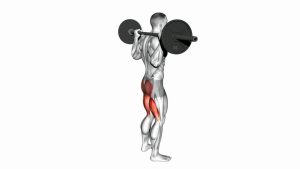
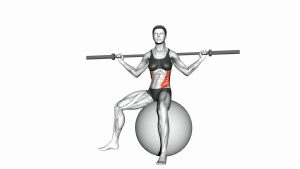
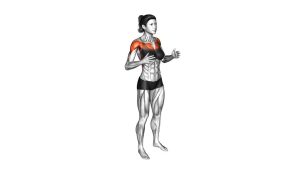
Lunge with Twist: Form, Benefits, Muscles Worked & Tips
Learn how to do the Lunge with Twist for stronger thighs, glutes, core control, balance, and mobility with step-by-step form tips.
Lunge with Twist
This exercise works best when every phase feels controlled. First, the forward step builds lower-body strength. Then, the twist challenges the obliques and teaches the torso to rotate while the hips and front knee stay stable. Because of this combination, the Lunge with Twist is useful for warm-ups, athletic movement prep, home workouts, leg conditioning, and full-body functional training.
Although the movement looks simple, it should not be rushed. A good repetition uses a tall chest, steady breathing, and a front knee that tracks in line with the toes. In addition, the twist should come mostly from the ribs and upper back, not from collapsing the lower back or swinging the arms.
Quick Overview
| Body Part | Quads, Core |
|---|---|
| Primary Muscle | Quadriceps, glutes, and obliques |
| Secondary Muscle | Hamstrings, calves, hip stabilizers, deep core, and upper-back rotators |
| Equipment | Bodyweight only; optional medicine ball, dumbbell, or yoga mat |
| Difficulty | Beginner to intermediate depending on depth, tempo, and added resistance |
Sets & Reps (By Goal)
- Warm-up and mobility: 1–2 sets × 6–8 reps per side using a slow, easy tempo.
- Lower-body strength: 3–4 sets × 8–12 reps per side with controlled depth and full balance.
- Core rotation control: 2–3 sets × 8–10 reps per side with a 1–2 second pause during the twist.
- Conditioning: 3–5 rounds × 30–45 seconds, alternating sides while keeping clean technique.
- Beginner practice: 2 sets × 5–6 reps per side with a shorter step and smaller rotation.
Progression rule: Increase control before adding load. Once your knee stays aligned and your torso rotates smoothly, you can use a light medicine ball, dumbbell, or slower tempo for more challenge.
Setup / Starting Position
- Stand tall: Place your feet about hip-width apart and keep your toes pointing forward.
- Brace lightly: Tighten your core enough to keep your ribs stacked over your pelvis.
- Set your shoulders: Keep your chest open, shoulders relaxed, and neck long.
- Choose arm position: Hold your hands together in front of your chest, extend your arms slightly, or hold a light ball.
- Look forward: Start with your head neutral and your eyes facing straight ahead.
For better balance, begin with bodyweight only. After that, add a light object only when the lunge and twist both stay smooth.
Execution (Step-by-Step)
- Step forward: Take a controlled step forward with one leg. Keep the stride long enough to create space, but not so long that your hips lose control.
- Lower into the lunge: Bend both knees and drop your hips down. Your front knee should track in line with your toes, while your rear knee moves toward the floor.
- Stabilize at the bottom: Pause briefly when the front thigh approaches parallel or when you reach a comfortable depth. Keep your chest tall and your core engaged.
- Rotate toward the front leg: Turn your ribs, shoulders, and chest toward the side of the front leg. Let your eyes follow the twist without yanking your neck.
- Keep the lower body steady: As you rotate, prevent the front knee from caving inward and avoid letting the hips swing open.
- Return to center: Rotate your torso back to the middle with control. Do not bounce or rush out of the bottom position.
- Push back to standing: Drive through the front foot and return to the starting position. Reset your posture before switching sides or repeating.
Pro Tips & Common Mistakes
Pro Tips
- Step, lower, then twist: Separate the movement into phases instead of twisting while falling into the lunge.
- Rotate from the ribs: Think about turning your chest, not cranking your lower back.
- Control the front knee: Keep it aligned with the second and third toes throughout the rep.
- Use a smooth tempo: A slower rep usually builds better balance, control, and muscle engagement.
- Keep the rear leg active: The back leg helps stabilize the pelvis and prevents you from collapsing forward.
- Breathe through the twist: Exhale gently as you rotate, then inhale as you return to center.
Common Mistakes
- Twisting too fast: Swinging the arms reduces control and may irritate the lower back.
- Letting the knee cave inward: This reduces hip stability and places extra stress on the knee.
- Leaning forward excessively: A small forward lean is normal, but the chest should not collapse over the thigh.
- Over-rotating the hips: The hips should stay mostly stable while the torso performs the twist.
- Taking too short of a step: A cramped stance can push the front knee too far forward and limit balance.
- Using load too early: Add weight only after bodyweight reps look clean and controlled.
FAQ
What muscles does the Lunge with Twist work?
The Lunge with Twist mainly works the quadriceps, glutes, and obliques. It also trains the hamstrings, calves, hip stabilizers, deep core, and upper-back muscles that assist rotation.
Is the Lunge with Twist good for beginners?
Yes, beginners can use it if they keep the step shorter, the twist smaller, and the tempo slow. However, anyone with poor balance should first master a basic bodyweight lunge before adding rotation.
Should I twist toward the front leg?
In the most common version, yes. You step forward, lower into the lunge, and rotate your torso toward the front leg. This pattern challenges oblique control while the front hip and knee stay stable.
Can I do this exercise with a medicine ball?
Yes. A light medicine ball can increase the core challenge. Still, the weight should not pull you out of alignment. Start light and keep the rotation controlled.
Why does my knee wobble during the twist?
Knee wobbling usually means your hip stabilizers, foot control, or balance need more practice. Reduce the depth, slow the twist, and focus on keeping the knee aligned over the toes.
Is this better as a warm-up or a workout exercise?
It can be both. As a warm-up, use lighter reps and focus on mobility. As a workout exercise, use more sets, slower tempo, or light resistance to build strength and control.
Recommended Equipment (Optional)
- Medicine Ball — adds light resistance and improves rotational core engagement.
- Exercise Mat — gives knee comfort and floor grip during bodyweight lunge practice.
- Light Dumbbells Set — useful for progressing the lunge once bodyweight form is stable.
- Resistance Bands Set — helpful for glute activation drills before lunges and lower-body workouts.
- Balance Pad — optional tool for advanced stability training after mastering the standard version.
Tip: Equipment should improve control, not hide poor form. If added weight makes your knee collapse or your torso swing, return to the bodyweight version.