Russian Twist with Medicine Ball: Form, Core Benefits, Sets & Tips
Learn the Russian Twist with Medicine Ball for stronger obliques, better core rotation, and trunk control. Includes form, sets, mistakes, FAQs, and equipment.
Russian Twist with Medicine Ball
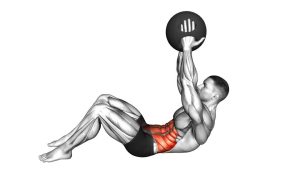
This exercise is useful for building rotational strength, improving trunk endurance, and adding load to basic oblique training. Because the body stays in a reclined seated position, the abs must work continuously to prevent the spine from collapsing backward. The medicine ball also adds resistance, which makes each side-to-side turn more demanding than a bodyweight twist.
For best results, perform every repetition with smooth control. Keep the ball close enough to manage, rotate from the torso, and avoid bouncing the weight from side to side. A clean Russian Twist should look stable, athletic, and deliberate. The hips should not rock excessively, and the lower back should not round under fatigue.
Quick Overview
| Body Part | Core |
|---|---|
| Primary Muscle | Obliques |
| Secondary Muscle | Rectus abdominis, transverse abdominis, hip flexors, spinal stabilizers |
| Equipment | Medicine ball |
| Difficulty | Beginner to intermediate, depending on ball weight and foot position |
Sets & Reps (By Goal)
- Core endurance: 2–4 sets × 16–30 total twists with light to moderate weight.
- Oblique strength: 3–4 sets × 10–20 total twists with a heavier medicine ball and slower tempo.
- Beginner control: 2–3 sets × 8–16 total twists with feet on the floor and a light ball.
- Conditioning finisher: 2–5 rounds × 20–40 seconds with controlled speed and short rest.
Progression rule: First improve control and posture. Then increase reps, extend time under tension, lift the feet, or use a heavier medicine ball. Do not increase load if your lower back starts rounding.
Setup / Starting Position
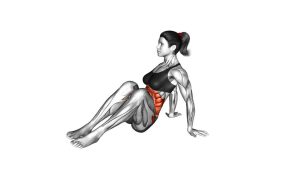
- Sit on the floor: Bend your knees and place your feet in front of you. Keep the heels either lightly on the floor or slightly elevated.
- Hold the medicine ball: Grip the ball with both hands and keep it close to the center of your chest.
- Lean back slightly: Recline your torso until your abs engage, but do not collapse into your lower back.
- Lift your chest: Keep the spine long, shoulders down, and neck neutral.
- Brace your core: Tighten your midsection as if preparing for a light punch to the stomach.
If you are new to the exercise, keep your feet on the ground. This creates more stability and helps you learn the rotation pattern before adding extra difficulty.
Execution (Step-by-Step)
- Start at the center: Hold the medicine ball in front of your torso with elbows slightly bent.
- Rotate to one side: Turn your shoulders, chest, and ball together toward one hip.
- Control the end range: Bring the ball near the floor beside your hip without slamming or bouncing it.
- Return through center: Rotate back smoothly while keeping your abs tight and your spine steady.
- Twist to the opposite side: Repeat the same movement on the other side with equal control.
- Continue alternating: Move side to side at a steady rhythm while maintaining posture and breathing.
Pro Tips & Common Mistakes
- Rotate from your rib cage: Let the shoulders and chest turn together instead of waving the ball with your arms.
- Keep the ball controlled: A medicine ball should add resistance, not momentum.
- Avoid rounding your lower back: Stay tall through the spine even while leaning back.
- Use a manageable load: A heavy ball can make the exercise sloppy if your core cannot control it.
- Do not rush the reps: Fast twisting often reduces tension and increases stress on the lower back.
- Control your legs: Feet should not kick, swing, or drift side to side during the movement.
- Breathe with rhythm: Exhale as you rotate, then inhale as you pass through the center.
- Stop before form fails: Quality reps are more valuable than high-volume twisting with poor posture.
FAQ
What muscles does the Russian Twist with Medicine Ball work?
The exercise mainly targets the obliques. It also trains the rectus abdominis, transverse abdominis, hip flexors, and spinal stabilizers because the torso must stay braced while rotating.
Should my feet stay on the floor or lifted?
Beginners should usually keep the feet on the floor. Lifting the feet increases the balance challenge and makes the hip flexors work harder. Choose the version that lets you keep clean posture.
Is one repetition counted as one side or both sides?
You can count it either way, but be consistent. A common method is to count each side touch as one rep. Another method counts right plus left as one full repetition.
Why does my lower back hurt during Russian Twists?
Lower-back discomfort often happens when the spine rounds, the ball is too heavy, or the torso leans too far back. Reduce the load, keep your chest lifted, place your feet down, and shorten the range of motion.
Can beginners do Russian Twists with a medicine ball?
Yes, but beginners should use a light medicine ball and keep their feet grounded. Once the movement feels stable, they can progress by lifting the feet or increasing the weight gradually.
Recommended Equipment
- Medicine Ball — the main tool for adding resistance to Russian Twists.
- Soft Medicine Ball — easier to grip and more comfortable for floor-based core exercises.
- Thick Exercise Mat — improves comfort under the hips and lower back during seated core work.
- Slam Ball — a durable weighted ball option for intense core and conditioning workouts.
- Adjustable Weighted Medicine Ball — useful for progressing resistance without buying multiple ball sizes.
Tip: Choose a ball that allows clean rotation. If the ball pulls your shoulders forward or causes your lower back to round, it is too heavy for this exercise.