Half Wipers Bent-Leg: Core Form, Sets, Tips & FAQ
Learn Half Wipers bent-leg form for stronger abs, obliques, and rotational core control. Includes setup, steps, sets, mistakes, FAQs, and equipment.
Half Wipers (Bent-Leg)
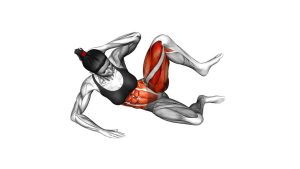
Half Wipers (Bent-Leg) are best used when you want to build rotational core strength without jumping straight into a very demanding straight-leg variation. The bent-knee position reduces stress on the lower back and allows better control through the hips and trunk. Because the legs move side to side, the obliques must work hard to guide the motion, slow the descent, and bring the knees back to center.
This exercise should feel like a controlled abdominal movement, not a loose hip swing. Keep the ribs down, brace gently, and move only as far as you can without your shoulders lifting or your lower back arching aggressively. A smaller range with clean control is more useful than a large range performed with momentum.
Quick Overview
| Body Part | Core |
|---|---|
| Primary Muscle | Obliques and rectus abdominis |
| Secondary Muscle | Lower abs, hip flexors, transverse abdominis, spinal stabilizers |
| Equipment | Exercise mat only |
| Difficulty | Beginner to intermediate |
Sets & Reps (By Goal)
- Core control: 2–3 sets × 6–8 reps per side with a slow tempo.
- Oblique strength: 3–4 sets × 8–12 reps per side with full control.
- Beginner practice: 2 sets × 5–6 reps per side using a short range of motion.
- Core finisher: 2–3 sets × 30–45 seconds, alternating sides smoothly.
- Warm-up activation: 1–2 sets × 6–10 total reps before heavier core or lower-body training.
Progression rule: First improve control, then increase range. After that, add more reps or slow the lowering phase. Move to straight-leg wipers only when the bent-leg version feels stable and pain-free.
Setup / Starting Position
- Lie on your back: Use a mat so your spine and shoulders stay comfortable throughout the movement.
- Open the arms: Extend both arms out to the sides in a “T” shape. Press the palms lightly into the floor for balance.
- Lift the legs: Bring both knees above the hips and bend them to about 90 degrees.
- Set the trunk: Keep the ribs down, brace the abs lightly, and avoid letting the lower back over-arch.
- Anchor the shoulders: Both shoulders should remain connected to the floor before the legs begin moving.
- Control the head position: Keep the head relaxed and the neck neutral. Avoid looking around during the rotation.
A strong starting position makes the exercise safer. If the knees are too far away from the body, the movement becomes harder. Keep them closer at first, especially while learning the pattern.
Execution (Step-by-Step)
- Brace before moving: Take a controlled breath, tighten the abs slightly, and keep the knees bent above the hips.
- Lower the knees to one side: Rotate the hips slowly and allow both knees to travel together toward the floor.
- Keep the shoulders down: Do not allow the opposite shoulder to peel off the mat as the knees move sideways.
- Stop before control breaks: Lower only as far as you can while keeping the ribs controlled and the back comfortable.
- Pause briefly: Hold the bottom position for a short moment without relaxing the core.
- Return to center: Use the obliques and abs to pull the knees back to the middle. Avoid kicking or swinging.
- Repeat to the other side: Move across the center with control, then rotate the knees toward the opposite side.
- Complete the rep smoothly: One controlled movement to each side counts as a balanced repetition pattern.
Pro Tips & Common Mistakes
Pro Tips
- Move slowly: A slow lowering phase makes the abs and obliques work harder than a fast drop.
- Use the arms for support: Press the arms gently into the floor, but do not rely on them to throw the legs back up.
- Keep the knees together: This keeps the movement organized and improves rotational control.
- Control the center: Do not rush through the middle. Pause slightly if you feel momentum building.
- Shorten the range when needed: Stopping halfway down is fine if it keeps your lower back safe.
- Exhale during the return: Breathing out as the knees come back to center can help you brace better.
Common Mistakes
- Letting the legs drop: Dropping quickly reduces muscle tension and may irritate the lower back.
- Lifting the shoulders: When the shoulders leave the floor, the rotation becomes less controlled.
- Arching the lower back: Excessive arching usually means the range is too large or the brace is too weak.
- Swinging through the center: Momentum makes the exercise easier but less effective.
- Straightening the legs too soon: Straight legs increase difficulty significantly. Master the bent-leg version first.
- Turning the exercise into a stretch: The main goal is active core control, not forcing the knees to the floor.
FAQ
What muscles do Half Wipers (Bent-Leg) work?
Half Wipers (Bent-Leg) mainly work the obliques and rectus abdominis. The lower abs, hip flexors, transverse abdominis, and spinal stabilizers also help control the movement.
Are bent-leg half wipers good for beginners?
Yes. The bent-leg version is more beginner-friendly than straight-leg windshield wipers because the shorter lever makes the movement easier to control. Beginners should use a smaller range and focus on slow, clean reps.
Should my knees touch the floor?
Not necessarily. Your knees should only lower as far as your core can control. Stopping above the floor is better than forcing extra range while your shoulders lift or your lower back twists aggressively.
Why do I feel this in my lower back?
Lower-back discomfort often happens when the range is too large, the legs drop too fast, or the abs lose tension. Bring the knees closer to your body, move slower, and stop before your back feels strained.
How can I make Half Wipers easier?
Keep the knees closer to the chest, reduce how far you lower the legs, and pause at the center after each rep. You can also place the feet down briefly between sides if needed.
How can I make Half Wipers harder?
Slow the lowering phase, pause near the bottom, move through a larger controlled range, or progress toward a straighter-leg windshield wiper variation. Only increase difficulty when your shoulders stay anchored.
Recommended Equipment
- Exercise Mat — adds comfort and grip for floor-based core exercises.
- Thick Yoga Mat — useful if your lower back or shoulders need extra cushioning.
- Mini Pilates Ball — can be held between the knees to improve leg control and alignment.
- Adjustable Ankle Weights — optional advanced progression after bodyweight control is mastered.
- Core Sliders — helpful for adding variety to core training and oblique-focused workouts.
Tip: Equipment is optional for this exercise. A comfortable mat is usually enough, while extra resistance should only be added after your reps are smooth and controlled.