Kettlebell Pistol Squat: Form, Muscles, Sets, Tips & FAQ
Learn the kettlebell pistol squat for single-leg strength, balance, mobility, and quad control with step-by-step form, sets, tips, FAQs, and gear.
Kettlebell Pistol Squat
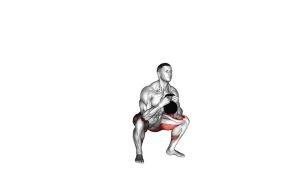
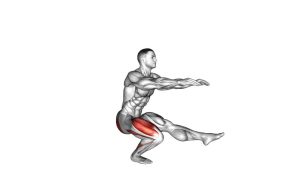
This exercise requires strong lower-body control, clean balance, and excellent joint positioning. The working leg must manage deep knee flexion, hip control, and ankle dorsiflexion while the upper body stays braced around the kettlebell. The movement should feel controlled through the entire range, especially at the bottom position where balance and strength are most challenged.
Quick Overview
| Body Part | Legs |
|---|---|
| Primary Muscle | Quadriceps |
| Secondary Muscle | Glutes, hamstrings, calves, hip flexors, core, ankle stabilizers |
| Equipment | Kettlebell |
| Difficulty | Advanced |
Sets & Reps (By Goal)
- Strength: 3–5 sets × 3–6 reps per leg using a controlled tempo and full rest.
- Balance and control: 3–4 sets × 5–8 reps per leg with a slow descent and clean lockout.
- Mobility practice: 2–3 sets × 3–5 slow reps per leg with light loading or bodyweight assistance.
- Skill development: 4–6 sets × 1–3 high-quality reps per leg, focusing on perfect mechanics.
Progression rule: Improve control before increasing kettlebell weight. A smooth bodyweight pistol squat should usually come before a heavy kettlebell pistol squat.
Setup / Starting Position
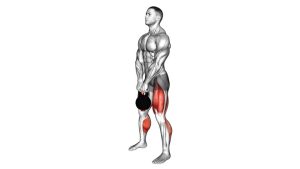
- Hold the kettlebell: Grip the kettlebell by the horns or handle and keep it close to the chest.
- Stand tall on one leg: Place your full foot on the floor with the heel, big toe, and little toe grounded.
- Lift the free leg: Extend the non-working leg forward with the toes slightly up.
- Brace the core: Keep the ribs controlled, chest proud, and shoulders relaxed around the kettlebell.
- Set the eyes forward: Look at one fixed point to improve balance before starting the descent.
Tip: The kettlebell should stay close enough to feel stable but slightly forward enough to help counterbalance the squat.
Execution (Step-by-Step)
- Start the descent: Bend the working knee and hip while keeping the planted heel firmly on the floor.
- Reach the free leg forward: Keep the non-working leg lifted in front of the body as you lower.
- Use the kettlebell as balance: Keep the weight close to the chest but allow it to help counter the backward hip shift.
- Control the bottom: Lower until your hip reaches your available depth without rounding hard or falling backward.
- Drive through the foot: Push through the mid-foot and heel to stand back up.
- Finish tall: Fully extend the working leg, stabilize your balance, and reset before the next rep.
Pro Tips & Common Mistakes
- Keep the heel down: If the heel lifts, reduce depth or improve ankle mobility before loading heavier.
- Control the knee path: The knee can travel forward, but it should track in line with the toes.
- Do not drop into the bottom: Lower under control to protect the knee and improve strength.
- Keep the kettlebell close: Letting the weight drift too far forward can pull you out of position.
- Avoid twisting: Keep hips and shoulders square instead of rotating toward the free leg.
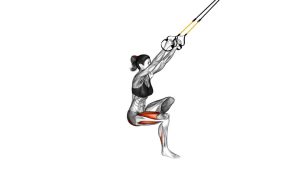
- Use progressions: Box pistol squats, TRX-assisted pistol squats, and counterbalance bodyweight pistols can help build control.
- Train both sides evenly: Start with the weaker leg and match reps on the stronger side.
FAQ
Is the kettlebell pistol squat good for building legs?
Yes. The kettlebell pistol squat is excellent for building single-leg strength, especially in the quadriceps. It also trains the glutes, calves, core, balance, and mobility.
Why hold the kettlebell in front of the chest?
Holding the kettlebell in front creates a counterbalance. This helps many lifters stay upright and control the bottom position more easily than a bodyweight-only pistol squat.
Is this exercise beginner-friendly?
No. The kettlebell pistol squat is usually an advanced exercise. Beginners should first learn split squats, step-ups, goblet squats, assisted pistol squats, and box pistol squats.
Should my knee go past my toes?
In a pistol squat, the knee often travels past the toes because the movement requires deep ankle dorsiflexion. This is normal when the heel stays grounded and the knee tracks in line with the foot.
What if I fall backward at the bottom?
Falling backward usually means you need more ankle mobility, better counterbalance, or a higher target. Practice to a box first and slowly lower the box height as your control improves.
Recommended Equipment
- Cast Iron Kettlebell — the main loading tool for kettlebell pistol squats and other lower-body exercises
- Competition Kettlebell — consistent size across weights, useful for skill practice and balanced goblet holds
- Squat Slant Board — helps support ankle positioning during squat mobility drills and regressions
- Plyometric Box — useful for box pistol squat progressions and controlled depth practice
- Resistance Bands — useful for assisted pistol squat progressions, mobility drills, and warm-ups
Tip: Choose a kettlebell weight that allows clean balance and smooth depth. If form breaks, use a lighter bell or return to assisted progressions.