Sled Lying Squat: Proper Form, Muscles Worked, Sets, Tips & FAQ
Learn the Sled Lying Squat for stronger quads, glutes, and controlled leg drive. Includes setup, execution, sets, mistakes, FAQs, and equipment.
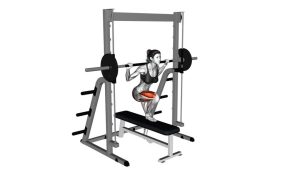
Sled Lying Squat
This exercise is useful when you want to build leg strength with less balance demand than a free-weight squat. Because the machine guides the movement path, you can focus on controlled knee flexion, strong foot pressure, and clean lower-body drive. It works best when the tempo is smooth, the hips stay stable, and the knees do not collapse inward.
Quick Overview
| Body Part | Legs |
|---|---|
| Primary Muscle | Quadriceps |
| Secondary Muscle | Glutes, hamstrings, calves, adductors |
| Equipment | Sled machine / lying leg press machine |
| Difficulty | Beginner to Intermediate |
Sets & Reps (By Goal)
- Muscle growth: 3–5 sets × 8–15 reps with controlled lowering and strong pressing.
- Strength: 4–6 sets × 4–8 reps using heavier loading while keeping full control.
- Beginner technique: 2–3 sets × 10–12 reps with light to moderate weight.
- Quad emphasis: 3–4 sets × 10–15 reps with a slightly lower foot position if comfortable.
- Glute emphasis: 3–4 sets × 8–12 reps with a slightly higher foot position and controlled depth.
Progression rule: Add weight only when every rep stays smooth, the heels remain planted, and the knees track cleanly without collapsing inward.
Setup / Starting Position
- Lie back on the machine: Position your back, hips, and head firmly against the support pad.
- Place your feet on the platform: Use a shoulder-width stance with toes slightly turned out.
- Set your foot pressure: Keep pressure through the mid-foot and heel instead of pushing only through the toes.
- Grip the handles: Hold the side handles to keep your torso stable during the movement.
- Unlock the sled safely: Make sure the machine is secure before starting your first rep.
- Start with soft knees: Avoid beginning from a hard knee lockout.
Execution (Step-by-Step)
- Brace lightly: Keep your core engaged and your back supported against the pad.
- Lower the sled: Bend your knees and hips as the platform moves toward your body.
- Control the bottom position: Stop when you reach a deep but safe range without your hips rolling or lower back lifting.
- Drive through the platform: Push through the mid-foot and heel to move the sled away.
- Extend the legs: Straighten the knees and hips together without snapping into lockout.
- Repeat with rhythm: Keep each rep smooth, controlled, and consistent.
Pro Tips & Common Mistakes
- Do not bounce at the bottom: Pause briefly or reverse smoothly to protect the knees and hips.
- Avoid locking the knees hard: Stop just short of aggressive lockout to keep tension on the legs.
- Keep heels planted: Lifting the heels can shift stress forward and reduce stability.
- Control the descent: A slow eccentric phase improves muscle tension and technique.
- Use the right depth: Deeper is only better if your pelvis and lower back stay stable.
- Match stance to your goal: Lower foot placement can emphasize quads; higher placement can involve more glutes and hamstrings.
- Do not overload too soon: Heavy weight with short, uncontrolled reps reduces the value of the exercise.
FAQ
What muscles does the Sled Lying Squat work?
The Sled Lying Squat primarily works the quadriceps. It also trains the glutes, hamstrings, calves, and inner thigh muscles depending on stance and depth.
Is the Sled Lying Squat the same as a leg press?
It is very similar to a lying leg press because both use a supported machine pressing pattern. The exact name can vary by machine design, but the movement still follows a squat-like lower-body press.
Should I fully lock my knees at the top?
No. You should extend your legs strongly but avoid snapping or forcing the knees into a hard lockout. Keeping a slight bend helps maintain muscle tension and reduces joint stress.
How low should I go?
Lower the sled until your knees bend deeply while your heels stay planted and your hips remain stable. Stop before your lower back rounds or your pelvis lifts from the pad.
Is this exercise good for beginners?
Yes. It can be beginner-friendly because the machine provides support and balance. Beginners should start light, learn the movement path, and avoid using maximum depth or heavy loading too early.
Recommended Equipment
- Weightlifting Shoes — help create stable foot pressure during heavy sled or leg press work.
- Knee Sleeves — provide warmth and light support during lower-body training.
- Gym Training Gloves — improve grip comfort when holding machine handles.
- Resistance Bands — useful for warm-ups, glute activation, and knee-tracking drills.
- Foam Roller — helpful for warming up quads, glutes, and calves before leg sessions.