Dumbbell Rear Lunge: Proper Form, Muscles Worked, Sets & Tips
Learn the Dumbbell Rear Lunge for stronger legs, glutes, balance, and control. Step-by-step form, sets, mistakes, FAQs, and equipment tips.
Dumbbell Rear Lunge
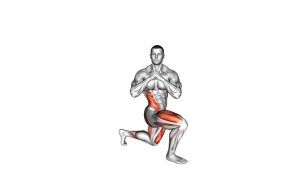
The Dumbbell Rear Lunge is valuable because it builds single-leg strength while placing less forward stress on the knee than many forward lunge variations. Since the working leg remains planted in front, you can focus on pushing through the front foot, controlling the descent, and keeping your hips level. This makes the exercise useful for leg hypertrophy, glute development, athletic balance, and general lower-body strength.
Quick Overview
| Body Part | Legs |
|---|---|
| Primary Muscle | Quadriceps and gluteus maximus |
| Secondary Muscle | Hamstrings, calves, glute medius, adductors, and core stabilizers |
| Equipment | Pair of dumbbells |
| Difficulty | Intermediate because it requires balance, coordination, and controlled single-leg strength |
Sets & Reps (By Goal)
- Beginner technique practice: 2–3 sets × 8–10 reps per leg using light dumbbells or bodyweight
- Muscle growth: 3–4 sets × 8–12 reps per leg with controlled tempo and moderate load
- Strength focus: 4–5 sets × 5–8 reps per leg with heavier dumbbells and full rest
- Balance and control: 2–4 sets × 10–14 reps per leg with slow lowering and clean posture
- Conditioning finisher: 2–3 sets × 12–16 reps per leg using lighter weight and steady rhythm
Progression rule: Add reps first, then increase dumbbell weight. Do not increase load if your front knee collapses inward, your torso twists, or your back foot slams into the floor.
Setup / Starting Position
- Stand tall: Begin with your feet about hip-width apart and your torso upright.
- Hold the dumbbells: Keep one dumbbell in each hand with a neutral grip and arms hanging naturally at your sides.
- Set your shoulders: Keep the shoulders relaxed, slightly back, and away from your ears.
- Brace your core: Create light abdominal tension so your ribs, pelvis, and spine stay stacked.
- Look forward: Keep your head neutral and eyes focused on a fixed point to improve balance.
- Prepare the front foot: Keep the working foot flat and connected to the floor before stepping back.
Setup tip: Your front leg is the main working leg. The rear leg helps with balance, but it should not take over the exercise.
Execution (Step-by-Step)
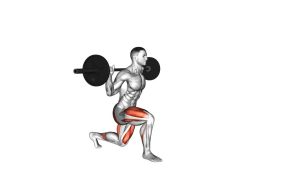
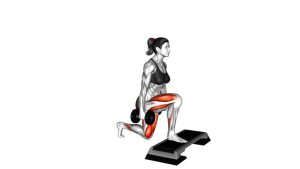
- Step one leg backward: Move one foot behind you with control, landing on the ball of the rear foot.
- Lower into the lunge: Bend both knees as the rear knee moves toward the floor.
- Keep the front foot grounded: Maintain pressure through the front heel and midfoot instead of shifting onto the toes.
- Control knee alignment: Let the front knee track in the same direction as the toes without collapsing inward.
- Stay tall: Keep your chest lifted and torso stable. A slight natural forward lean is acceptable, but avoid rounding the back.
- Reach the bottom position: Stop when the rear knee is close to the floor and the front leg is working hard without pain.
- Drive back up: Push through the front foot to extend the hip and knee.
- Return to standing: Bring the rear foot forward to meet the front foot and reset your posture before the next rep.
Pro Tips & Common Mistakes
- Push through the front leg: The front leg should perform most of the work, especially during the return to standing.
- Do not step too narrow: A very narrow stance makes balance harder and may cause hip twisting.
- Avoid knee collapse: Keep the front knee tracking over the middle toes.
- Control the descent: Lower slowly instead of dropping into the bottom position.
- Keep dumbbells quiet: Swinging weights reduce control and increase unwanted momentum.
- Do not push mainly from the back foot: The rear foot should assist balance, not drive the whole movement.
- Adjust step length: A shorter step usually feels more quad-focused, while a slightly longer step can increase glute involvement.
- Keep the torso organized: Avoid excessive arching, rounding, or side bending.
- Use a smooth reset: Stand fully between reps instead of rushing into the next step.
FAQ
What muscles does the Dumbbell Rear Lunge work?
The Dumbbell Rear Lunge primarily works the quadriceps and gluteus maximus. It also trains the hamstrings, calves, glute medius, adductors, and core because the body must stabilize during a single-leg pattern.
Is the Dumbbell Rear Lunge the same as the Dumbbell Reverse Lunge?
Yes. The Dumbbell Rear Lunge and Dumbbell Reverse Lunge usually describe the same exercise. Both involve stepping backward into a lunge while holding dumbbells.
Is the rear lunge better than the forward lunge?
It depends on the goal. The rear lunge is often easier to control and may feel more comfortable on the knees because the front foot stays planted. The forward lunge can create more braking demand and may be more challenging for some lifters.
Should my torso stay completely upright?
Your torso should stay controlled and mostly upright. A slight forward lean can be normal, especially if you are emphasizing the glutes. However, avoid collapsing forward or rounding the lower back.
Why do I lose balance during Dumbbell Rear Lunges?
Balance issues usually come from stepping too narrow, rushing the movement, using too much weight, or not bracing the core. Start with bodyweight or lighter dumbbells and use a slightly wider stance.
How heavy should I go on Dumbbell Rear Lunges?
Use a load that allows clean knee tracking, stable posture, and full control. If your dumbbells swing, your knee caves inward, or you cannot return smoothly to standing, the weight is too heavy.
Recommended Equipment
- Adjustable Dumbbells — ideal for progressing Dumbbell Rear Lunges without needing many separate pairs
- Rubber Hex Dumbbells — stable, durable dumbbells that work well for lower-body strength training
- Non-Slip Exercise Mat — helps improve foot grip and comfort during home workouts
- Weightlifting Gloves — useful for grip comfort when holding heavier dumbbells
- Resistance Bands Set — helpful for glute activation drills before lunges and lower-body sessions
Tip: Choose equipment that supports control first. Dumbbell Rear Lunges are most effective when every rep stays balanced, smooth, and stable.