Side Lunge Stretch: Form, Benefits, Sets, Tips & FAQ
Learn the Side Lunge Stretch to improve inner thigh mobility, hip control, and lateral flexibility with proper form, sets, tips, FAQs, and equipment.
Side Lunge Stretch
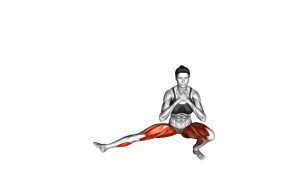
This exercise is commonly used in warm-ups, mobility sessions, athletic preparation, and flexibility routines. It trains the body to move laterally while keeping the hips, knees, and ankles coordinated. Unlike a heavy side lunge, this variation is performed with a slower tempo and a stretch-focused intention.
Quick Overview
| Body Part | Legs |
|---|---|
| Primary Muscle | Adductors / Inner thigh muscles |
| Secondary Muscle | Glutes, quadriceps, hamstrings, hip stabilizers, calves |
| Equipment | No equipment required |
| Difficulty | Beginner to intermediate, depending on hip mobility |
Sets & Reps (By Goal)
- General mobility: 2–3 sets × 8–12 reps per side with a smooth tempo.
- Warm-up preparation: 1–2 sets × 6–10 reps per side before lower-body training.
- Flexibility focus: 2–4 sets × 20–30 seconds of controlled side-to-side movement.
- Beginner control: 1–2 sets × 5–8 reps per side using a shorter range of motion.
Progression rule: Increase range gradually only when you can keep the bent-leg heel grounded, the straight leg long, and the torso controlled.
Setup / Starting Position
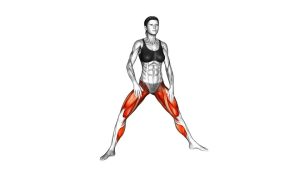
- Stand wide: Place your feet wider than shoulder-width with toes slightly turned outward.
- Brace lightly: Keep your core active enough to support your spine without becoming stiff.
- Keep the chest lifted: Maintain a neutral spine and avoid rounding your back before you move.
- Set your feet flat: Keep both heels on the floor so the stretch stays stable and controlled.
- Prepare to shift: Start with your weight centered before moving into one side.
Execution (Step-by-Step)
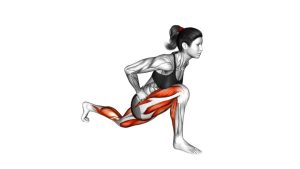
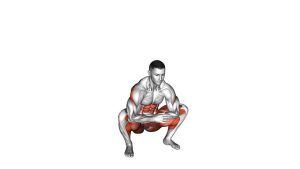
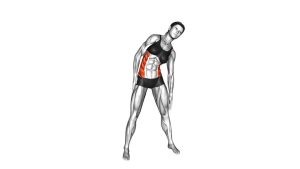
- Shift your hips to one side: Bend one knee as your hips travel back and slightly down.
- Keep the opposite leg straight: Let the straight-leg inner thigh lengthen without locking aggressively.
- Maintain foot contact: Keep the bent-leg heel grounded and the straight-leg foot flat if your mobility allows.
- Control the torso: Lean slightly forward if needed, but keep your spine long and your chest open.
- Pause briefly: Hold the stretch for 1–2 seconds while breathing calmly.
- Return to center: Push through the bent-leg foot and shift your hips back to the starting position.
- Repeat to the other side: Move smoothly side to side without bouncing or rushing.
Pro Tips & Common Mistakes
- Move from the hips: Think about sitting the hips back instead of driving the knee forward first.
- Do not bounce: Use a smooth controlled rhythm to protect the groin and hip joints.
- Keep the straight leg active: The straight leg should lengthen, not collapse or twist.
- Watch knee alignment: Avoid letting the bent knee cave inward during the shift.
- Use a smaller range if needed: A clean shallow side lunge stretch is better than a deep forced position.
- Breathe through the stretch: Exhale gently as you shift into the deeper range.
- Avoid rounding the back: A slight forward lean is normal, but the spine should stay controlled.
FAQ
What muscles does the Side Lunge Stretch target?
The Side Lunge Stretch mainly targets the adductors, also known as the inner thigh muscles. It also involves the glutes, quadriceps, hamstrings, calves, and hip stabilizers for balance and control.
Is the Side Lunge Stretch good for hip mobility?
Yes. It is an effective hip mobility drill because it trains lateral movement, adductor length, and hip control at the same time.
Should I keep both feet flat on the floor?
Ideally, yes. Keeping both feet flat improves stability and allows the stretch to stay controlled. If your mobility is limited, reduce the range instead of forcing the foot position.
Is this exercise the same as a side lunge?
It is similar, but the intention is different. A regular side lunge is often used for strength, while the Side Lunge Stretch is performed more slowly to improve mobility and flexibility.
Can beginners do the Side Lunge Stretch?
Yes. Beginners can perform it with a shorter range of motion and slower tempo. Over time, mobility and control can improve naturally.
When should I do this exercise?
It works well before leg workouts, athletic training, running, squats, lunges, or as part of a dedicated mobility routine.
Recommended Equipment (Optional)
- Exercise Mat — provides a stable surface for mobility drills and warm-ups.
- Yoga Blocks — useful for support if your hips or hamstrings feel tight.
- Stretching Strap — helpful for lower-body flexibility work after training.
- Foam Roller — useful for preparing the adductors, quads, and hips before stretching.
- Mobility Resistance Bands — helpful for hip activation drills and lower-body warm-up routines.
Tip: Equipment is optional. The most important factor is controlled movement, comfortable range, and consistent practice.