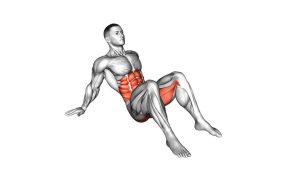
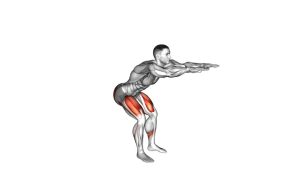
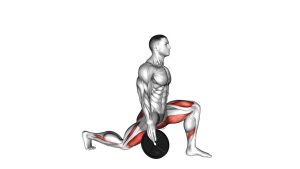
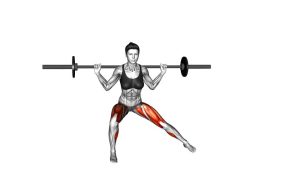
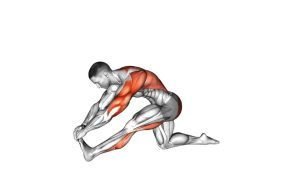
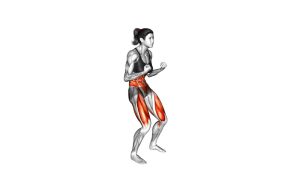
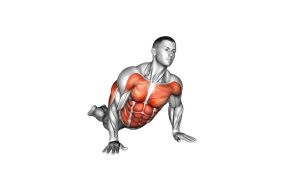
Squat Mobility Twist: Deep Squat Rotation Form, Benefits, Tips & FAQ
Learn the Squat Mobility Twist for hip mobility, deep squat control, and thoracic rotation with step-by-step form, sets, tips, FAQs, and gear.
Squat Mobility Twist
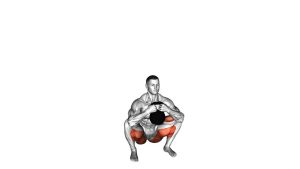
This exercise works best when the squat depth stays stable and the rotation stays calm. Instead of bouncing or forcing the range, lower into a controlled deep squat, open one side of the chest, then return to center before twisting to the opposite side. As a result, the drill becomes useful as a warm-up before squats, athletic training, or lower-body mobility sessions.
Quick Overview
| Body Part | Legs |
|---|---|
| Primary Muscle | Glutes, quadriceps, hip adductors, and hip stabilizers |
| Secondary Muscle | Core, obliques, thoracic spine stabilizers, calves, and upper back |
| Equipment | No equipment required |
| Difficulty | Beginner to intermediate, depending on squat depth and hip mobility |
Sets & Reps (By Goal)
- Mobility warm-up: 2–3 sets × 4–6 rotations per side with slow control.
- Deep squat practice: 2–4 sets × 20–40 seconds total time in the bottom position.
- Thoracic rotation focus: 2–3 sets × 5–8 reps per side with a brief pause at the top.
- Beginner mobility reset: 1–2 sets × 3–5 reps per side using a comfortable squat depth.
Progression rule: First improve control and breathing. Then, gradually increase squat depth, pause time, or the smoothness of each rotation before adding more reps.
Setup / Starting Position
- Stand tall: Place your feet around shoulder-width apart or slightly wider if your hips need more space.
- Brace lightly: Keep your torso upright, ribs controlled, and spine long before you descend.
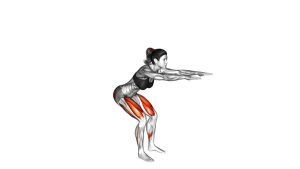
- Lower into a squat: Bend your hips and knees together until you reach a deep but manageable squat position.
- Set the elbows: Bring your elbows toward the inside of your knees so they can help you maintain position.
- Find balance: Keep the heels grounded if possible and avoid collapsing forward through the chest.
If your heels lift or your back rounds heavily, use a slightly wider stance or reduce the depth until the position feels more stable.
Execution (Step-by-Step)
- Begin in the deep squat: Settle into the bottom position with both elbows near the inner knees.
- Anchor one side: Keep one elbow lightly pressing against the inside of the knee for support.
- Rotate upward: Lift the opposite arm toward the ceiling while turning your chest in the same direction.
- Follow the hand: Let your eyes follow the raised hand if it feels natural and comfortable.
- Pause briefly: Hold the open position for 1–2 seconds while keeping the squat stable.
- Return to center: Lower the arm and rotate the chest back to the middle without rushing.
- Switch sides: Repeat the same pattern on the opposite side with the same control and depth.
Pro Tips & Common Mistakes
- Keep the movement slow: Fast twisting usually reduces control and makes the drill less effective.
- Do not bounce in the squat: Stay steady at the bottom before rotating side to side.
- Open the chest, not just the arm: The arm reaches up, but the torso should rotate with it.
- Avoid knee collapse: Keep the knees tracking in line with the toes as much as possible.
- Do not force depth: A controlled partial squat is better than a deep squat with pain or poor balance.
- Use breathing to relax: Exhale gently as you rotate, then inhale as you return to center.
- Match both sides: Move through the same range on each side unless one side feels restricted.
FAQ
What is the Squat Mobility Twist good for?
The Squat Mobility Twist is useful for practicing deep squat control, hip opening, ankle positioning, and upper-body rotation. Therefore, it works well as a warm-up before lower-body training or as part of a mobility routine.
Should I feel this exercise in my hips?
Yes, you may feel a gentle stretch or opening around the hips and inner thighs while holding the squat. However, the feeling should stay controlled and comfortable, not sharp or pinchy.
Why do my heels lift during the deep squat?
Heel lift can happen when ankle mobility, squat stance, or balance is limited. In that case, reduce your squat depth, widen your stance slightly, or practice with a small heel elevation until control improves.
Is this a strength exercise or a mobility exercise?
It is mainly a mobility and control exercise. Although the legs and core stay active, the goal is not heavy strength work. Instead, the goal is smooth depth, steady balance, and controlled rotation.
Can beginners do the Squat Mobility Twist?
Beginners can do it if they use a comfortable squat depth and move slowly. If the full deep squat is difficult, start higher, use a wider stance, or hold onto a stable support until balance improves.
Recommended Equipment (Optional)
- Exercise Yoga Mat — provides floor comfort and grip during mobility practice.
- Yoga Blocks — useful for support if full squat depth feels limited.
- Squat Slant Board — helps elevate the heels for easier squat depth and ankle positioning.
- Mobility Stick — can assist balance and posture during lower-body mobility drills.
- Resistance Bands Set — helpful for warm-ups, hip activation, and mobility preparation.
Tip: Equipment is optional for this drill. However, support tools can make the movement more comfortable if squat depth, ankle mobility, or balance is still developing.