Barbell Seated Calf Raise: Form, Muscles & Tips
Build stronger calves with the barbell seated calf raise. Learn proper soleus-focused technique, sets, common mistakes, safety tips, and equipment.
Barbell Seated Calf Raise
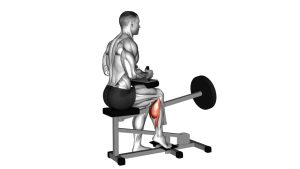
The Barbell Seated Calf Raise is particularly useful for developing lower-leg strength, calf thickness, and controlled ankle movement. Because the exercise is performed while seated, the hips and knees remain relatively stable. Consequently, the calf muscles perform most of the lifting work.
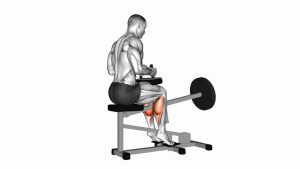
Additionally, this variation offers a practical alternative when a seated calf raise machine is unavailable. As demonstrated in the exercise, the athlete sits on a flat bench with the barbell resting across the lower thighs. Both forefeet remain planted while the heels repeatedly rise and lower. Therefore, controlled ankle movement matters more than lifting the heaviest possible weight.
Quick Overview
| Body Part | Legs — Calves |
|---|---|
| Primary Muscle | Soleus (deep calf muscle) |
| Secondary Muscle | Gastrocnemius, tibialis posterior, fibularis muscles, and intrinsic foot stabilizers |
| Equipment | Barbell, weight plates, flat bench, and optional barbell pad |
| Difficulty | Intermediate (requires controlled loading and secure barbell positioning) |
Sets & Reps (By Goal)
- Strength: 4–5 sets × 6–8 reps with challenging, controlled resistance. Rest 90–120 seconds between sets.
- Hypertrophy (muscle growth): 3–4 sets × 10–15 reps using a controlled lifting phase and 2–3-second lowering phase. Rest 60–90 seconds.
- Muscular endurance: 2–3 sets × 15–25 reps using lighter resistance. Maintain consistent technique and rest 45–60 seconds.
- Mobility and movement control: 2–3 sets × 12–15 slow repetitions, preferably without the barbell. Focus on comfortable ankle movement rather than resistance.
- Rehab-style strengthening: 1–3 sets × 8–12 controlled repetitions using bodyweight or very light resistance, when approved by a qualified professional.
Choosing the Right Training Intensity
For muscle growth, select a weight that challenges the calves without causing bouncing or shortened repetitions. However, beginners should first master the seated heel raise without additional loading. Once technique becomes consistent, gradually increase resistance while preserving a smooth movement.
Progression rule: Increase repetitions before adding more weight. Next, progress the load in small increments while maintaining heel height, ankle alignment, and a controlled lowering phase. Avoid increasing resistance if barbell stability becomes difficult.
Setup / Starting Position
Preparing the Bench and Barbell
- Choose a stable bench: Sit near the front edge of a flat weight bench. Ensure the bench remains firmly positioned on a level, non-slip surface.
- Position your legs: Place both feet approximately hip-width apart. Keep the knees bent near 90 degrees and aligned with the direction of your toes.
- Set your foot placement: Keep the balls of both feet firmly against the floor. Allow the heels to move freely while keeping the forefeet grounded.
- Position the barbell: Carefully place the bar across the lower thighs, slightly behind the knees. Use padding to distribute pressure and avoid direct contact with the kneecaps.
- Secure the bar: Hold the barbell with both hands to prevent unwanted movement. Additionally, ensure the weight plates are secured with appropriate collars.
- Establish your posture: Keep the spine comfortably neutral, shoulders relaxed, and torso slightly inclined forward if needed. Avoid excessive rounding or leaning backward.
Establishing a Stable Starting Position
Before lifting, make sure the barbell remains balanced across both thighs. Your knees should stay relatively still throughout each repetition. Meanwhile, the ankle joints should remain free to move through a comfortable range.
Setup tip: The demonstrated variation keeps the feet on the floor. Therefore, the heels cannot descend below forefoot level as they could on an elevated calf block. If using a block for additional range, treat it as a separate progression and maintain stable foot support.
Execution (Step-by-Step)
Performing the Seated Calf Raise
- Establish your starting position: Sit securely with the barbell resting across the thighs. Keep both feet planted, knees bent, and hands firmly stabilizing the bar.
- Prepare the calf muscles: Keep your torso steady and direct pressure through the balls of both feet. Meanwhile, maintain natural breathing and avoid unnecessary upper-body tension.
- Raise the heels: Press through the forefeet and lift both heels away from the floor. As the ankles plantarflex, the knees and barbell rise slightly with the thighs.
- Contract at the top: Continue lifting until you reach your highest comfortable heel position. Then briefly squeeze the calf muscles without bouncing or shifting your knees.
- Begin the lowering phase: Slowly lower both heels while maintaining control over the resistance. Aim for approximately 2–3 seconds during the descent.
- Return to the starting position: Lower the heels toward the floor without dropping the barbell abruptly. Maintain contact through the forefeet and avoid excessive ankle rolling.
- Repeat with consistent technique: Start the next repetition without using momentum. Throughout the set, maintain stable knee alignment, balanced pressure, and smooth ankle movement.
Maintaining Proper Movement Mechanics
The ankles should produce the main movement, while the hips and torso remain supported. Because the knees stay bent, the soleus contributes strongly to each repetition. Additionally, both heels should rise together rather than alternating or twisting outward.
Pro Tips & Common Mistakes
Pro Tips for Better Calf Activation
- Prioritize the soleus: Maintain a bent-knee position throughout the exercise. Consequently, the seated position emphasizes the soleus more than straight-leg calf raise variations.
- Use a controlled tempo: Raise the heels smoothly, pause briefly at the top, and lower slowly. This approach limits momentum and maintains muscular tension.
- Keep the barbell balanced: Position the weight evenly across both thighs. Additionally, use a comfortable protective pad to reduce concentrated pressure.
- Maintain balanced foot pressure: Push through the balls of both feet without allowing the ankles to collapse inward or roll excessively outward.
- Train through a comfortable range: Lift the heels as high as you can control. However, avoid forcing ankle movement or sacrificing alignment for extra height.
Common Mistakes to Avoid
- Bouncing at the bottom: Rapid repetitions often rely on momentum. Instead, control the lowering phase before initiating the next heel raise.
- Using excessive resistance: Heavy loading can shorten the movement and destabilize the barbell. Therefore, prioritize consistent heel elevation before increasing weight.
- Placing the bar directly on the knees: This can create uncomfortable joint pressure. Instead, support the bar across the lower thighs behind the kneecaps.
- Moving the torso excessively: Rocking forward and backward can reduce isolation. Keep your upper body relatively steady while the ankles perform the movement.
- Allowing uneven heel movement: One heel rising higher may indicate poor control or uneven pressure. Accordingly, reduce the load and practice symmetrical repetitions.
- Rushing the lowering phase: Dropping the heels reduces controlled muscular work. Instead, lower gradually until you return to the starting position.
Training tip: Combine seated calf raises with straight-leg calf raises when building a comprehensive calf routine. Both variations train ankle plantarflexion, but their different knee positions change the relative contribution of the calf muscles.
FAQ
Muscle Activation and Exercise Technique
What muscles does the Barbell Seated Calf Raise work?
The Barbell Seated Calf Raise primarily trains the soleus, which lies beneath the gastrocnemius. Because the knees remain bent, the gastrocnemius contributes from a shortened position. Additionally, smaller ankle and foot muscles help stabilize the movement.
Together, these muscles support ankle plantarflexion, lower-leg strength, and controlled pushing movements during walking and other physical activities.
Why are seated calf raises effective for the soleus?
The soleus crosses the ankle joint but not the knee. In contrast, the gastrocnemius crosses both joints. Therefore, bending the knees reduces the gastrocnemius’s mechanical advantage while allowing the soleus to remain an important force producer.
As a result, seated calf raises provide a practical way to emphasize the deeper calf musculature while maintaining controlled ankle movement.
Should my feet remain flat on the floor during this exercise?
In the demonstrated variation, the forefeet stay on the floor while the heels rise and lower. The starting position places the heels near the ground, and each repetition involves lifting them through ankle plantarflexion.
Alternatively, a stable calf block can increase the available ankle range of motion. However, that modification is not required to perform the floor-based variation shown.
Training Frequency, Progression, and Safety
How many sets and reps should I perform for calf growth?
For hypertrophy, begin with 3–4 sets of 10–15 controlled repetitions. Choose a load that challenges your calves while preserving consistent heel movement. Additionally, allow sufficient recovery between demanding training sessions.
As your strength improves, gradually increase repetitions or resistance. Nevertheless, avoid sacrificing technique simply to lift heavier weights.
Can beginners perform the Barbell Seated Calf Raise?
Yes, although beginners should first learn the seated calf raise without external resistance. Once they can raise and lower both heels smoothly, they may progress to a lightly loaded barbell.
Furthermore, careful bar placement and stable bench positioning are important. If controlling the barbell is difficult, a seated calf raise machine may offer a more convenient alternative.
Is the Barbell Seated Calf Raise better than the standing variation?
Neither variation is universally better. Seated calf raises emphasize the soleus because the knees remain bent. Meanwhile, standing calf raises place the gastrocnemius in a more lengthened position, allowing it to contribute more strongly.
Therefore, combining both exercises can provide a more complete approach to calf development. Training goals, available equipment, and individual comfort should determine the final selection.
What should I do if the barbell causes discomfort on my thighs?
First, confirm that the bar rests across the lower thighs rather than directly on the kneecaps. Next, use a suitable barbell pad and reduce the resistance if necessary.
However, persistent pain, numbness, or unusual pressure should not be ignored. Stop the exercise and consider a different loading method or professional guidance.
Recommended Equipment
- Flat Weight Bench — provides stable seated support while keeping the hips and knees positioned for controlled calf raises
- Weightlifting Barbell — supplies adjustable resistance across the thighs for progressive calf strengthening
- Barbell Weight Plates — allow gradual resistance adjustments for strength, hypertrophy, and endurance training
- Barbell Protective Pad — helps distribute pressure across the thighs and improves comfort during loaded seated calf raises
- Locking Barbell Collars — secure weight plates on the barbell and help prevent unwanted plate movement during repetitions
Equipment tip: Select a sturdy bench, compatible barbell and weight plates, and secure collars. Additionally, use protective padding when necessary. Because the barbell rests across the thighs, comfort and stability should take priority over maximum loading.