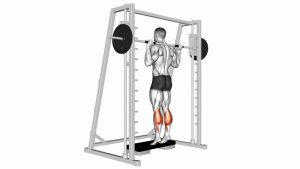
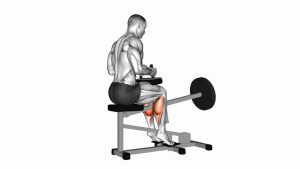
Dumbbell Standing Calf Raise: Form, Muscles, Sets & Tips
Learn the Dumbbell Standing Calf Raise on an elevated step to build stronger calves. Discover proper form, sets and reps, common mistakes, FAQs, and gear.
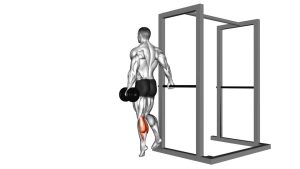
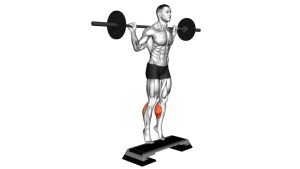
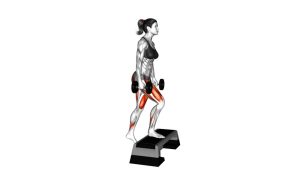
Dumbbell Standing Calf Raise
Strong calf muscles contribute to walking, running, jumping, and maintaining control during standing movements. In addition, weighted calf raises help develop lower-leg muscle size and the ability to generate force through the ankles. Because the knees remain nearly extended, this variation places substantial emphasis on the gastrocnemius. Meanwhile, the deeper soleus contributes throughout the movement.
Unlike flat-floor calf raises, the elevated-platform variation allows the heels to descend below the forefoot level. Therefore, you can train through a greater ankle range of motion when your mobility permits. However, effective repetitions depend on balance, controlled loading, and consistent heel movement rather than excessive weight.
Quick Overview
| Body Part | Calves |
|---|---|
| Primary Muscle | Gastrocnemius (medial and lateral heads) |
| Secondary Muscle | Soleus, tibialis posterior, fibularis muscles, and intrinsic foot stabilizers |
| Equipment | Two dumbbells and a sturdy elevated calf-raise platform or step |
| Difficulty | Beginner to Intermediate, depending on resistance, balance, and ankle mobility |
Sets & Reps (By Goal)
- Calf strength: 4–5 sets × 6–10 reps with moderate-to-heavy dumbbells. Rest 90–120 seconds between sets while maintaining full control of every repetition.
- Muscle hypertrophy: 3–4 sets × 10–15 reps with a controlled lowering phase. Pause briefly at the top and rest approximately 60–90 seconds.
- Muscular endurance: 2–3 sets × 15–25 reps using lighter dumbbells. Maintain a consistent rhythm and rest 45–75 seconds between sets.
- Ankle mobility and control: 2–3 sets × 8–12 slow reps with very light resistance or body weight. Focus on comfortable movement through the ankles without bouncing.
- Rehab-style progression: 1–3 sets × 8–12 controlled reps using body weight or light loading, only when appropriate for your condition and approved by a qualified professional.
Progression rule: First establish consistent balance, a comfortable range of motion, and controlled repetitions. Next, increase the repetitions or improve your tempo before adding dumbbell weight. For muscle growth, a useful starting rhythm is approximately 1–2 seconds upward, a brief pause at the top, and 2–3 seconds downward. Additionally, stop a set when your heels can no longer travel through the intended range without compensation.
Setup / Starting Position
- Choose a stable elevated platform: Select a calf-raise block or exercise step with a secure, non-slip surface. Before adding weight, confirm that it cannot rock, slide, or tip under your feet.
- Position both feet: Stand with the balls of your feet supported near the platform’s edge. Keep your heels free to move upward and downward while maintaining secure forefoot contact.
- Establish your stance: Place your feet approximately hip-width apart with the toes pointing forward or slightly outward. Distribute pressure evenly across both forefeet instead of rolling onto the outer edges.
- Hold a dumbbell in each hand: Allow your arms to hang naturally beside your thighs with your palms facing inward. Keep your grip secure without lifting or swinging the dumbbells.
- Align your entire body: Stand tall with your chest comfortably lifted, abdomen lightly braced, and shoulders relaxed. Meanwhile, maintain nearly straight knees without aggressively locking the joints.
- Prepare the starting position: Allow your heels to lower gradually into a comfortable stretch if your ankle mobility permits. Keep your gaze forward and your torso steady before beginning the first repetition.
Tip: Start with lighter dumbbells than you expect to need. Since the exercise takes place on an elevated surface, balance and precise ankle control are especially important. If you cannot maintain stability, practice on the floor or use a stable support before attempting the demonstrated variation.
Execution (Step-by-Step)
- Establish a controlled starting position: Stand upright with both forefeet firmly supported by the elevated platform. Keep the dumbbells hanging beside your thighs and maintain a stable, nearly straight-knee posture.
- Engage your calf muscles: Begin pressing downward through the balls of both feet. As the calf muscles contract, allow your heels to rise together without swinging your arms or shifting your hips.
- Lift your heels upward: Continue extending through the ankles until you reach a comfortable high position on your forefeet. Throughout the upward phase, keep your torso vertical and avoid bending your knees to generate momentum.
- Reach the peak contraction: At the top, briefly pause while maintaining tension in your calves. However, do not force your ankles beyond their comfortable range or roll excessively toward your little toes.
- Begin the controlled descent: Slowly lower your heels by allowing the ankle joints to move into dorsiflexion. Resist gravity with your calf muscles rather than dropping your body weight suddenly.
- Return to the lowered position: Continue descending until you feel a comfortable calf stretch and reach your intended bottom position. The heels may travel below the platform surface, provided your ankles and Achilles tendons tolerate the movement.
- Maintain your posture: Keep your arms extended, dumbbells steady, shoulders relaxed, and knees nearly straight. Furthermore, avoid rocking your torso forward or using a bouncing motion to initiate the next repetition.
- Repeat with consistent technique: Begin the next heel raise smoothly and continue for the prescribed repetitions. Each repetition should follow the same controlled upward and downward ankle movement.
Pro Tips & Common Mistakes
- Use a controlled range of motion: Raise your heels as high as comfortably possible, then lower them slowly. However, do not force excessive ankle movement simply to achieve a deeper stretch.
- Keep your knees nearly straight: A mostly extended knee position maintains greater emphasis on the gastrocnemius. In contrast, deliberately bending the knees changes the muscular emphasis toward the soleus.
- Avoid bouncing at the bottom: Rapid rebounding can reduce muscular control and place unnecessary stress on the Achilles tendon. Instead, reverse the movement smoothly after reaching your comfortable lower position.
- Maintain balanced forefoot pressure: Press through the balls of your feet without allowing the ankles to collapse inward or roll excessively outward. Consequently, the movement remains more stable and repeatable.
- Do not swing the dumbbells: Keep your arms relaxed and the weights close to your thighs. Swinging the dumbbells introduces momentum and makes balance more difficult.
- Avoid excessive forward leaning: Maintain an upright torso and stable hip position. Although slight natural body adjustments may occur, noticeable rocking usually indicates poor control or excessive loading.
- Choose manageable resistance: Heavy dumbbells are useful only when you can maintain the intended heel movement. Therefore, reduce the weight if your repetitions become rushed, uneven, or incomplete.
- Control the lowering phase: The descending portion provides an important muscular loading opportunity. Rather than dropping quickly, lower your heels over approximately 2–3 seconds.
- Keep both legs working evenly: Avoid shifting most of your body weight onto one foot. Instead, raise both heels together and maintain similar movement height on each side.
- Progress gradually: Once you can perform all repetitions with steady balance and controlled movement, increase the dumbbell resistance modestly. Additionally, allow sufficient recovery between demanding calf-training sessions.
FAQ
What muscles does the Dumbbell Standing Calf Raise work?
The exercise primarily targets the gastrocnemius, which forms the prominent upper portion of the calves. Additionally, the soleus contributes to ankle plantar flexion. Smaller ankle and foot muscles help stabilize the movement, especially when performing it on an elevated platform.
Is the Dumbbell Standing Calf Raise good for beginners?
Yes, beginners can learn this movement with light resistance and a stable surface. However, holding two dumbbells while standing on a raised platform increases the balance requirement. Therefore, start with floor-based or supported bodyweight calf raises if the weighted variation feels unstable.
Should I keep my knees straight or slightly bent?
Keep your knees nearly straight throughout the repetition without forcing them into a rigid lockout. This position emphasizes the gastrocnemius because it crosses both the knee and ankle joints. Meanwhile, a deliberately bent-knee calf raise shifts relatively more emphasis toward the soleus.
Why should I perform calf raises on an elevated platform?
An elevated platform allows your heels to descend below the level of your forefeet. As a result, you can use a greater ankle range of motion than a typical flat-floor calf raise. However, the additional depth should remain comfortable and controlled, especially around the Achilles tendons.
How much weight should I use for dumbbell calf raises?
Choose a weight that allows every repetition to remain balanced and controlled. For example, beginners may start with very light dumbbells before progressing. Once you can maintain steady heels, nearly straight knees, and a consistent range of motion, increase the resistance gradually.
How often should I train my calves?
Many people can begin with two or three calf-training sessions per week, depending on their overall program. However, recovery needs vary with exercise intensity and total training volume. Allow additional recovery when the calves remain unusually sore or your performance declines.
Recommended Equipment
- Hex Dumbbell Pair — provides adjustable training resistance when different weight pairs are available, making progressive calf strengthening easier
- Non-Slip Calf Raise Block — supports the forefeet on a raised surface while allowing controlled heel movement through a greater ankle range
- Adjustable Aerobic Step Platform — offers an elevated training surface for calf raises and other lower-body exercises when sufficiently stable and load-rated
- Weightlifting Straps — may help experienced lifters maintain their dumbbell grip during demanding calf-training sets
- Non-Slip Training Shoes — provide dependable traction and forefoot support during weighted standing calf raises and other strength exercises
Tip: Prioritize equipment stability, adequate load capacity, and secure footing before increasing resistance. A sturdy calf-raise platform and manageable dumbbells are sufficient for this variation. Furthermore, optional accessories should support your training rather than replace proper ankle control and technique.