Smith Machine Standing Calf Raise: Form, Sets, Muscles & Tips
Master the Smith Machine Standing Calf Raise using a raised platform. Learn proper setup, heel lift technique, sets, mistakes, FAQs, and calf training tips.
Smith Machine Standing Calf Raise
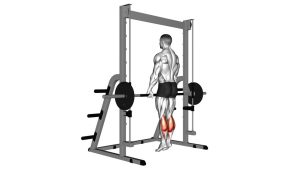
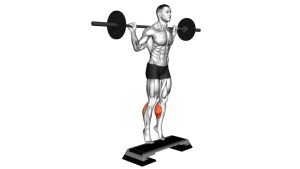
The Smith Machine Standing Calf Raise develops lower-leg strength by applying resistance directly to repeated heel elevation. Unlike seated calf raises, this standing variation keeps the knees relatively extended, allowing the gastrocnemius to contribute strongly. Additionally, the soleus assists throughout the movement, while smaller ankle stabilizers help maintain proper foot alignment. The Smith machine guides the bar along a fixed path, reducing some balance demands compared with a free-weight barbell. However, the exerciser must still control body position, forefoot pressure, and the movement of both ankles. Because the feet are elevated, the heels can descend below the platform’s upper surface for a greater comfortable range of motion. As a result, properly controlled repetitions can challenge the calves through both a lengthened and shortened position.
Quick Overview
| Body Part | Calves |
|---|---|
| Primary Muscle | Gastrocnemius (medial and lateral heads) |
| Secondary Muscle | Soleus, tibialis posterior, fibularis longus and brevis; quadriceps, glutes, and core assist with posture and stabilization |
| Equipment | Smith machine, stable raised calf platform, and optional compatible weight plates |
| Difficulty | Beginner to Intermediate, depending on resistance, ankle control, platform stability, and machine familiarity |
Sets & Reps (By Goal)
- Strength development: Perform 3–5 sets × 6–10 controlled repetitions, resting approximately 90–150 seconds between sets. Choose challenging resistance while maintaining complete control over the upward and downward movement. However, avoid increasing the load if your heel height or ankle alignment deteriorates.
- Hypertrophy / muscle growth: Complete 3–4 sets × 10–15 repetitions with approximately 60–90 seconds of rest. Use a deliberate lowering phase and pause briefly at the highest comfortable heel position. Additionally, prioritize a consistent range of motion rather than excessively heavy resistance.
- Muscular endurance: Perform 2–4 sets × 15–25 repetitions, resting 30–75 seconds between sets. Select a lighter load that permits repeated, controlled contractions without bouncing. As fatigue increases, maintain steady breathing and avoid shortening the repetitions.
- Mobility and ankle control: Complete 2–3 sets × 10–15 slow repetitions using bodyweight or minimal resistance. Focus on balanced forefoot pressure, smooth heel elevation, and comfortable ankle dorsiflexion. Therefore, movement quality takes priority over additional weight.
- Rehabilitation-style progression: When cleared by a qualified healthcare professional, begin with 1–3 sets × 6–12 gentle repetitions. Initially, use an unloaded or supported calf-raise variation instead of a heavy Smith machine setup. Progress to machine loading only when symptoms, strength, and balance permit.
Progression rule: First establish consistent heel height, stable foot alignment, and a controlled lowering phase. Next, increase repetitions or improve the brief top-position pause before adding weight. Once all prescribed repetitions remain clean, increase resistance gradually. A useful starting tempo is approximately 1–2 seconds upward, a 1-second contraction, and 2–3 seconds downward. Nevertheless, reduce the load whenever your technique becomes unstable.
Setup / Starting Position
- Prepare the Smith machine: Position the bar near shoulder height and inspect the locking mechanism. Additionally, adjust the safety stops to suit the platform and your standing position. Confirm that the machine permits safe movement and reracking before adding resistance.
- Position the raised platform: Place a sturdy, non-slip calf-raise block directly beneath the bar’s intended path. Ensure that it cannot slide or tip when your body weight and resistance shift during the exercise.
- Set both feet: Stand with the balls of your feet securely supported on the platform. Allow your heels to extend beyond the rear edge so they can move freely. Meanwhile, keep your feet approximately hip-width apart or slightly narrower if comfortable.
- Place the bar on your upper back: Position the Smith bar across the upper trapezius muscles. Grip it with both hands at a comfortable width while keeping your wrists and shoulders stable. Avoid resting the bar directly against your neck.
- Establish upright posture: Keep your head neutral, chest comfortably lifted, and abdominal muscles engaged. Position your hips beneath your torso without excessive arching of the lower back. Consequently, the load remains supported through a stable standing position.
- Set the knees: Maintain nearly straight knees with a slight natural softness. Do not force a hard lockout or repeatedly bend the knees to generate upward movement. Instead, prepare to move primarily through the ankle joints.
- Distribute foot pressure: Keep the forefeet supported evenly without rolling inward or outward. Additionally, avoid gripping the platform excessively with your toes. Both legs should share the workload throughout the movement.
- Unrack and stabilize: Release the bar using the machine’s designated locking mechanism. Establish balance before beginning the first repetition. Then lower your heels into a comfortable starting stretch without forcing the ankles beyond their available range.
Execution (Step-by-Step)
- Establish the starting position: Stand upright with both forefeet supported on the raised platform and the bar across your upper back. Keep your knees nearly straight and your core gently braced. Before lifting, ensure that both ankles feel stable.
- Begin the heel raise: Press downward through the balls of both feet to lift your heels. As the ankles move into plantar flexion, allow your body and the Smith bar to rise together. Avoid bending the knees to initiate the lift.
- Lift the body vertically: Continue elevating your heels until reaching the highest comfortable position. Meanwhile, maintain a relatively stationary torso and stable shoulder position. The movement should come from the calves rather than a squat or hip thrust.
- Maintain balanced forefoot pressure: Keep both feet aligned as the heels rise. Distribute pressure across the supported forefeet rather than rolling excessively toward either edge. Consequently, the ankle stabilizers assist while the calves produce the primary lifting force.
- Contract at the top: Briefly hold the elevated position for approximately one second. Focus on a strong but comfortable calf contraction without forcing extra heel height. Additionally, continue breathing rather than holding your breath unnecessarily.
- Lower the heels slowly: Gradually allow your heels to descend as the ankles move toward dorsiflexion. Control the resistance throughout the lowering phase. Instead of dropping suddenly, keep tension through the calves and maintain stable knee alignment.
- Reach a comfortable bottom stretch: Allow the heels to descend below the platform surface only as far as your ankle mobility permits. Pause momentarily without bouncing or forcing the Achilles tendon. Therefore, each repetition begins from a controlled position rather than accumulated momentum.
- Repeat and finish safely: Begin the next heel raise while keeping your posture and foot placement consistent. Continue for the prescribed repetitions without turning the exercise into a knee-driven movement. Finally, return to a stable position, secure the Smith bar using its locking hooks, and carefully step off the platform.
Pro Tips & Common Mistakes
- Keep the movement focused on the ankles: A standing calf raise is not a squat. Therefore, avoid using repeated knee extension or hip movement to lift the resistance. Instead, initiate each repetition by raising both heels.
- Maintain nearly straight knees: The gastrocnemius contributes strongly when the knees remain extended. However, avoid aggressively locking or hyperextending them. Keep the knee angle relatively constant throughout the set.
- Do not bounce at the bottom: Rapidly dropping into the stretch can increase unwanted stress on the Achilles tendon. Instead, pause briefly before beginning the next repetition. Controlled movement also reduces reliance on elastic rebound.
- Use a comfortable full range: Raise your heels as high as possible without losing alignment. Then lower them into a manageable stretch below the platform surface. Nevertheless, never force additional depth when the ankles or Achilles tendons feel uncomfortable.
- Control the lowering phase: The descent challenges the calf muscles as they resist the load. Therefore, lower gradually rather than allowing the Smith bar to drop. A slower descent also makes technique errors easier to recognize.
- Keep the ankles aligned: Avoid rolling excessively inward or outward during the heel raise. Instead, maintain balanced pressure across the forefeet. This helps distribute the load more consistently between both legs.
- Keep the shoulders and torso stable: The Smith bar should remain securely positioned across the upper back. Additionally, avoid leaning excessively forward or backward to increase heel height. Maintain a stable trunk throughout the movement.
- Choose appropriate resistance: Excessive weight commonly causes shortened repetitions, bouncing, and loss of balance. Consequently, begin with manageable resistance and increase gradually. Consistent muscle tension matters more than the number of plates loaded.
- Combine standing and seated calf work: Standing raises emphasize the gastrocnemius while also involving the soleus. Meanwhile, seated calf raises provide another way to train plantar flexion with bent knees. Both variations can contribute to a balanced calf-training program.
FAQ
What muscles does the Smith Machine Standing Calf Raise work?
The Smith Machine Standing Calf Raise primarily targets the gastrocnemius, including its medial and lateral heads. Additionally, the soleus contributes to ankle plantar flexion. Smaller lower-leg muscles help stabilize the ankles, while the quadriceps, glutes, and core support body alignment. Because the knees remain relatively extended, the gastrocnemius receives substantial emphasis during the movement.
Why use a raised platform for Smith Machine Calf Raises?
A raised platform allows the heels to descend below the level of the forefeet. Consequently, the exercise can use a greater comfortable ankle range than a floor-based calf raise. However, the platform must remain stable and provide secure forefoot support. Avoid forcing excessive depth or bouncing at the bottom, especially when training with heavier resistance.
Should my knees remain straight during Smith Machine Calf Raises?
Keep the knees nearly straight throughout each repetition without aggressively locking them. This position allows the gastrocnemius to contribute effectively while the soleus continues assisting. In contrast, repeatedly bending and straightening the knees changes the exercise mechanics. Therefore, use an ankle-focused movement and maintain a consistent knee angle.
How high should I lift my heels during each repetition?
Raise your heels until reaching the highest position you can control comfortably. At the top, briefly contract the calves while maintaining stable forefoot pressure. However, avoid rolling the ankles, bending the knees, or leaning backward for additional height. Then lower slowly into a comfortable stretch before repeating. The quality of the movement is more important than forcing maximum range.
Is the Smith Machine Standing Calf Raise suitable for beginners?
Beginners can learn the calf-raising movement with bodyweight before progressing to machine resistance. Additionally, a Smith machine provides a guided bar path that may simplify load control. However, using a raised platform and shoulder-supported bar still requires proper balance and machine-handling skills. Therefore, begin with light resistance, verify the safety stops, and increase difficulty only after mastering controlled repetitions.
Recommended Equipment
- Smith Machine with Adjustable Safety Stops — provides a guided bar path for loaded calf raises and other strength exercises; choose a stable model with reliable locking hooks and safety adjustments
- Non-Slip Calf Raise Block / Elevated Platform — supports the forefeet while allowing the heels to descend through a greater comfortable range of motion; select a rigid, load-rated, non-slip design
- Olympic Weight Plates — allow gradual increases in resistance as calf strength improves; verify compatibility with the Smith machine’s loading sleeves
- Barbell Shoulder Pad — optional cushioning for the bar across the upper trapezius; use only if it fits securely without interfering with balance or bar position
- Flat-Sole Training Shoes — provide stable contact and dependable traction on the calf platform; avoid excessively soft or unstable footwear during loaded repetitions
Tip: Prioritize equipment stability and machine compatibility before increasing resistance. First, confirm that the Smith machine’s locking system and safety stops function correctly. Next, choose a calf-raise platform that cannot move under load and provides secure forefoot support. Finally, use footwear and resistance that allow smooth heel elevation, balanced ankle alignment, and controlled lowering.