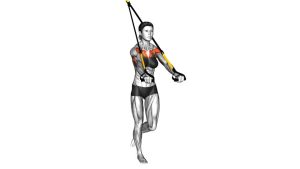
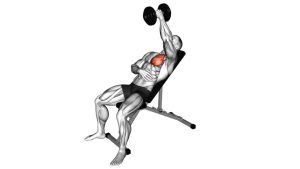
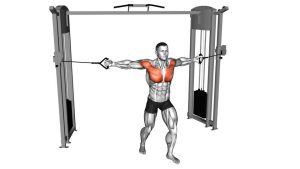
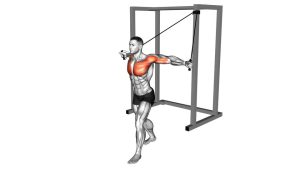
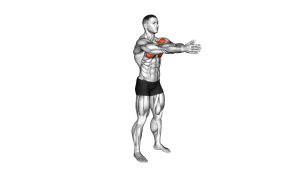
Landmine Single-Arm Side Low Fly: Form, Muscles Worked, Sets & Pro Tips
Master the Landmine Single-Arm Side Low Fly for chest-focused tension with shoulder-friendly mechanics. Learn setup, step-by-step form, sets by goal, common mistakes, FAQs, and recommended equipment.
Landmine Single-Arm Side Low Fly
This movement shines when you treat it like a controlled fly, not a max-load press. Aim for steady tension in the pecs and a stable torso. If you feel the shoulder taking over, reduce load and tighten your setup: shoulder down-and-back, elbow softly bent, and arm traveling on a smooth arc.
Quick Overview
| Body Part | Chest |
|---|---|
| Primary Muscle | Pectoralis major (sternal / mid-to-lower fibers emphasis) |
| Secondary Muscle | Anterior deltoid, serratus anterior, obliques (anti-rotation), rotator cuff (stability) |
| Equipment | Landmine attachment (or barbell in corner), barbell, weight plates |
| Difficulty | Intermediate (unilateral loading + torso stability + shoulder control) |
Sets & Reps (By Goal)
- Muscle growth (hypertrophy): 3–4 sets × 8–12 reps/side (60–90 sec rest)
- Chest pump / finishers: 2–3 sets × 12–20 reps/side (30–60 sec rest)
- Strength-control focus: 3–5 sets × 6–10 reps/side (90–120 sec rest, strict form)
- Shoulder-friendly volume: 2–4 sets × 10–15 reps/side (slow eccentric, moderate load)
Progression rule: Add reps first while keeping the torso square and the elbow softly bent. Then increase load in small jumps. If you start twisting or “pressing” the weight, it’s too heavy.
Setup / Starting Position
- Set the landmine: Secure the bar in a landmine base (or safely into a corner with protection).
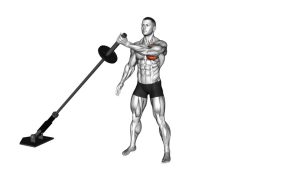
- Stand side-on: Face perpendicular to the bar. The bar should start slightly in front of your hip.
- Stance + core: Feet shoulder-width (or split-stance for extra stability). Brace ribs down and squeeze glutes lightly.
- Grip + elbow: Hold the sleeve/end of the bar with one hand. Keep a soft bend in the elbow (10–20°).
- Shoulder position: Pack the shoulder (down and back). Avoid shrugging or reaching the shoulder forward.
- Start low and open: Working hand begins low and slightly out to the side for a chest stretch—not a painful pull.
Tip: If you struggle to stay square, use a split stance with the inside foot forward (the foot closer to the bar). This makes anti-rotation easier.
Execution (Step-by-Step)
- Lock in posture: Tall spine, ribs stacked, chin neutral. Keep your torso facing forward.
- Lead with the pec: Initiate by bringing the arm up and across the body on the landmine’s arc.
- Maintain elbow bend: Keep the elbow softly bent—think “hug a tree,” not “straight-arm swing.”
- Squeeze at midline: Finish near chest height and slightly across your centerline. Pause 1 second and squeeze the pec.
- Controlled return: Lower slowly to the start (2–3 seconds). Stop before the shoulder rolls forward.
- Repeat clean reps: Same arc every rep—no bouncing, no twisting, no shrugging.
Pro Tips & Common Mistakes
- Keep the torso square: Don’t rotate toward the bar—brace your core like an anti-rotation hold.
- Soft elbow always: Locking out turns it into a shoulder lever and often irritates the joint.
- Stop before shoulder drift: If the shoulder rolls forward at the bottom, you’re going too deep.
- Don’t “press” the rep: If triceps take over, reduce load and focus on hugging across.
- Use a slow eccentric: 2–3 seconds down builds tension and keeps the shoulder stable.
- Split stance for stability: Great for beginners or heavier loads—helps resist rotation.
FAQ
Where should I feel the landmine single-arm side low fly?
You should feel the pecs working through a smooth arc, especially near the top squeeze. Mild front-shoulder involvement is normal, but sharp shoulder pain or pinching is not—reduce range and load.
Is this a fly or a press?
It’s a fly-dominant movement if you keep a soft elbow and “hug” across the body. If you bend the elbow a lot and drive forward, it becomes more press-like and shifts load to triceps/delts.
What stance is best: square or split?
Both work. Split stance is usually easier to control and helps you resist rotation. Square stance is fine once you can keep your ribs and hips stacked without twisting.
Can I use this instead of cable flies?
Yes—this is a great alternative when you want a guided arc and a shoulder-friendly line of pull. Cables often give more constant tension, while the landmine is excellent for stability and clean rep mechanics.
How heavy should I go?
Use a load that lets you keep the torso square and control the eccentric. If you need to twist, shrug, or turn it into a press, the weight is too heavy for fly-quality reps.
Recommended Equipment (Optional)
- Landmine Attachment (Barbell Landmine Base) — the safest and most stable way to set up landmine movements
- Barbell Collars (Lock-Jaw or Clamp Style) — keeps plates tight so the arc stays smooth and controlled
- Olympic Weight Plates — choose smaller jumps for fly work so form stays strict
- Landmine Handle / Single-Arm Grip — improves comfort and control vs holding the sleeve directly
- Training Gloves or Lifting Straps — optional comfort support if grip becomes the limiting factor
Tip: For fly variations, prioritize smooth reps and shoulder comfort over loading heavy. The best results come from clean tension and a controlled squeeze.