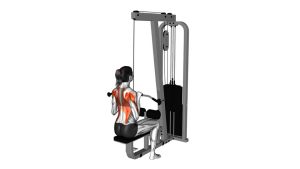
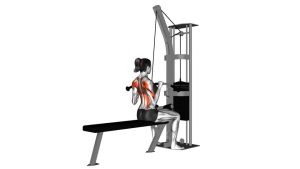
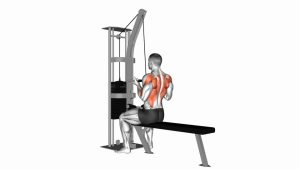
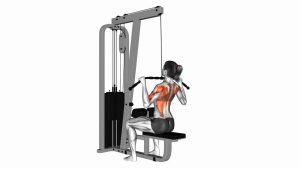
Cable Cross-Over Lateral Pulldown: Form, Muscles Worked, Sets, Tips & FAQ
Learn how to perform the Cable Cross-Over Lateral Pulldown with proper form. Discover muscles worked, setup, step-by-step execution, sets and reps by goal, mistakes to avoid, FAQs, and recommended equipment.
Cable Cross-Over Lateral Pulldown
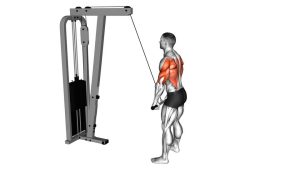
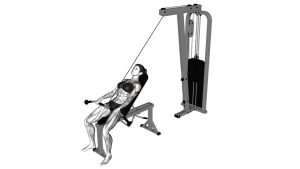
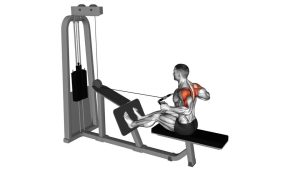
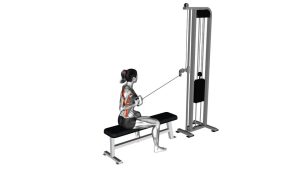
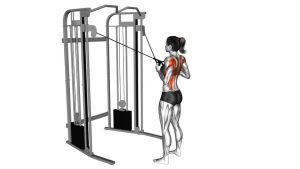
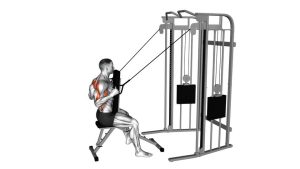
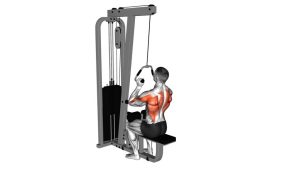
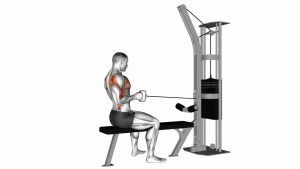
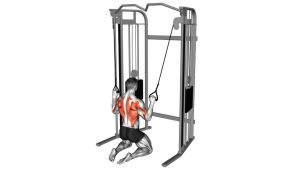
This variation starts with the cables crossed in front of the body, which creates a unique line of pull and challenges the upper back to stay organized throughout the rep. The goal is not to yank the handles with the arms, but to pull by leading with the elbows while the shoulder blades move from a stretched position into a strong, controlled retraction. When done well, this exercise feels smooth, stable, and highly focused in the back rather than in the wrists, neck, or lower back.
Quick Overview
| Body Part | Back |
|---|---|
| Primary Muscle | Latissimus dorsi, rhomboids, middle trapezius |
| Secondary Muscle | Rear deltoids, teres major, biceps, lower traps, forearms |
| Equipment | Dual adjustable cable machine with single D-handles |
| Difficulty | Intermediate |
Sets & Reps (By Goal)
- Muscle growth: 3-4 sets × 8-12 reps with controlled tempo and 60-90 sec rest
- Back detail / pump work: 2-4 sets × 12-15 reps with lighter weight and strict form
- Strength-focused accessory: 3-5 sets × 6-8 reps with full control and 90-120 sec rest
- Technique / activation: 2-3 sets × 10-15 reps using lighter resistance before heavier back work
Progression rule: Add reps before adding load. Increase weight only when you can keep the torso still, elbows tracking cleanly, and the shoulder blades moving smoothly on every rep.
Setup / Starting Position
- Set both pulleys high: Position the pulleys above shoulder level and attach a single D-handle to each side.
- Grab cross-body: Take the right handle with the left hand and the left handle with the right hand so the cables cross in front of you.
- Stand centered: Place your feet about shoulder-width apart with a slight knee bend for balance.
- Brace the torso: Keep the chest tall, ribs down, and core engaged. A slight forward lean is fine, but do not round the back.
- Start long: Let the arms extend forward under control so the shoulder blades can reach slightly without losing posture.
Tip: Step forward or backward slightly until the cables feel evenly loaded at the start and both handles move symmetrically.
Execution (Step-by-Step)
- Initiate with the back: Begin the rep by pulling the shoulder blades back and down instead of yanking with the hands.
- Drive the elbows: Pull the elbows backward and slightly outward while keeping the wrists neutral.
- Open the chest: As the handles move toward the sides of the upper torso, keep the chest proud and the neck relaxed.
- Squeeze at the peak: Pause briefly when the elbows pass the torso and the shoulder blades are fully retracted.
- Return slowly: Extend the arms forward under control and allow the shoulder blades to move into a loaded stretch without collapsing posture.
Pro Tips & Common Mistakes
- Lead with elbows, not hands: Thinking “pull the elbows back” usually improves back engagement immediately.
- Keep the neck quiet: Avoid shrugging or craning the head forward during the pull.
- Use a controlled stretch: Let the shoulder blades move naturally on the way forward, but do not lose rib or pelvic position.
- Don’t turn it into a row with momentum: Swinging the torso defeats the purpose of the cable angle and reduces muscle focus.
- Avoid overbending the elbows too early: The elbows should travel back smoothly instead of the biceps taking over from the start.
- Match both sides: Because the cables work independently, watch for one arm finishing earlier or pulling harder than the other.
- Pause the contraction: A brief squeeze at peak retraction improves upper-back quality and reduces sloppy reps.
FAQ
What muscles does the Cable Cross-Over Lateral Pulldown work most?
It mainly targets the lats, rhomboids, and middle traps, while the rear delts, teres major, biceps, and lower traps assist. It is especially effective for upper-back contraction and scapular control.
Is this more of a lat exercise or an upper-back exercise?
It hits both, but for most lifters it feels more like an upper-back dominant cable pull because the crossed setup and elbow path strongly emphasize scapular retraction.
How heavy should I go?
Use a load that lets you keep the torso stable, the shoulders down, and the rep smooth from start to finish. If you have to lean back, jerk the cables, or lose the peak squeeze, go lighter.
Can beginners use this exercise?
Yes, but it is usually better after learning basic cable rows first. Beginners can still use it with light weight to improve coordination, posture, and back awareness.
Where should the handles finish?
In most cases, the handles should finish near the sides of the upper torso or lower chest area, with the elbows pulled behind the body just enough to achieve a full back squeeze without shoulder discomfort.
Recommended Equipment
- D-Handle Cable Attachments — the key attachment for this movement; options on Amazon highlight ergonomic grips and heavy-duty designs.
- MOST GRIP Ergonomic Non-Slip D Handle Cable Attachment — marketed for cable and lat-pulldown work with a stated capacity up to 600 lbs.
- Luwint Fitness D Handle Cable Attachment — features an ergonomic contour and a 360-degree rotating grip for smoother handle movement.
- Lifting Straps — useful if grip fatigue limits your back work before your target muscles are fully trained.
- Resistance Bands Set — helpful for warm-ups, shoulder activation, and extra rear-delt or upper-back work between sets.
Choose cable handles with comfortable grip texture and durable hardware, then add straps only if grip is the limiting factor rather than back fatigue.