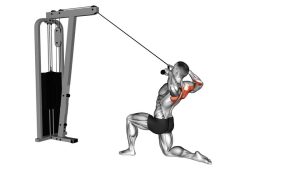
Cable Half-Kneeling Face Pull: Form, Muscles Worked, Sets, Tips & FAQ
Learn how to do the Cable Half-Kneeling Face Pull with proper form. Discover muscles worked, setup, step-by-step execution, sets and reps by goal, common mistakes, FAQs, and recommended equipment.
Cable Half-Kneeling Face Pull
This variation is especially useful for lifters who want better rear shoulder development, improved scapular control, and cleaner pulling mechanics without using momentum. Because the half-kneeling position limits lower-body cheating, it encourages a more controlled motion and better awareness of shoulder blade movement.
Quick Overview
| Body Part | Shoulders |
|---|---|
| Primary Muscle | Rear deltoids (posterior delts) |
| Secondary Muscle | Rhomboids, middle traps, lower traps, rotator cuff, upper back stabilizers, core |
| Equipment | Cable machine with rope attachment |
| Difficulty | Beginner to Intermediate |
Sets & Reps (By Goal)
- Muscle building: 3–4 sets × 10–15 reps with controlled tempo and 45–75 sec rest
- Shoulder health / posture work: 2–4 sets × 12–20 reps with light-to-moderate load and smooth form
- Warm-up / activation: 2–3 sets × 12–15 reps using lighter resistance before presses or upper-body sessions
- Movement quality / rehab-style control: 2–3 sets × 8–12 reps with a 1–2 second squeeze at peak contraction
Progression rule: Add reps before adding load. Only increase weight when you can keep the torso upright, elbows high, and the rope separating cleanly near the face without shrugging.
Setup / Starting Position
- Set the pulley: Position the cable around upper-chest to face height and attach a rope handle.
- Take a half-kneeling stance: Place one knee on the floor and the opposite foot forward, both knees around 90 degrees.
- Brace the torso: Stay tall through the chest with ribs down and glutes lightly engaged. Avoid leaning back.
- Grip the rope neutrally: Hold each end of the rope with palms facing each other.
- Start with arms extended: Let the arms reach forward under control while keeping the shoulders down and neck neutral.
Tip: Use a pad under the down knee if needed so you can focus on shoulder mechanics instead of knee discomfort.
Execution (Step-by-Step)
- Lock in your stance: Stay tall and balanced in the half-kneeling position with the core gently braced.
- Initiate the pull: Pull the rope toward your face by driving the elbows back and slightly outward.
- Keep elbows high: Let the upper arms travel in line with the shoulders rather than dropping the elbows low.
- Separate the rope: As the rope reaches face level, pull the ends apart so the hands move to either side of the head.
- Squeeze at the top: Briefly contract the rear delts and upper back without shrugging the shoulders toward the ears.
- Return slowly: Extend the arms back to the start under control, resisting the pull of the cable the whole way.
Pro Tips & Common Mistakes
- Think “pull to face, not chest”: Pulling too low shifts tension away from the rear delts and upper back pattern you want.
- Do not rush the return: The eccentric phase helps reinforce shoulder control and posture.
- Keep the neck relaxed: Avoid jutting the chin forward or shrugging during the pull.
- Use a stable half-kneeling base: Stay square through the hips instead of twisting or wobbling.
- Separate the rope at the end: This improves rear-delt and upper-back engagement instead of turning it into a basic cable row.
- Avoid going too heavy: Face pulls work best with control, quality reps, and clean shoulder blade movement.
FAQ
What muscles does the Cable Half-Kneeling Face Pull work?
It mainly targets the rear deltoids, while also training the rhomboids, middle and lower traps, and smaller shoulder stabilizers. The half-kneeling position also adds a light core challenge.
Why do this exercise half-kneeling instead of standing?
The half-kneeling stance reduces momentum and helps you stay more stable through the torso and hips. That often makes it easier to focus on clean shoulder mechanics and controlled reps.
Should I pull the rope to my chest or my face?
Pull it toward the upper face while keeping the elbows high and letting the rope split apart near the end. Pulling too low usually turns the movement into more of a row.
Is this exercise good for posture?
Yes, it can help strengthen the rear shoulders and upper back muscles that support better shoulder positioning. It works especially well when combined with balanced pressing, rowing, and mobility work.
How heavy should I go?
Use a load that allows you to keep the torso upright, avoid shrugging, and control both the pull and the return. Most people benefit more from moderate weight and crisp technique than from going very heavy on face pulls.
Recommended Equipment
- Rope Cable Attachment — the main handle used for face pulls, triceps work, and upper-back cable variations
- Resistance Bands Set with Door Anchor — a practical home alternative for face-pull style training when a cable station is not available
- Foam Kneeling Pad — helps make the half-kneeling setup more comfortable and stable on hard floors
- Home Cable Pulley System — useful for lifters building a home setup for face pulls, rows, and other upper-body cable exercises
- Face Pull / Triceps Rope Attachment Variations — helpful if you want a second rope option with different grip texture or handle style
Tip: Prioritize a smooth rope attachment and a stable setup over heavy loading. This exercise is most effective when it feels controlled and repeatable.