Cable Standing Face Pull: Proper Form, Muscles Worked, Sets, Tips & FAQ
Learn how to do the Cable Standing Face Pull with proper form to build rear delts, upper back strength, and shoulder stability. Includes setup, step-by-step execution, sets by goal, mistakes, FAQ, and recommended equipment.
Cable Standing Face Pull
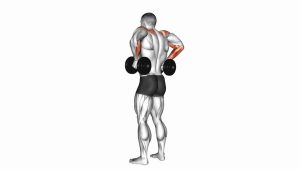
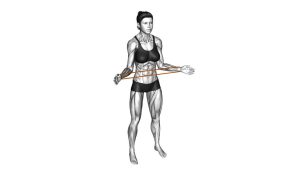
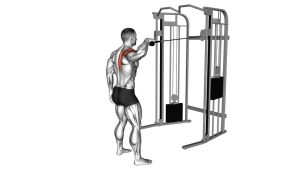
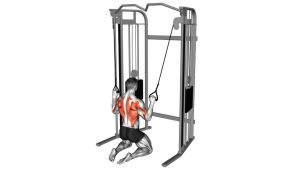
This exercise is especially useful for lifters who do a lot of pressing, desk work, or shoulder-heavy training. It helps strengthen often undertrained muscles on the back side of the shoulders and upper back, which can support better balance around the shoulder joint. In the video, the movement is performed standing with a rope on a cable machine, showing a controlled pull toward the face, elbows traveling outward, and a strong squeeze through the rear shoulders and upper back at the finish.
Quick Overview
| Body Part | Rear Shoulders |
|---|---|
| Primary Muscle | Rear deltoids |
| Secondary Muscle | Rhomboids, middle trapezius, rotator cuff, upper back stabilizers, biceps (assisting) |
| Equipment | Cable machine with rope attachment |
| Difficulty | Beginner to Intermediate |
Sets & Reps (By Goal)
- Muscle building: 3–4 sets × 10–15 reps, 45–75 sec rest
- Shoulder health / posture work: 2–4 sets × 12–20 reps, light-to-moderate load, 30–60 sec rest
- Warm-up / activation: 2–3 sets × 12–15 reps, slow and controlled, 30–45 sec rest
- Strength-focused upper-back accessory: 3–4 sets × 8–12 reps, moderate load, 60–90 sec rest
Progression rule: Increase reps before increasing load. If the elbows drop, the shoulders shrug, or the rope no longer reaches face level under control, the weight is too heavy.
Setup / Starting Position
- Set the pulley: Position the cable at about upper-chest to face height, or slightly above shoulder level.
- Attach the rope: Use a rope attachment rather than a straight bar to allow a more natural pull and rope separation.
- Take your stance: Stand tall with feet about hip- to shoulder-width apart and a slight bend in the knees.
- Grip the rope: Use a neutral grip with palms facing inward.
- Step back for tension: Walk back until the cable is taut and your arms are fully extended in front of you.
- Brace your torso: Keep ribs down, chest tall, core engaged, and neck neutral. A slight lean back is okay, but do not turn it into a row.
Tip: Before the first rep, think “shoulders down, chest open, elbows high.”
Execution (Step-by-Step)
- Start with tension: Arms extend forward at shoulder level, hands holding the rope, torso stable.
- Lead with the elbows: Pull the rope toward your face by driving the elbows out and back.
- Keep elbows high: Avoid letting them drop low, which shifts the movement toward a row.
- Separate the rope: As the rope approaches your face, let the hands move apart slightly so each end of the rope comes toward the sides of your head.
- Squeeze at the finish: Contract the rear delts and upper back hard for a brief pause without shrugging.
- Return slowly: Extend the arms back to the starting position under control while keeping tension on the cable.
- Repeat smoothly: Use a controlled tempo and keep every rep clean rather than chasing heavy weight.
Pro Tips & Common Mistakes
- Pull to the face, not the chest: Pulling too low turns the exercise into more of a cable row.
- Keep the elbows up: High elbows improve rear-delt and upper-back emphasis.
- Don’t use momentum: Avoid rocking backward or heaving the weight.
- Use a rope, not a straight bar: The rope allows a better finish and shoulder-friendly range of motion.
- Separate the rope at the end: This helps create a stronger contraction through the rear shoulders.
- Don’t shrug: Keep the neck long and shoulders controlled to avoid overusing upper traps.
- Stay controlled on the eccentric: The lowering phase is where a lot of the training value happens.
- Use moderate loads: Face pulls work best with precision and tension, not max weight.
FAQ
What muscles does the cable standing face pull work?
The main target is the rear deltoid, while the rhomboids, middle traps, and other upper-back stabilizers assist. It is also useful for shoulder external rotation control and posture support.
Should I pull to my face or chest?
Pull toward your face or forehead. Pulling too low usually shifts the movement away from a true face pull and makes it more like a row.
Are face pulls good for posture?
Yes. They help train the rear shoulders and upper-back muscles that support better shoulder position and balanced upper-body development, especially if you do a lot of pressing or sit for long periods.
How heavy should I go on face pulls?
Use a load that lets you keep the elbows high, the rope controlled, and the finish clean. Most people get better results from moderate weight and strict form than from going too heavy.
Can beginners do the cable standing face pull?
Absolutely. It is beginner-friendly as long as the weight is light enough to learn the movement pattern. Focus on position, tempo, and control before adding load.
Recommended Equipment
- Cable Machine Rope Attachment — the most direct tool for performing face pulls with the proper hand path and rope separation
- Resistance Bands Set with Door Anchor — a practical home alternative for band face pulls when you do not have a cable machine
- Wall-Mounted or Portable Cable Pulley System — useful for home gym setups that want cable-style shoulder and upper-back training
- Lifting Straps — optional if grip becomes a limiting factor during higher-volume pulling workouts
- Foam Roller for Upper Back Mobility — helpful for thoracic mobility work that pairs well with posture-focused pulling exercises
Tip: The rope attachment is the highest-priority item for this exercise. For home training, a resistance band with a door anchor is the simplest substitute.