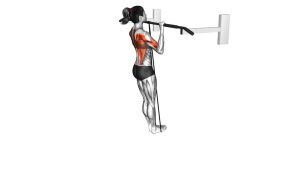
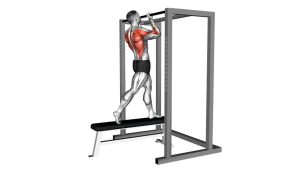
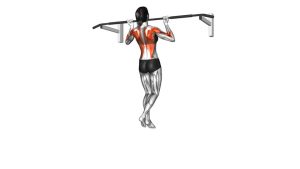
Band-Assisted Chin-Up (From Knee): Form, Muscles Worked, Sets & Tips
Learn how to do the Band-Assisted Chin-Up from the knee with proper form. Discover muscles worked, setup, execution steps, sets and reps by goal, common mistakes, FAQs, and recommended equipment.
Band-Assisted Chin-Up (From Knee)
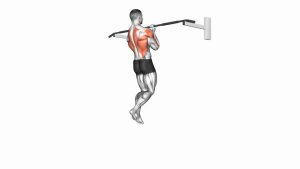
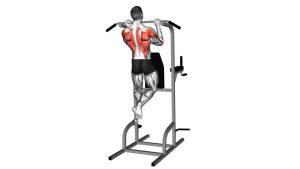
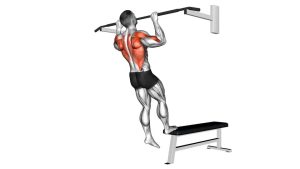
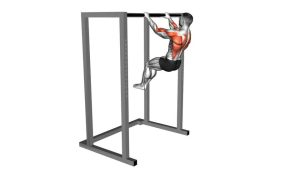
This exercise is one of the best progressions for lifters who are not yet ready for strict, unassisted chin-ups. The band helps most in the stretched bottom range, allowing you to practice full-range pulling mechanics with better control. It teaches you how to initiate with the shoulder blades, keep the chest tall, and finish the rep without relying on momentum.
Quick Overview
| Body Part | Back |
|---|---|
| Primary Muscle | Latissimus dorsi |
| Secondary Muscle | Biceps brachii, brachialis, rhomboids, middle trapezius, rear deltoids, forearms |
| Equipment | Pull-up bar and loop resistance band |
| Difficulty | Beginner to Intermediate |
Sets & Reps (By Goal)
- Strength progression: 3–5 sets × 4–8 reps, 90–150 sec rest
- Muscle building: 3–4 sets × 6–12 reps, 60–90 sec rest
- Technique practice: 2–4 sets × 3–6 clean reps, slow tempo, 60–120 sec rest
- Chin-up endurance: 2–3 sets × 8–15 reps, lighter band, 45–75 sec rest
Progression rule: First reduce the assistance by switching to a lighter band, then build more repetitions, then work toward unassisted chin-ups. Keep every rep controlled from the hang to the top.
Setup / Starting Position
- Anchor the band: Loop a resistance band securely over the pull-up bar and pull one end through the other so it tightens in place.
- Place the knee or foot: Put one knee into the bottom loop of the band. Some lifters use one foot instead, but the kneeling setup often feels more stable.
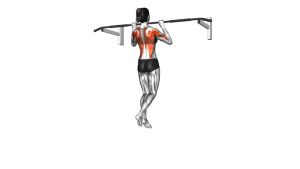
- Take an underhand grip: Grab the bar with a shoulder-width or slightly narrower supinated grip, palms facing you.
- Set a dead hang: Let the arms extend fully while keeping the core braced and the legs tucked under control.
- Prepare the torso: Keep the chest lifted, ribs stacked, and shoulders active without shrugging excessively into the ears.
Tip: Choose a band that lets you move through a full range of motion without kipping, twisting, or rushing the lowering phase.
Execution (Step-by-Step)
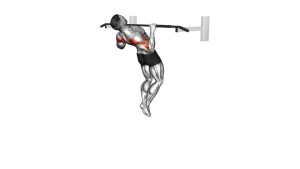
- Engage the shoulders first: Start each rep by pulling the shoulder blades down and slightly back before bending the elbows.
- Drive the elbows down: Pull your body upward by thinking about bringing your elbows toward your ribs rather than yanking with the hands.
- Keep the body tight: Maintain a steady torso, braced core, and quiet lower body so the band does not bounce you through the rep.
- Lift until the chin clears the bar: Continue pulling until your chin reaches or passes bar height while keeping the chest proud.
- Pause briefly at the top: Squeeze the back and arms for a moment without shrugging the shoulders forward.
- Lower with control: Descend slowly to a full hang, allowing the arms to straighten completely while resisting the band-assisted rebound.
- Reset and repeat: Re-establish tension at the bottom before starting the next repetition.
Pro Tips & Common Mistakes
- Lead with the back, not the hands: Think “elbows down” to recruit the lats more effectively.
- Use full range: Start from a dead hang and finish with the chin at or above the bar.
- Control the eccentric: The lowering phase builds strength and helps develop real chin-up skill.
- Avoid swinging: Excessive momentum reduces muscular tension and makes technique inconsistent.
- Do not over-rely on a heavy band: Too much assistance can change the pattern and make progress to bodyweight chin-ups slower.
- Keep wrists and elbows comfortable: Adjust grip width slightly if a very narrow setup bothers the joints.
- Stay patient at the bottom: Do not let the band snap you upward into the next rep.
FAQ
What muscles does the Band-Assisted Chin-Up work?
It mainly targets the latissimus dorsi and also trains the biceps, rhomboids, traps, rear deltoids, and forearm grip muscles. It is one of the most practical exercises for building chin-up strength.
Is this better than lat pulldowns for learning chin-ups?
For many people, yes. Lat pulldowns can help build strength, but band-assisted chin-ups teach the exact body position, grip, and movement pattern required for the real exercise.
How do I know if the band is too heavy?
If the band launches you out of the bottom, makes the rep feel too easy, or prevents you from controlling the descent, it is probably providing too much help. Choose the lightest band that still allows clean full-range reps.
Should I use my knee or my foot in the band?
Both options work, but the knee-assisted setup often feels more stable and easier to control, especially for beginners practicing smooth repetitions.
How can I progress from this exercise to a full chin-up?
Gradually use lighter bands, reduce assistance, increase strict reps, and add slow eccentric chin-ups or top-position holds. Over time, this builds the strength needed for unassisted repetitions.
Recommended Equipment
- Pull-Up Assistance Bands Set — multiple resistance levels let you scale assistance as you get stronger
- Doorway Pull-Up Bar — practical home setup for chin-ups, pull-ups, and band-assisted progressions
- Wall-Mounted Pull-Up Bar — a sturdier option for higher-volume training and long-term progression
- Liquid Chalk / Grip Aid — helps reduce slipping and improves grip confidence during pulling work
- Lifting Straps — optional tool for lifters whose grip fails before their back muscles do
Tip: Assistance bands and a reliable pull-up bar are the two most useful tools for progressing from assisted reps to strict bodyweight chin-ups.