Resistance Band Standing External Rotation: Form, Muscles Worked, Sets & Tips
Learn how to do the Resistance Band Standing External Rotation with proper form. Discover muscles worked, setup, step-by-step execution, sets by goal, common mistakes, FAQs, and recommended equipment.
Resistance Band Standing External Rotation
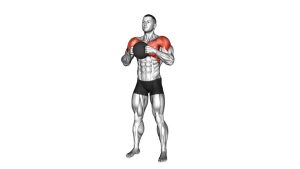
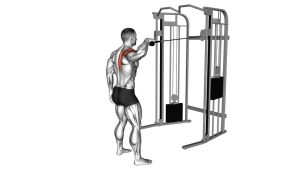
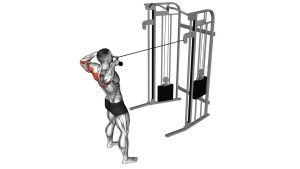
This exercise mainly trains the muscles responsible for external shoulder rotation, especially the infraspinatus and teres minor. It works best with slow tempo, a short-to-moderate range of motion, and steady shoulder positioning. You should feel the back of the shoulder and rotator cuff working without shrugging, twisting, or letting the elbow drift away from the torso.
Quick Overview
| Body Part | Shoulders |
|---|---|
| Primary Muscle | Infraspinatus and teres minor |
| Secondary Muscle | Rear deltoid, scapular stabilizers, and other rotator cuff support muscles |
| Equipment | Resistance band with a stable anchor point |
| Difficulty | Beginner (excellent for rehab-style work, warm-ups, and shoulder health) |
Sets & Reps (By Goal)
- Shoulder warm-up / activation: 2–3 sets × 10–15 reps per side with light tension and perfect control
- Rotator cuff strength: 3–4 sets × 8–12 reps per side with a 1–2 second pause at peak rotation
- Rehab-style control: 2–3 sets × 12–20 reps per side using very light resistance and smooth tempo
- Posture / prehab work: 2–3 sets × 12–15 reps per side at the end of an upper-body session
Progression rule: Increase control and time under tension before increasing band resistance. If your shoulder rolls forward or your torso starts twisting, the band is too heavy.
Setup / Starting Position
- Anchor the band: Attach the resistance band to a secure point roughly at elbow height.
- Stand tall: Keep your feet about hip-width apart with your ribs stacked over your pelvis.
- Set the working arm: Bend the elbow to about 90 degrees and keep it tucked against your side.
- Align the shoulder: Pull the shoulder blade gently down and back without over-squeezing.
- Start with light tension: Step away just enough to create mild resistance in the starting position.
Tip: Placing a small folded towel between the elbow and your torso can help keep the arm in the correct path.
Execution (Step-by-Step)
- Brace gently: Keep the torso still, chin neutral, and shoulders relaxed.
- Rotate outward: Move the forearm away from the body by rotating at the shoulder, not by pulling with the whole arm.
- Keep the elbow fixed: The elbow should stay close to your side throughout the rep.
- Pause briefly: Hold the end position for 1–2 seconds and feel the back of the shoulder working.
- Return slowly: Resist the pull of the band as you bring the forearm back to the starting position.
- Repeat evenly: Maintain the same range, tempo, and posture on every repetition.
Pro Tips & Common Mistakes
- Use light resistance: Rotator cuff work responds better to precision than ego loading.
- Keep the elbow close: Letting it float away changes the exercise and reduces isolation.
- Do not twist the torso: The body should stay quiet while the shoulder rotates.
- Avoid shrugging: Keep the upper traps relaxed so the shoulder stays centered.
- Do not force range: Only rotate as far as you can without losing position.
- Control the negative: The return phase is just as important as the outward phase.
- Pair it intelligently: This works well before pressing sessions or alongside rows, face pulls, and scapular stability drills.
FAQ
What muscles does the resistance band standing external rotation work?
It mainly targets the infraspinatus and teres minor, two key rotator cuff muscles that help externally rotate and stabilize the shoulder joint.
Should I feel this more in the shoulder or the upper back?
You should mostly feel it in the back of the shoulder and deep rotator cuff area. Some mild support from the upper back is normal, but it should not feel like a rowing movement.
How heavy should the band be?
Start lighter than you think. A band that allows smooth reps without shrugging, twisting, or elbow drift is the correct choice.
Can beginners use this exercise?
Yes. It is one of the best beginner-friendly shoulder stability drills when performed with light resistance and strict form.
Is this exercise good before upper-body workouts?
Yes. It works very well as part of a shoulder warm-up before pressing, pulling, throwing, or overhead training.
Recommended Equipment
- Shoulder Rehab Resistance Bands — ideal for light, controlled rotator cuff training and gradual progression
- Physical Therapy Bands — useful for rehab-style work, high-rep activation, and shoulder mobility drills
- Door Anchor for Resistance Bands — creates a stable anchor point for consistent standing external rotations at home
- Resistance Band Set with Door Anchor — a versatile option for shoulder work, rows, presses, and travel-friendly workouts
- Fit Simplify Resistance Loop Exercise Bands — compact loop bands that can work well for warm-ups, activation, and light rehab-style sessions
Tip: For this exercise, lighter bands are usually better than heavy ones. Your goal is clean shoulder rotation, not maximum tension.