Dumbbell Lateral to Front Raise: Proper Form, Sets, Tips & FAQ
Learn how to perform the Dumbbell Lateral to Front Raise with proper form to build stronger, rounder shoulders. Includes step-by-step execution, sets and reps by goal, common mistakes, FAQs, and recommended equipment.
Dumbbell Lateral to Front Raise
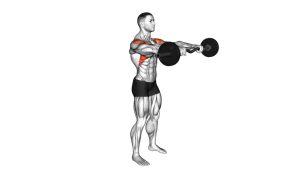
This exercise works best with light to moderate dumbbells and strict technique. You should feel the shoulders doing most of the work while the torso stays stable and the neck remains relaxed. Because the movement blends two raise patterns into one rep, it challenges shoulder endurance, coordination, and muscular control more than a standard single-direction raise.
Quick Overview
| Body Part | Shoulders |
|---|---|
| Primary Muscle | Lateral deltoid and anterior deltoid |
| Secondary Muscle | Upper traps, supraspinatus, upper chest, and core stabilizers |
| Equipment | Pair of dumbbells |
| Difficulty | Beginner to Intermediate |
Sets & Reps (By Goal)
- Muscle growth: 3-4 sets × 10-15 reps with light to moderate weight
- Shoulder endurance: 2-4 sets × 12-20 reps with strict tempo and short rest
- Technique practice: 2-3 sets × 8-12 reps using very light dumbbells
- Workout finisher: 2-3 sets × 12-15 reps with controlled form and minimal momentum
Progression rule: Increase reps first, then load. When all reps stay smooth and your shoulders—not your traps—do the work, gradually move up in weight.
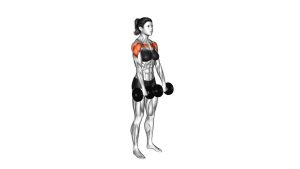
Setup / Starting Position
- Stand tall: Place your feet about hip-width to shoulder-width apart for balance.
- Hold the dumbbells at your sides: Use a neutral grip with palms facing inward.
- Keep a soft bend in the elbows: Do not lock the arms straight.
- Brace your core: Keep the ribs down and avoid leaning back.
- Relax your shoulders: Let the delts lift the weight instead of shrugging with the traps.
Tip: Choose lighter dumbbells than you would use for standard lateral raises. The combined movement is more demanding than it looks.
Execution (Step-by-Step)
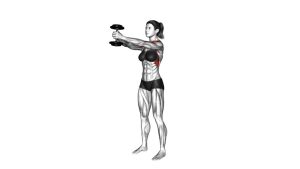
- Raise out to the sides: Lift both dumbbells laterally until your arms reach about shoulder height.
- Keep the elbows slightly bent: Maintain the same arm shape throughout the rep.
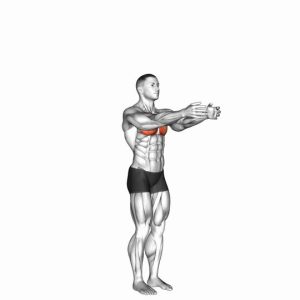
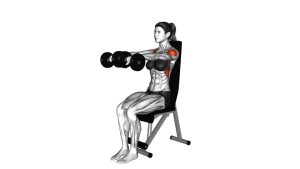
- Move into the front position: From the side raise position, sweep the dumbbells forward in a controlled arc until they are in front of your body at shoulder height.
- Pause briefly: Hold the front raise position for a moment without swinging or shrugging.
- Lower under control: Bring the dumbbells back down smoothly to the starting position.
- Repeat evenly: Use the same tempo on every rep and keep the torso still.
Pro Tips & Common Mistakes
- Use lighter weights than expected: This movement becomes difficult quickly because both front and side delts stay under tension.
- Stop at shoulder height: Going higher often shifts stress away from the delts and into the traps or shoulder joint.
- Keep the torso quiet: Avoid bouncing, leaning back, or using leg drive.
- Lead with the elbows: This can help keep the delts engaged during the side raise portion.
- Do not rush the transition: The arc from side to front is where control matters most.
- Avoid shrugging: Elevating the shoulders too much reduces delt emphasis and increases trap involvement.
- Control the lowering phase: The eccentric portion helps build better shoulder stability and hypertrophy.
FAQ
What muscles does the Dumbbell Lateral to Front Raise work?
It mainly targets the lateral deltoids and anterior deltoids. The traps and upper chest may assist slightly, while the core helps stabilize your body.
Should I go heavy on this exercise?
Usually no. This exercise works best with light to moderate dumbbells because control and continuous tension matter more than heavy loading.
Is this better than regular lateral raises?
It is not necessarily better, but it is more demanding per rep because it combines two movement patterns. It is excellent for adding variety, increasing time under tension, and training both the front and side delts.
Can beginners do this exercise?
Yes, as long as they start light and keep the movement controlled. Beginners should focus on clean reps before increasing weight.
Where should I place it in a shoulder workout?
It fits well in the middle or near the end of a shoulder session after pressing work, especially for hypertrophy-focused training.
Recommended Equipment
- Adjustable Dumbbells — ideal for fine-tuning load when shoulder isolation work requires lighter weight jumps
- Shoulder Resistance Bands — useful for warm-ups, activation drills, and extra delt volume with lower joint stress
- Adjustable Weight Bench — helpful for seated shoulder work and other upper-body accessories in the same session
- Wrist Wraps — optional support if your wrists feel uncomfortable during repeated raise variations
- Resistance Bands Set — great for shoulder prep, drop sets, and home-training alternatives
Choose equipment that supports smooth shoulder movement and controlled resistance. For this exercise, smaller load jumps are often more useful than very heavy dumbbells.