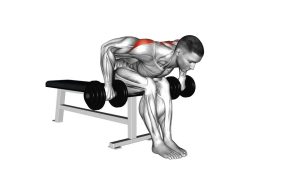
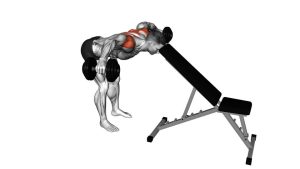
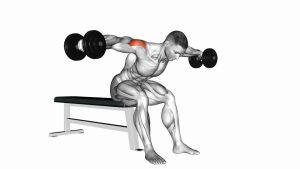
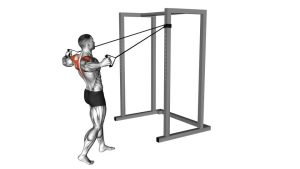
Dumbbell Rear Lateral Raise: Proper Form, Sets, Tips & FAQ
Learn how to do the Dumbbell Rear Lateral Raise with proper form to build stronger rear delts and upper back stability. Includes setup, execution, sets by goal, common mistakes, FAQs, and recommended equipment.
Dumbbell Rear Lateral Raise
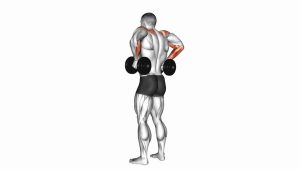
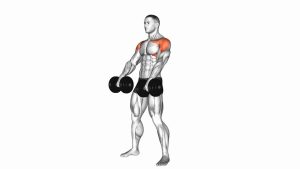
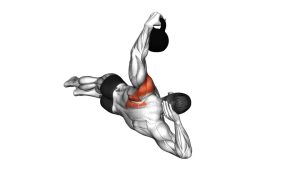
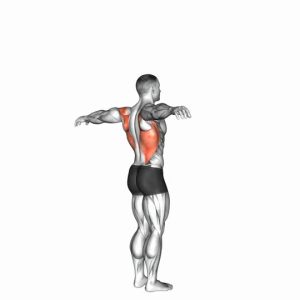
This exercise works best with moderate weight, strict control, and a clean range of motion. You should feel the movement mainly in the rear delts, with the upper back assisting naturally. Good reps come from lifting the dumbbells out wide rather than turning the exercise into a row or a shrug. When done correctly, the Dumbbell Rear Lateral Raise can help correct front-dominant shoulder training and support better posture.
Quick Overview
| Body Part | Rear Shoulders |
|---|---|
| Primary Muscle | Rear deltoids (posterior delts) |
| Secondary Muscle | Rhomboids, middle trapezius, rotator cuff stabilizers |
| Equipment | Dumbbells |
| Difficulty | Beginner to Intermediate |
Sets & Reps (By Goal)
- Muscle growth: 3-4 sets x 10-15 reps with controlled tempo and 45-75 seconds rest
- Shoulder definition: 3-4 sets x 12-20 reps using lighter weight and strict form
- Warm-up / activation: 2-3 sets x 12-15 reps with light dumbbells before upper-body sessions
- Posture support / balance work: 2-4 sets x 12-18 reps focusing on smooth reps and scapular control
Progression rule: Add reps before adding load. Rear delt isolation exercises respond best to clean technique, steady control, and consistent weekly volume rather than heavy cheating reps.
Setup / Starting Position
- Grab two dumbbells: Choose a manageable pair that lets you control both the lift and the lowering phase.
- Set your stance: Stand with feet about shoulder-width apart and keep a soft bend in the knees.
- Hinge at the hips: Push your hips back and lean your torso forward until your chest is angled toward the floor.
- Keep a neutral spine: Maintain a flat back, braced core, and relaxed neck position.
- Let the dumbbells hang below you: Start with your arms hanging down and your palms facing each other.
- Prepare the shoulders: Keep the shoulder blades stable and avoid shrugging before the lift begins.
Tip: A deeper hip hinge usually makes it easier to target the rear delts instead of the upper traps.
Execution (Step-by-Step)
- Brace your torso: Stay locked into the bent-over position without bouncing or standing up during the rep.
- Lift the dumbbells outward: Raise both arms out to the sides in a wide arc with a slight bend in the elbows.
- Lead with the elbows: Think about moving the upper arms rather than swinging the hands.
- Stop around shoulder height: Lift until your upper arms are roughly parallel to the floor or slightly below.
- Squeeze briefly at the top: Pause for a moment while keeping tension on the rear delts and upper back.
- Lower with control: Bring the dumbbells back down slowly to the starting position without letting them drop.
- Repeat smoothly: Keep each rep controlled and identical from start to finish.
Pro Tips & Common Mistakes
- Use lighter weights than you think: Rear delt work is more effective when the movement stays strict.
- Keep the torso fixed: Do not rise up as you lift the dumbbells.
- Lift out, not back: Pulling too far backward can shift tension into the traps and upper back.
- Avoid shrugging: Keep your shoulders down to prevent trap dominance.
- Do not turn it into a row: Excessive elbow flexion changes the exercise and reduces rear delt isolation.
- Control the eccentric: Lowering slowly improves muscle tension and keeps the exercise safer.
- Keep the neck neutral: Do not crane your head upward while bent over.
- Train rear delts regularly: They often need more direct volume than many lifters expect.
FAQ
What muscles does the Dumbbell Rear Lateral Raise work?
It primarily targets the rear deltoids. The rhomboids, middle traps, and small stabilizing muscles around the shoulder also assist during the movement.
Is this the same as a dumbbell reverse fly?
Yes, many people use the names interchangeably. In practice, the Dumbbell Rear Lateral Raise and bent-over dumbbell reverse fly usually describe the same rear-delt-focused movement pattern.
How heavy should I go on rear lateral raises?
Use a weight that allows strict reps without body swing. For most people, lighter dumbbells with strong control produce better rear delt activation than heavy weights with sloppy form.
Why do I feel this more in my traps than my rear delts?
That usually happens when you shrug the shoulders, lift too high, or use too much weight. Focus on a fixed torso, softer elbows, shoulders down, and a wide outward arm path.
Can beginners use this exercise?
Absolutely. It is a great beginner-friendly isolation exercise as long as the lifter uses light dumbbells, a stable hip hinge, and controlled repetitions.
Recommended Equipment (Optional)
- Adjustable Dumbbells — versatile for progressing rear delt work without needing multiple fixed dumbbell pairs
- Rubber Hex Dumbbells — stable, durable, and ideal for strict shoulder isolation training
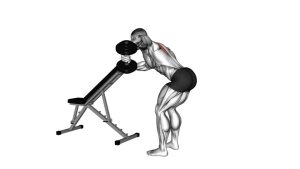
- Adjustable Weight Bench — useful for chest-supported rear delt variations and better torso stability
- Lifting Straps — helpful if grip fatigue limits your shoulder work during higher-rep sets
- Resistance Bands Set — useful for warm-ups, rear delt activation drills, and shoulder health work
Tip: Rear delt training usually responds best to moderate loads, controlled tempo, and consistent weekly practice.