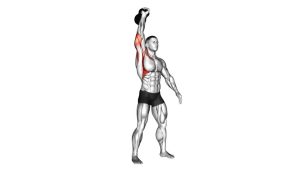
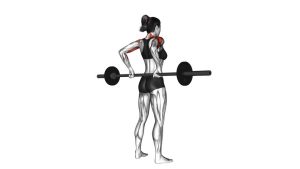
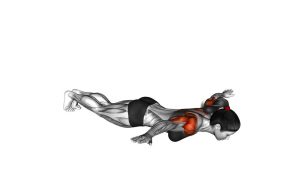
Weighted Round Arm Shoulder Raise: Proper Form, Sets, Tips & FAQ
Learn how to perform the Weighted Round Arm Shoulder Raise with proper form. Discover muscles worked, setup, execution steps, sets by goal, common mistakes, FAQs, and recommended equipment.
Weighted Round Arm Shoulder Raise
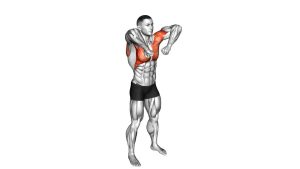
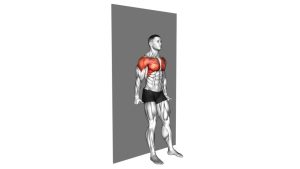
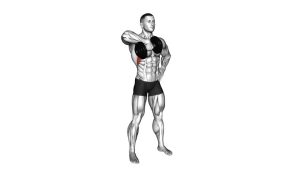
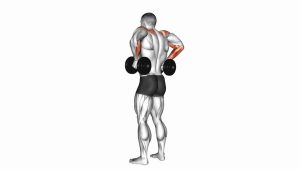
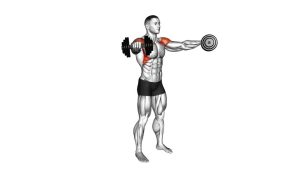
This exercise is best performed with strict form, moderate load, and deliberate tempo. The goal is to keep the arms moving in a controlled rounded pattern while the shoulders stay active and the torso stays stable. You should feel the movement primarily in the front of the shoulders, with assistance from the side delts and upper chest. Because the exercise is constant-tension based, lighter weights often work better than heavy plates.
Quick Overview
| Body Part | Front Shoulders |
|---|---|
| Primary Muscle | Anterior deltoid (front delts) |
| Secondary Muscle | Lateral deltoid, upper chest, upper traps, core stabilizers |
| Equipment | Weight plate |
| Difficulty | Beginner to Intermediate |
Sets & Reps (By Goal)
- Muscle growth: 3-4 sets × 10-15 reps with controlled circles and 45-75 sec rest
- Shoulder endurance: 2-4 sets × 15-20 reps with lighter weight and short rest
- Warm-up / activation: 2-3 sets × 8-12 reps using a very light plate and clean tempo
- Finisher / burnout: 1-3 sets × 20+ reps or timed sets of 30-45 seconds
Progression note: First improve control, range consistency, and time under tension. Increase plate weight only when you can keep the circles smooth without torso sway or shoulder shrugging.
Setup / Starting Position
- Stand tall: Place your feet about shoulder-width apart and keep your knees softly bent.
- Hold the plate securely: Grip a weight plate with both hands at roughly the 3 and 9 o’clock positions.
- Start in front of the body: Position the plate near the lower chest or upper waist with your elbows slightly bent.
- Brace the torso: Tighten your core, keep your ribs down, and avoid arching your lower back.
- Set the shoulders: Let the shoulders stay down and controlled rather than shrugged upward.
Tip: Choose a lighter plate than you would use for a standard front raise. This exercise becomes much harder once the circular motion starts.
Execution (Step-by-Step)
- Lift the plate forward: Raise the plate in front of your body until it reaches around shoulder height.
- Create the round motion: Begin tracing a small circular path with your arms while keeping the weight under control.
- Maintain slight elbow bend: Keep tension on the delts without locking the arms rigidly.
- Keep the torso still: Do not lean back, swing the weight, or bounce through the movement.
- Control every rep: Continue the circular path smoothly, then lower with the same deliberate control when the set ends.
Pro Tips & Common Mistakes
- Keep the circles small: Oversized circles reduce tension and make the movement sloppy.
- Use lighter weight than expected: Constant tension makes even a modest plate feel challenging.
- Do not swing: Momentum takes work away from the shoulders and increases stress on the joints.
- Avoid shrugging: Letting the traps take over reduces front-delt emphasis.
- Control the eccentric: The lowering phase matters just as much as the lifting phase for hypertrophy.
- Stay upright: Excessive back lean usually means the load is too heavy.
- Focus on the burn, not the load: This movement is excellent for isolation, volume, and shoulder finishers.
FAQ
What muscles does the Weighted Round Arm Shoulder Raise work most?
It mainly targets the anterior deltoids. The side delts, upper chest, traps, and core also assist with stabilization and control.
Is this better than a regular front raise?
It is not necessarily better, but it creates more continuous tension and often produces a stronger burnout effect. A regular front raise is simpler, while this version adds a control and endurance challenge.
How heavy should the plate be?
Start lighter than you think. Because the circular motion increases time under tension, even a modest plate can feel demanding after several reps.
Should the circles be large or small?
Keep them small and controlled. A tight circular path maintains tension on the shoulders and helps you avoid using momentum.
Can beginners do this exercise?
Yes, as long as they use a light weight and focus on control. Beginners should prioritize smooth movement and posture before trying longer sets or heavier plates.
Recommended Equipment (Optional)
- Olympic Weight Plates — the main tool for performing this exercise with multiple load options
- Adjustable Weight Vest — useful for adding general training resistance in shoulder-focused workouts
- Resistance Bands Set — excellent for shoulder warm-ups, activation drills, and pairing with delt training
- Full-Length Gym Mirror — helps monitor circle size, shoulder position, and torso stability during reps
- Lifting Straps — optional support if grip fatigue limits longer shoulder finisher sets
Tip: For most lifters, a few lighter plates and a mirror are enough to make this exercise effective. Good form matters more than heavy resistance here.