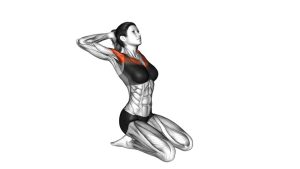
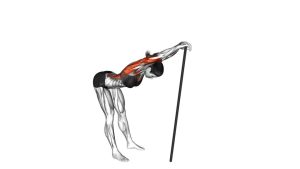
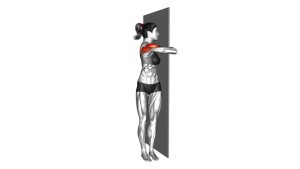
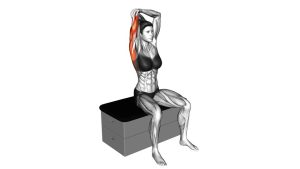
Arm-Up Rotator Stretch: Proper Form, Shoulder Mobility Benefits, Tips & FAQ
Learn how to do the Arm-Up Rotator Stretch for better shoulder mobility, rotator cuff flexibility, and behind-the-back range of motion. Includes setup, form tips, sets by goal, mistakes, FAQ, and recommended equipment.
Arm-Up Rotator Stretch
This exercise works best when you stay tall, relaxed, and patient. The goal is not to yank the arm into extreme range, but to gradually improve shoulder mobility with controlled assistance. You should feel the stretch mostly in the rear shoulder, rotator cuff area, and sometimes the upper arm. If you feel pinching at the front of the shoulder or sharp joint discomfort, reduce the range and use a gentler pull.
Quick Overview
| Body Part | Shoulders |
|---|---|
| Primary Muscle | Posterior deltoid, infraspinatus, teres minor |
| Secondary Muscle | Subscapularis, triceps long head, upper-back stabilizers |
| Equipment | Mobility stick, dowel, strap, towel, or resistance band |
| Difficulty | Beginner (easy to scale by adjusting grip width and pull intensity) |
Sets & Reps (By Goal)
- Daily shoulder mobility: 2–3 sets × 20–30 sec hold per side
- Warm-up before upper-body training: 1–2 sets × 15–20 sec hold per side
- Flexibility focus: 2–4 sets × 30–45 sec hold per side
- Rehab-style control work: 2–3 sets × 15–25 sec hold per side at very low intensity
Progression rule: First improve comfort and smoothness. Then increase hold time slightly. Only increase stretch depth when you can maintain relaxed shoulders and no front-of-shoulder pinching.
Setup / Starting Position
- Stand tall: Keep your ribs stacked over your hips and your spine neutral.
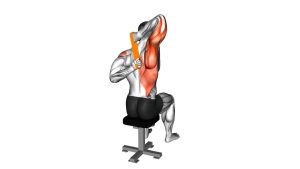
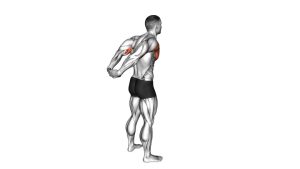
- Grab your tool: Hold a stick, strap, band, or towel behind your body with one hand overhead and the other behind your lower back.
- Set the top arm: Bend the elbow overhead so the top hand reaches down behind your head.
- Set the bottom arm: Reach the lower hand behind your back and grip the lower end of the tool.
- Relax the shoulders: Avoid shrugging, twisting, or arching your lower back before the stretch begins.
Tip: If your shoulders are very tight, start with a longer towel or strap so you can keep the position comfortable and controlled.
Execution (Step-by-Step)
- Get into position: Keep your chest tall and your neck relaxed as both hands hold the tool behind your body.
- Assist with the top arm: Gently pull upward with the top hand to guide the lower arm higher behind your back.
- Feel the stretch: Pause when you feel mild-to-moderate tension in the rear shoulder and rotator cuff area.
- Hold and breathe: Maintain calm breathing and keep the rest of the body still for the programmed hold time.
- Release slowly: Ease out of the stretch with control, then switch sides.
Pro Tips & Common Mistakes
- Use a gentle pull: Stretch intensity should build gradually, not suddenly.
- Stay upright: Don’t lean sideways or flare the ribs to fake more shoulder range.
- Keep the lower shoulder relaxed: Avoid shrugging the stretched side upward.
- Don’t force end range: Shoulder mobility improves better with consistency than with aggressive stretching.
- Use longer leverage if needed: A towel or strap makes the exercise more accessible than a short stick for tight shoulders.
- Pair it wisely: This stretch works well after shoulder training, upper-back work, or a general upper-body warm-up.
FAQ
Where should I feel the Arm-Up Rotator Stretch?
Most people feel it in the rear shoulder, rotator cuff region, and sometimes the back of the upper arm. You should not feel sharp pinching in the front of the shoulder.
Is this a mobility drill or a static stretch?
It is mostly a static assisted stretch. You move into position, hold gently, and let the tissues relax while maintaining good posture.
What if I can’t reach my hands together behind my back?
Use a longer towel, strap, or band. That makes the exercise easier and lets you build mobility without forcing the joint.
Can I do this before workouts?
Yes, but keep it light and brief before training. Longer holds are usually better after workouts or in dedicated mobility sessions.
Who should be cautious with this exercise?
Anyone with a painful shoulder injury, recent surgery, instability, or sharp impingement symptoms should avoid forcing this stretch and follow professional guidance.
Recommended Equipment (Optional)
- Adjustable Mobility Stick / Stretching Stick — useful for assisted shoulder mobility drills and controlled stretching
- Stretching Strap with Loops — great for gradual progression when a rigid stick feels too limiting
- Physical Therapy Resistance Bands — useful for pairing mobility work with light rotator cuff strengthening
- Shoulder Pulley for Physical Therapy — an optional tool for assisted range-of-motion practice at home
- Shoulder Rehab Band Set — helpful for warming up and reinforcing healthy shoulder movement patterns
Tip: Start with the simplest tool that lets you move comfortably. Better control and steady progress matter more than aggressive stretching.