Dumbbell One-Arm Lateral Raise : Form, Muscles Worked, Sets, Tips & FAQ
Learn how to do the Dumbbell One-Arm Lateral Raise with proper form. Discover muscles worked, setup, step-by-step execution, sets and reps by goal, common mistakes, FAQs, and recommended equipment.
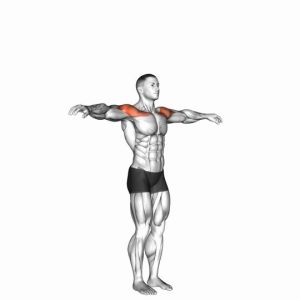
Dumbbell One-Arm Lateral Raise
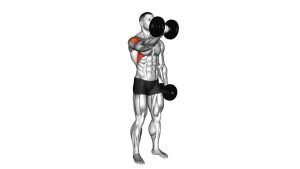
This variation is excellent for improving left-to-right shoulder balance, refining mind-muscle connection, and keeping tension on one side at a time. Because only one arm is working, it is easier to focus on a clean path, a stable torso, and a smooth lifting arc. You should feel the exercise mostly in the side shoulder, with only light assistance from stabilizers.
Quick Overview
| Body Part | Side Shoulders |
|---|---|
| Primary Muscle | Lateral deltoid |
| Secondary Muscle | Anterior deltoid, supraspinatus, upper traps (minimal if form is clean), core stabilizers |
| Equipment | 1 dumbbell |
| Difficulty | Beginner to Intermediate |
Sets & Reps (By Goal)
- Muscle growth: 3–4 sets × 10–15 reps per arm, 45–75 sec rest
- Shoulder definition / accessory work: 2–4 sets × 12–20 reps per arm, 30–60 sec rest
- Strength control / technique focus: 3 sets × 8–10 reps per arm, 60–90 sec rest
- Beginner practice: 2–3 sets × 10–12 reps per arm using a light dumbbell and slow tempo
Progression rule: First improve control, then add reps, then increase load gradually. If form breaks before the target rep range, the weight is too heavy.
Setup / Starting Position
- Stand tall: Place your feet about hip-width to shoulder-width apart and brace your core lightly.
- Hold one dumbbell at your side: Use a neutral grip with the palm facing inward.
- Keep posture stacked: Chest up, ribs down, neck relaxed, and shoulders level.
- Soften the elbow: Keep a slight bend rather than locking the arm straight.
- Set the non-working side: Let the free arm rest naturally or place it on your hip for balance.
Tip: Before starting, think about keeping the working shoulder down rather than letting it shrug upward.
Execution (Step-by-Step)
- Start from your side: Begin with the dumbbell beside your thigh and your torso still.
- Raise outward in an arc: Lift the dumbbell out to the side by driving through the shoulder.
- Lead slightly with the elbow: Let the elbow guide the motion while keeping a gentle bend in the arm.
- Stop around shoulder height: Raise until the arm is roughly parallel to the floor or slightly below if needed.
- Pause briefly: Hold the top for a moment without shrugging or twisting.
- Lower under control: Return the dumbbell slowly along the same path until it reaches the start position.
- Repeat evenly: Complete all reps on one side, then switch arms, or alternate sides based on your program.
Pro Tips & Common Mistakes
- Lead with the elbow: This usually helps keep tension on the side delt instead of just lifting with the hand.
- Use a slight elbow bend: A soft arm position is more joint-friendly and easier to control.
- Keep the shoulder down: Avoid shrugging so the lateral deltoid does more of the work.
- Do not swing the torso: Momentum reduces isolation and often turns the movement into a cheat rep.
- Do not go too heavy: Lateral raises usually respond better to moderate or lighter loads with strict form.
- Stop at clean range: Shoulder height is usually enough; higher is not always better.
- Control the lowering phase: The eccentric part of the rep matters for muscle growth and technique quality.
FAQ
What muscle does the one-arm lateral raise work the most?
The exercise mainly targets the lateral deltoid, which is the side portion of the shoulder responsible for helping create a broader shoulder appearance.
Should I raise the dumbbell above shoulder height?
In most cases, no. Stopping around shoulder height keeps the movement cleaner and helps reduce unnecessary trap dominance.
Why do I feel this more in my traps than my shoulders?
That usually happens when the weight is too heavy, the shoulder shrugs upward, or the movement becomes rushed. Lower the load and focus on keeping the shoulder down and the elbow leading the path.
Is one arm better than doing both arms together?
The unilateral version can be very useful for improving symmetry, control, and mind-muscle connection. It also lets you focus more clearly on one shoulder at a time.
How heavy should I go on lateral raises?
Use a weight that allows strict reps with no swinging. For most people, lateral raises work best with light to moderate dumbbells and strong control.
Recommended Equipment
- Adjustable Dumbbells — ideal if you want multiple weight options for progressive overload without buying many separate pairs
- Neoprene Dumbbell Set — great for beginners and lighter, stricter lateral raise work
- Resistance Loop Bands — useful for shoulder warm-ups, activation drills, and extra side-delt volume
- Adjustable Weight Bench — helpful if you want more shoulder training options alongside raises and presses
- Workout Gloves — optional grip support for longer shoulder sessions or home training comfort
Tip: For lateral raises, lighter dumbbells with better control usually outperform heavier dumbbells with poor form.