Barbell Seated Overhead Press : Proper Form, Muscles Worked, Sets & Tips
Learn how to perform the Barbell Seated Overhead Press with proper form. Discover muscles worked, setup, step-by-step execution, sets and reps by goal, common mistakes, FAQs, and recommended equipment.
Barbell Seated Overhead Press
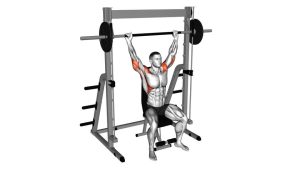
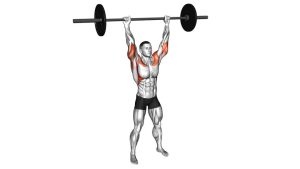
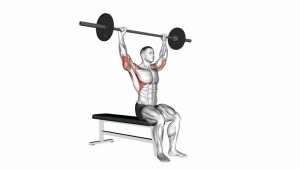
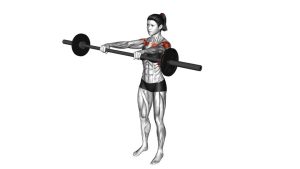
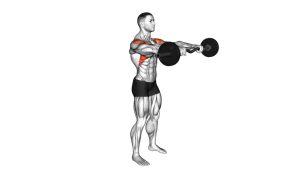
This exercise is best performed with a strong upright setup and smooth bar control. The goal is to move the bar overhead without turning the press into a loose, overarched lift. You should feel the shoulders doing most of the work, with the triceps helping finish the press. Keep the ribcage down, avoid excessive lean-back, and lower the bar with intention instead of letting it drop.
Quick Overview
| Body Part | Shoulders |
|---|---|
| Primary Muscle | Anterior deltoids |
| Secondary Muscle | Lateral deltoids, triceps brachii, upper chest, upper traps (stabilizing) |
| Equipment | Barbell, weight plates, flat or upright bench, optional collars |
| Difficulty | Beginner to Intermediate |
Sets & Reps (By Goal)
- Strength: 4–5 sets × 4–6 reps with 2–3 minutes rest
- Muscle growth: 3–4 sets × 6–10 reps with 60–90 seconds rest
- Technique practice: 2–4 sets × 8–12 reps with light-to-moderate load
- General fitness: 3 sets × 8–12 reps with controlled tempo
Progression tip: Add weight gradually only when you can keep the bar path smooth, the torso upright, and every rep controlled from chest level to full lockout.
Setup / Starting Position
- Set the bench: Sit on a stable bench with your torso upright and feet flat on the floor.
- Grip the bar: Take a pronated grip slightly wider than shoulder width.
- Rack position: Hold the bar at upper-chest or collarbone level with wrists stacked over elbows.
- Brace the torso: Keep your core tight, chest tall, and avoid flaring the ribs upward.
- Head and elbows: Keep your eyes forward, neck neutral, and elbows slightly in front of the bar rather than flared straight out.
Tip: Before pressing, think “glutes grounded, core tight, shoulders down and stable.”
Execution (Step-by-Step)
- Start from the upper chest: Begin with the bar under control at shoulder level.
- Press upward: Drive the bar vertically overhead while extending your elbows.
- Move around the face: Let the bar travel close to the face without drifting too far forward.
- Lock out overhead: Finish with the bar stacked over the shoulders and arms fully extended.
- Pause briefly: Stabilize at the top without shrugging excessively or leaning back.
- Lower with control: Bring the bar back down to the upper chest in a steady eccentric phase.
- Repeat cleanly: Maintain posture and bar control on every rep.
Pro Tips & Common Mistakes
- Keep the wrists stacked: Avoid letting the wrists bend too far backward under the bar.
- Press up, not out: A forward bar path wastes energy and can stress the shoulders.
- Stay upright: Too much lean-back turns the press into an incline-style movement.
- Don’t bounce from the chest: Start each rep under control.
- Use full-body tension: Even seated, your core and legs should help keep you stable.
- Lower slowly: The eccentric portion is important for shoulder control and hypertrophy.
- Avoid ego loading: Heavy weight with sloppy mechanics is one of the fastest ways to stall progress.
FAQ
What muscles does the seated barbell overhead press work most?
The main target is the anterior deltoid. The lateral deltoid and triceps also contribute heavily, while the upper chest and upper traps assist with pressing and stabilization.
Is seated overhead pressing better than standing?
Neither is universally better. The seated version usually reduces momentum and lower-body involvement, which can make it easier to focus on shoulder hypertrophy and strict pressing form.
How low should I bring the bar?
For most lifters, lowering to the upper chest or collarbone area works well. Only use a range you can control without shoulder pain or compensating with excessive torso lean.
Should I lock out at the top?
Yes, in most cases a controlled lockout is fine. Just avoid slamming into the top position or shrugging aggressively.
What if I feel this more in my lower back than my shoulders?
That usually means you are leaning back too much, losing core position, or using more load than you can control. Reduce the weight and focus on a taller, stricter press.
Recommended Equipment
- Olympic Barbell — the main implement for building pressing strength with proper loading potential
- Olympic Weight Plates — lets you scale resistance gradually for strength and hypertrophy work
- Flat Weight Bench — provides a stable seated base for strict overhead pressing
- Barbell Collars — helps secure the plates and improve training safety
- Lifting Wrist Wraps — useful for lifters who want extra wrist support during heavier pressing sets
Choose gear that supports stable pressing mechanics first. Good setup quality usually matters more than adding load too quickly.