Lever Seated Reverse Fly : Form, Muscles Worked, Sets, Tips & FAQ
Learn how to perform the Lever Seated Reverse Fly with proper form to build rear delts, improve shoulder balance, and support posture. Includes muscles worked, setup, execution, sets and reps, mistakes, FAQ, and recommended equipment.
Lever Seated Reverse Fly
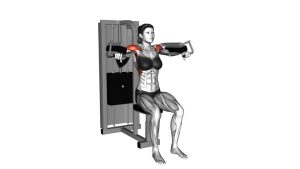
This exercise is especially useful for lifters who do a lot of pressing, front-delt work, or desk-based activity. Because the machine guides the movement path, it makes it easier to focus on the posterior delts without having to balance free weights. You should feel the work mostly in the back of the shoulders, with some assistance from the rhomboids and middle traps. Keep the movement smooth and avoid turning it into a row.
Quick Overview
| Body Part | Shoulders |
|---|---|
| Primary Muscle | Rear deltoids (posterior delts) |
| Secondary Muscle | Rhomboids, middle trapezius, rotator cuff stabilizers |
| Equipment | Lever reverse fly machine / seated rear delt machine |
| Difficulty | Beginner to Intermediate |
Sets & Reps (By Goal)
- Muscle growth: 3–4 sets × 10–15 reps, 45–75 sec rest
- Shoulder balance / accessory work: 2–4 sets × 12–20 reps, 30–60 sec rest
- Strength-focused machine work: 3–5 sets × 6–10 reps, 75–120 sec rest
- Warm-up / activation: 2–3 sets × 15–20 light reps, controlled tempo
Progression rule: Add reps first, then increase load gradually. Rear delt work usually responds best to clean execution, steady tension, and moderate loads rather than heavy swinging.
Setup / Starting Position
- Adjust the seat: Set the seat so the handles align around shoulder height or slightly below.
- Sit tall: Plant your feet flat and keep your chest firmly against the pad if the machine uses chest support.
- Grip the handles: Use a comfortable grip with a soft bend in the elbows.
- Set your shoulders: Keep the neck long, shoulders down, and chest proud without over-arching the lower back.
- Start under control: Begin with the arms in front of you and tension already on the machine.
Tip: A correct seat height makes a big difference. If the handles are too high or too low, the movement can shift away from the rear delts.
Execution (Step-by-Step)
- Brace lightly: Keep your torso still and your chest connected to the pad.
- Open the arms: Drive the handles out and back in a wide arc while keeping a slight bend in the elbows.
- Lead with the rear shoulders: Think about moving through the back of the shoulders, not pulling with the hands.
- Squeeze at the end: Pause briefly when your arms reach out to the sides and your shoulder blades come together naturally.
- Return slowly: Control the eccentric and bring the handles back to the starting position without letting the weight slam.
Pro Tips & Common Mistakes
- Use a modest load: Rear delts are smaller muscles and respond better to control than ego lifting.
- Keep elbows soft: Too much elbow bend can turn the exercise into a mid-back row.
- Do not shrug: Keep the upper traps relaxed so the rear delts do more of the work.
- Control the return: The lowering phase is valuable for hypertrophy and joint control.
- Chest stays supported: Avoid rocking your torso backward to cheat the rep.
- Think “open and squeeze”: That cue usually works better than “pull hard.”
- Train rear delts consistently: This movement pairs well with rows, face pulls, and lateral raises.
FAQ
What muscles does the Lever Seated Reverse Fly work most?
It mainly targets the rear deltoids. The rhomboids, middle traps, and smaller shoulder stabilizers also assist.
Is the Lever Seated Reverse Fly better than dumbbell reverse flyes?
It is often easier for beginners because the machine provides stability and a guided path. Dumbbells can be excellent too, but the machine usually makes it easier to keep tension on the rear delts.
Should I squeeze my shoulder blades together hard?
A natural squeeze is good, but do not exaggerate it so much that the movement becomes mostly upper back. Keep the rear delts as the primary focus.
How heavy should I go?
Choose a load that lets you move smoothly for the target rep range without shrugging, jerking, or losing chest support. Clean reps beat heavy reps on this exercise.
Where should I feel it?
You should mainly feel it in the back of the shoulders. Some tension in the mid-upper back is normal, but neck strain and trap dominance usually mean the weight is too heavy or your form needs adjustment.
Recommended Equipment
- Shoulder Resistance Bands — useful for rear delt activation, warm-ups, and home shoulder work
- Resistance Loop Bands — great for light posterior shoulder training, rehab-style work, and mobility drills
- Over-the-Door Resistance Band Set — gives you a practical home alternative for reverse fly and face-pull variations
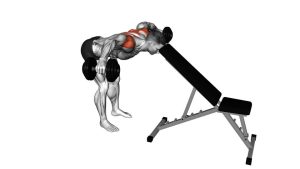
- Adjustable Weight Bench — helpful for chest-supported rear delt raises and other shoulder accessory exercises
- Pec Fly / Rear Delt Machine — closest home-gym machine option for replicating the same reverse fly pattern
Tip: For most people, bands and a bench are the most cost-effective home options. A dedicated rear delt machine is useful, but only makes sense if you are building a more complete home gym.