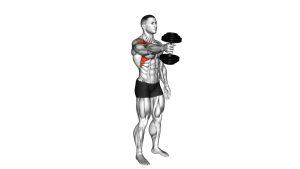
Dumbbell Front Raise : Proper Form, Sets, Tips & FAQ
Learn how to do the Dumbbell Front Raise with proper form to build stronger front delts. Includes setup, execution, sets and reps by goal, common mistakes, FAQs, and recommended equipmen
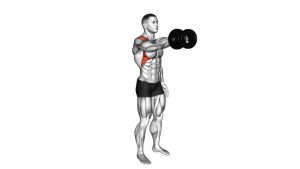
Dumbbell Front Raise
This exercise is best performed with light-to-moderate weight and strict control. It works well as part of a shoulder hypertrophy workout, an upper-body accessory session, or a beginner-friendly front-delt builder. Because the movement has a relatively short range and low margin for sloppy technique, proper form matters more than using heavy dumbbells.
Quick Overview
| Body Part | Shoulders |
|---|---|
| Primary Muscle | Anterior deltoid (front delts) |
| Secondary Muscle | Upper chest, serratus anterior, lateral delts, core stabilizers |
| Equipment | Dumbbells |
| Difficulty | Beginner |
Sets & Reps (By Goal)
- Muscle growth: 3–4 sets × 10–15 reps with controlled tempo and 45–75 seconds rest
- Shoulder endurance: 2–4 sets × 12–20 reps with light dumbbells and steady form
- Technique practice: 2–3 sets × 8–12 reps using very light weight and strict motion
- Upper-body accessory work: 2–3 sets × 10–15 reps after presses or lateral raises
Progression rule: Increase the weight only when you can raise and lower every rep without swinging, leaning back, or shrugging.
Setup / Starting Position
- Stand tall: Place your feet about hip-width to shoulder-width apart for a stable base.
- Hold the dumbbells in front of your thighs: Use a neutral grip with palms facing your body.
- Keep a soft bend in the elbows: Your arms should stay slightly bent, not locked.
- Brace the core: Tighten the abs and keep the ribs down to prevent leaning backward.
- Set the shoulders: Keep them relaxed and down, not shrugged toward the ears.
Tip: Starting with lighter dumbbells usually improves control and helps you keep tension where it belongs—the front delts.
Execution (Step-by-Step)
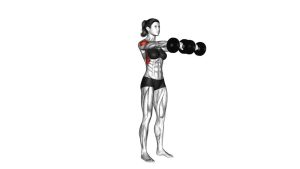
- Begin from the thighs: Start with the dumbbells resting in front of your upper thighs.
- Raise both dumbbells forward: Lift them in a smooth arc in front of the body.
- Stop at shoulder height: Bring the dumbbells up until your arms are roughly parallel to the floor.
- Pause briefly: Hold the top for a moment without shrugging or swinging.
- Lower under control: Bring the dumbbells back down slowly along the same path.
- Repeat evenly: Maintain the same posture and range of motion on every rep.
Pro Tips & Common Mistakes
- Lift only to shoulder level: Going too high can reduce tension quality and irritate the shoulder.
- Keep the core tight: This prevents lower-back arching and torso swing.
- Use strict tempo: Raise smoothly, then lower even more slowly for better delt engagement.
- Don’t go too heavy: Front raises are an isolation exercise, not a momentum-based lift.
- Avoid shrugging: Letting the traps take over reduces front-delt focus.
- Keep the elbows softly bent: This protects the joints and helps maintain a natural arm path.
- Watch wrist position: Keep wrists neutral rather than bent backward.
FAQ
What muscles does the Dumbbell Front Raise work?
The main target is the anterior deltoid, which is the front part of the shoulder. The upper chest and core also help stabilize the movement.
Should I raise the dumbbells above shoulder height?
No. In most cases, shoulder height is enough. Raising higher often shifts tension away from the ideal range and may increase unnecessary shoulder stress.
Is this exercise good for beginners?
Yes. It is beginner-friendly when performed with light dumbbells, controlled tempo, and clean posture. Start with a manageable load and master the range before progressing.
Why do I feel my traps more than my front delts?
That usually happens when the weight is too heavy or the shoulders shrug upward during the lift. Reduce the load and focus on keeping your shoulders down throughout the set.
Can I do front raises on shoulder day after pressing?
Yes. Front raises work well after overhead presses or machine shoulder presses as a lighter accessory movement to add focused anterior-delt volume.
Recommended Equipment
- Amazon Basics Neoprene Dumbbell Hand Weights — beginner-friendly hand weights for strict front raises and controlled shoulder work
- CAP Barbell Coated Hex Dumbbells — durable fixed dumbbells with a stable grip for home or gym training
- Adjustable Dumbbells Pair — practical for progressive overload without buying multiple fixed-weight pairs
- Weightlifting Wrist Wraps — useful if you want extra wrist support during higher-volume shoulder sessions
- Exercise Mat for Home Workouts — helpful for home training comfort, floor protection, and a cleaner workout setup
Tip: For most lifters, a light pair of dumbbells and consistent technique will do more for front raises than chasing heavy weights too early.