Dumbbell Z Press: Proper Form, Sets, Benefits & Common Mistakes
Learn the Dumbbell Z Press to build stronger shoulders, core stability, and strict overhead pressing mechanics. Includes setup, form tips, sets by goal, mistakes, FAQs, and recommended equipment.
Dumbbell Z Press
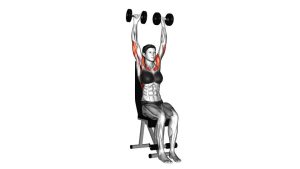
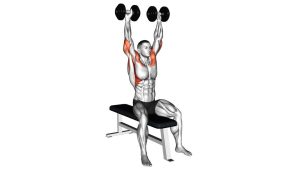
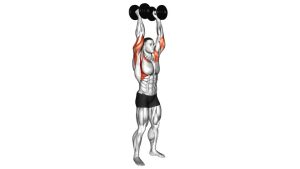
The Dumbbell Z Press is one of the best ways to improve strict overhead pressing mechanics while exposing mobility or stability weaknesses. Because you sit on the floor without a bench, you have to create your own posture through the hips, core, and upper back. Done correctly, it builds stronger shoulders, better bracing, and cleaner pressing technique that can carry over to other overhead movements.
Quick Overview
| Body Part | Shoulders |
|---|---|
| Primary Muscle | Anterior deltoids and lateral deltoids |
| Secondary Muscle | Triceps, upper chest, core stabilizers, upper back |
| Equipment | Dumbbells, floor space, optional exercise mat |
| Difficulty | Intermediate (requires overhead mobility, trunk stability, and hip flexibility) |
Sets & Reps (By Goal)
- Shoulder strength: 4-5 sets × 4-6 reps, 90-150 sec rest
- Muscle building: 3-4 sets × 8-12 reps, 60-90 sec rest
- Technique and control: 3-4 sets × 6-8 reps, moderate load, smooth tempo
- Warm-up / activation: 2-3 sets × 10-12 reps with light dumbbells
Progression rule: Increase weight only when you can stay upright, reach a controlled lockout, and lower the dumbbells without leaning back or losing spinal position.
Setup / Starting Position
- Sit on the floor: Extend both legs straight in front of you and keep the heels lightly on the ground.
- Get tall: Sit upright with the chest open, ribs stacked, and core braced. Avoid slouching or over-arching.
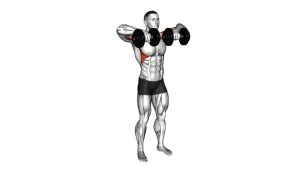
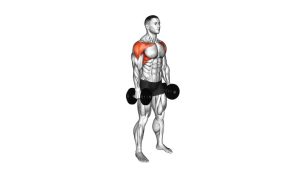
- Hold the dumbbells at shoulder level: Keep the elbows slightly in front of the body and wrists stacked over the elbows.
- Set your head and neck neutral: Eyes forward, chin level, shoulders down and stable.
- Create full-body tension: Brace your abs and squeeze your glutes lightly to help keep the torso vertical.
Tip: If your hamstrings or hips are too tight to sit upright, elevate your hips slightly on a low pad or plate until you can maintain good posture.
Execution (Step-by-Step)
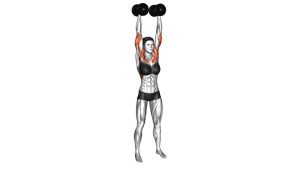
- Start from the rack position: Hold the dumbbells beside the shoulders with the forearms close to vertical.
- Brace before pressing: Tighten the core to prevent your torso from tipping backward.
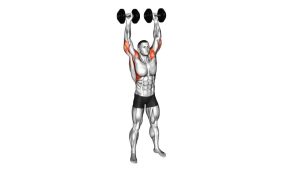
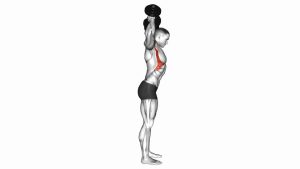
- Press straight overhead: Drive the dumbbells upward in a controlled vertical path until the arms are fully extended.
- Finish at lockout: Bring the dumbbells overhead without smashing them together, keeping the shoulders active and stable.
- Lower with control: Bring the dumbbells back to shoulder level slowly while maintaining a tall seated posture.
- Repeat smoothly: Each rep should look clean and strict, with no bouncing, jerking, or leaning back.
Pro Tips & Common Mistakes
- Stay tall from the floor: The best Z Press reps come from posture, not from trying to “muscle” the weight up.
- Press in a vertical line: Keep the dumbbells moving overhead rather than forward in front of the body.
- Brace hard before each rep: A strong core helps protect your lower back and keeps the press strict.
- Don’t lean back: Excessive backward lean turns the rep into a compensation pattern and reduces the benefit of the exercise.
- Avoid flaring the elbows too wide: Slightly forward elbows usually create a stronger and more shoulder-friendly pressing path.
- Control the lowering phase: The eccentric portion builds stability and helps reinforce clean mechanics.
- Use realistic loads: The Z Press is usually lighter than a seated or standing dumbbell press because it removes support and momentum.
FAQ
What muscles does the Dumbbell Z Press work most?
The main muscles are the anterior deltoids and lateral deltoids. The triceps help extend the elbows, while the core and upper back work hard to keep the torso upright and stable.
Why is the Z Press harder than a regular seated shoulder press?
Because you lose bench support and leg assistance. Sitting on the floor forces you to stabilize the trunk entirely on your own, which makes strict pressing much more demanding.
Is the Dumbbell Z Press good for shoulder growth?
Yes. It can be excellent for shoulder development, especially when used with controlled reps and moderate loads. It also improves pressing mechanics, which can help your performance in other overhead exercises.
What if I cannot sit upright with my legs straight?
That usually points to limited hamstring, hip, or thoracic mobility. You can slightly elevate your hips, reduce the load, or work on mobility until you can hold a tall seated position comfortably.
Should I use heavy weight on the Z Press?
Usually not at first. The Z Press rewards clean mechanics more than ego loading. Start lighter than your normal shoulder press and progress only when your form stays strict.
Recommended Equipment
- Dumbbell Set — the main tool for loading the Z Press with consistent progression
- Adjustable Dumbbell Set — space-saving option for home gyms and progressive overload
- Exercise Mat — adds comfort and grip when seated on the floor during pressing work
- Adjustable Weight Bench — useful for pairing the Z Press with other shoulder and upper-body exercises
- Resistance Bands Set — great for shoulder warm-ups, mobility drills, and upper-back accessory work
Tip: Pair the Dumbbell Z Press with lateral raises, rear-delt work, and upper-back exercises for more complete shoulder development.