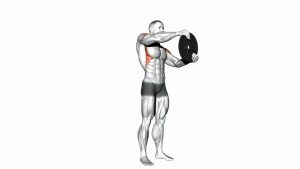
Dumbbell Alternate Front Raise: Form, Muscles Worked, Sets, Tips & FAQ
Learn how to do the Dumbbell Alternate Front Raise with proper form. Discover muscles worked, setup, execution steps, sets and reps by goal, common mistakes, FAQs, and recommended equipment.
Dumbbell Alternate Front Raise
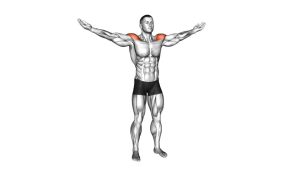
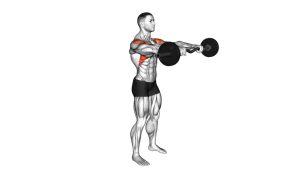
This exercise is most effective when performed with a moderate load, a steady tempo, and strong upper-body positioning. The alternating pattern helps many lifters stay more controlled than bilateral front raises, especially when focusing on muscular tension rather than momentum. You should feel the front of the shoulder doing most of the work, while the torso remains still and braced.
Quick Overview
| Body Part | Front Shoulders |
|---|---|
| Primary Muscle | Anterior deltoid (front deltoid) |
| Secondary Muscle | Upper chest, lateral deltoid, serratus anterior, core stabilizers, forearms |
| Equipment | Dumbbells |
| Difficulty | Beginner to Intermediate |
Sets & Reps (By Goal)
- Muscle growth: 3–4 sets × 10–15 reps per arm, 45–75 sec rest
- Shoulder endurance: 2–4 sets × 15–20 reps per arm, 30–60 sec rest
- Strength-focused isolation: 3–4 sets × 8–10 reps per arm, 60–90 sec rest
- Warm-up / activation: 2–3 sets × 10–12 reps per arm with light weight and perfect control
Progression rule: First improve control and reduce torso movement. Then add reps, and only after that increase the dumbbell weight.
Setup / Starting Position
- Stand tall: Place your feet about hip-width apart with knees softly bent.
- Hold the dumbbells at your sides: Use a neutral grip with palms facing inward toward your thighs.
- Brace your core: Keep your ribs down, chest tall, and avoid arching the lower back.
- Set the shoulders: Keep them down and relaxed rather than shrugged upward.
- Start balanced: Let both arms hang naturally with a slight bend in the elbows.
Tip: Choose a weight that lets you raise each dumbbell to shoulder level without body swing or momentum.
Execution (Step-by-Step)
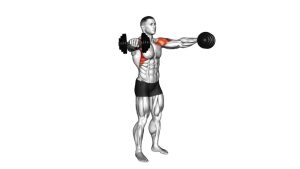
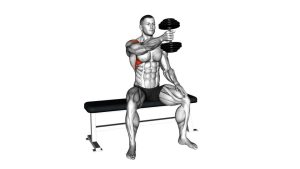
- Lift one dumbbell forward: Raise one arm in front of your body in a smooth arc while keeping a soft bend in the elbow.
- Stop at shoulder height: Bring the dumbbell up until the arm is roughly parallel to the floor.
- Pause briefly: Squeeze the front delt for a moment without shrugging the shoulder.
- Lower under control: Return the dumbbell to the starting position slowly.
- Switch arms: Begin the same movement with the opposite arm while keeping the torso stable.
- Repeat in alternation: Continue alternating reps until both sides complete the target volume.
Pro Tips & Common Mistakes
- Raise only to shoulder height: Going much higher often shifts tension away from the target muscle and adds unnecessary strain.
- Keep the torso quiet: Don’t lean back, dip the knees, or swing the weight upward.
- Use a slight elbow bend: Keep it fixed throughout the rep rather than turning the movement into a curl.
- Control the lowering phase: The eccentric portion is valuable for muscle growth and shoulder control.
- Don’t go too heavy: Front raises respond well to moderate weight and precise execution.
- Keep traps from taking over: If your shoulders shrug toward your ears, lighten the load and reset your posture.
- Alternate with purpose: Let one arm fully finish before the other begins instead of rushing the rhythm.
FAQ
What muscles does the Dumbbell Alternate Front Raise work?
The main target is the anterior deltoid, or front shoulder. Secondary support comes from the upper chest, lateral deltoid, forearms, and core stabilizers.
Is alternating better than raising both dumbbells together?
Alternating can make the exercise easier to control and may help reduce momentum. It also allows you to focus more on each shoulder individually.
How high should I raise the dumbbell?
In most cases, shoulder height is ideal. Lifting significantly above that often reduces the quality of the movement and may increase joint stress.
Should I use heavy or light dumbbells for front raises?
Most lifters get better results with light to moderate weights and strict form. Too much weight usually turns the exercise into a swing instead of a raise.
Can beginners do Dumbbell Alternate Front Raises?
Yes. This is a beginner-friendly exercise as long as you start with manageable dumbbells and focus on slow, clean reps.
Recommended Equipment
- Adjustable Dumbbells — ideal for progressing front raises without needing multiple fixed dumbbell pairs
- Light Neoprene Dumbbells — excellent for beginners, warm-ups, and higher-rep shoulder isolation work
- Weight Lifting Gloves — can improve grip comfort during longer shoulder sessions
- Full-Length Exercise Mirror — helps monitor shoulder height, body sway, and overall form
- Resistance Bands Set — useful for shoulder warm-ups, activation drills, and pairing with front-delt training
Tip: Front raises do not require heavy loading to be effective. A lighter dumbbell with better control is usually the smarter choice.