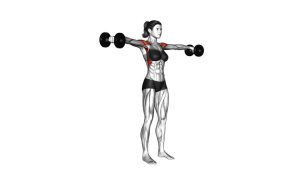
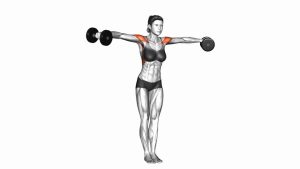
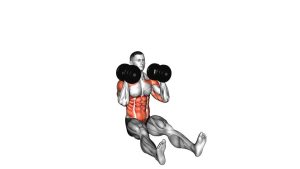
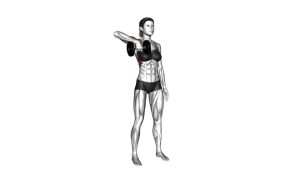
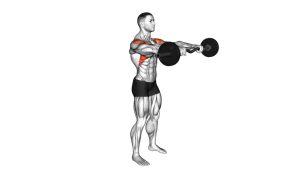
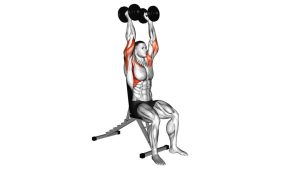
Dumbbell Seated Arnold Press: Form, Muscles Worked, Sets, Tips & FAQ
Learn how to do the Dumbbell Seated Arnold Press with proper form. Discover muscles worked, setup, step-by-step execution, sets and reps by goal, common mistakes, FAQs, and recommended equipment.
Dumbbell Seated Arnold Press
This exercise is excellent for lifters who want to build fuller shoulders while reinforcing pressing control. The seated position reduces lower-body momentum, making the shoulders do more of the work. Because of the rotational path, it is important to use a load you can fully control without leaning back, flaring the ribs, or turning the movement into a rushed standard shoulder press.
Quick Overview
| Body Part | Shoulders |
|---|---|
| Primary Muscle | Anterior deltoids (front shoulders) |
| Secondary Muscle | Lateral deltoids, triceps, upper chest, rotator cuff stabilizers |
| Equipment | Dumbbells and a flat or adjustable bench |
| Difficulty | Intermediate |
Sets & Reps (By Goal)
- Muscle growth: 3–4 sets × 8–12 reps with controlled rotation and 60–90 sec rest
- Strength focus: 4–5 sets × 5–8 reps with heavier dumbbells and 90–120 sec rest
- Technique and control: 2–3 sets × 10–15 reps using moderate weight and smooth tempo
- Shoulder accessory work: 2–4 sets × 12–15 reps after compound presses
Progression rule: Increase reps first, then load. Only move heavier when you can keep the full rotation smooth, stay upright on the bench, and finish each rep without using momentum.
Setup / Starting Position
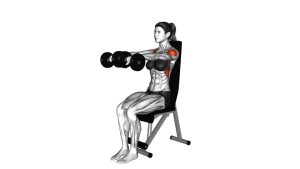
- Set the bench: Sit upright on a bench with your feet planted firmly on the floor.
- Hold the dumbbells in front of the shoulders: Start with elbows bent and palms facing your body.
- Brace the torso: Keep the chest up, core tight, and avoid excessive lower-back arching.
- Align the wrists: Keep wrists neutral and stacked over the elbows at the bottom.
- Prepare for rotation: The elbows should begin slightly in front of the body, not flared wide.
Tip: Choose a weight that allows you to rotate and press in one fluid motion without losing posture.
Execution (Step-by-Step)
- Start from the bottom position: Dumbbells in front of the shoulders, palms facing inward, elbows slightly forward.
- Press and rotate together: As you drive the dumbbells upward, rotate the palms outward.
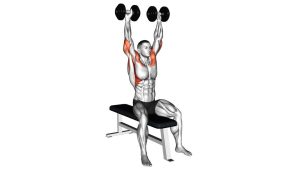
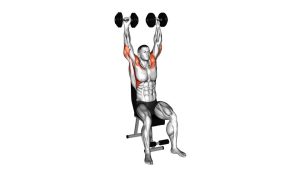
- Reach the top position: Finish with arms extended overhead and palms facing forward.
- Pause briefly: Lock out under control without shrugging excessively or slamming the weights together.
- Lower with control: Reverse the movement, rotating the palms back inward as the dumbbells descend.
- Return to the start: End in the same front-racked position you started from and repeat.
Pro Tips & Common Mistakes
- Rotate gradually: Don’t wait until the top to turn the palms—rotation should happen throughout the press.
- Stay upright: Avoid leaning back to force the weights overhead.
- Use full control on the way down: The eccentric phase is key for shoulder development.
- Don’t rush the bottom: Reset the elbows slightly forward before starting the next rep.
- Avoid oversized loads: Too much weight often turns the movement into a sloppy shoulder press.
- Keep shoulders active, not shrugged: Press up strongly, but don’t let the traps dominate every rep.
FAQ
What makes the Arnold Press different from a regular shoulder press?
The Arnold Press adds a rotational component. You begin with palms facing inward and rotate them outward as you press, which increases range of motion and changes how the deltoids are challenged.
What muscles does the Dumbbell Seated Arnold Press work most?
It mainly targets the front deltoids, while also training the lateral delts, triceps, upper chest, and stabilizing muscles around the shoulder joint.
Is the seated Arnold Press better for muscle growth?
It can be an excellent hypertrophy exercise because it increases time under tension and limits momentum. It works especially well as a main shoulder movement or as a variation after standard presses.
Should I use heavy dumbbells for Arnold Presses?
Moderate weight is usually best. The rotational pattern makes control more important than raw load. If you go too heavy, form often breaks down and shoulder stress increases.
Can beginners do the seated Arnold Press?
Yes, but beginners should start light and master the movement path first. If the rotation feels awkward, learning a standard seated dumbbell press before progressing can help.
Recommended Equipment
- Adjustable Dumbbells — ideal for progressive overload without needing a full rack of weights
- Adjustable Weight Bench — provides a stable seated setup for shoulder pressing variations
- Weightlifting Gloves — can improve grip comfort during higher-volume dumbbell pressing
- Resistance Bands — useful for shoulder warm-ups, activation drills, and mobility work
- Foam Roller — helpful for upper-back mobility and recovery to support better pressing mechanics
Tip: Use supportive equipment to improve setup and recovery, but remember that good technique and manageable loading matter most.