Bottle-Weighted Halo: Proper Form, Muscles Worked, Sets, Tips & FAQ
Learn how to do the Bottle-Weighted Halo with proper form to build shoulder mobility, stability, and control. Includes setup, execution, sets by goal, mistakes to avoid, FAQ, and recommended equipment.
Bottle-Weighted Halo
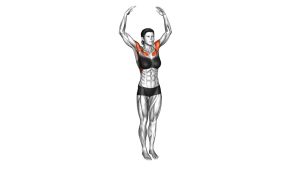
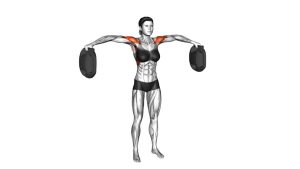
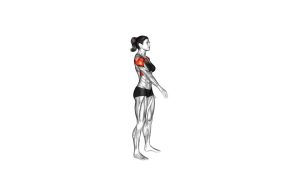
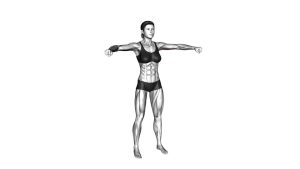
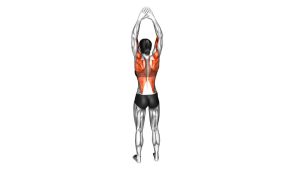
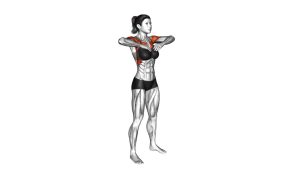
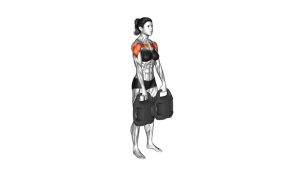
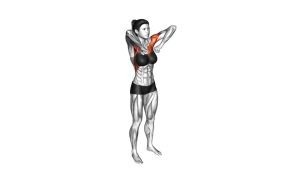
This exercise works best with a light load and a slow, deliberate tempo. You should feel the shoulders working through a controlled arc while the core helps keep the body steady. The halo is especially useful as a warm-up, a shoulder-control drill, or a light accessory movement for people training at home. Because the weight travels around the head, the movement also challenges coordination and teaches you to keep the shoulders active without shrugging or losing posture.
Quick Overview
| Body Part | Shoulders |
|---|---|
| Primary Muscle | Deltoids |
| Secondary Muscle | Rotator cuff stabilizers, upper trapezius, serratus anterior, upper chest, and core stabilizers |
| Equipment | Water bottle, light bottle, or other small household weight |
| Difficulty | Beginner |
Sets & Reps (By Goal)
- Warm-up / activation: 2–3 sets × 6–10 circles per direction with a very light bottle
- Mobility and control: 2–4 sets × 8–12 circles per direction with slow tempo
- Shoulder endurance: 2–4 sets × 10–16 total circles with clean, even rhythm
- Recovery / light movement session: 1–3 sets × 5–8 circles per direction using a reduced range if needed
Progression rule: First improve circle quality, posture, and smooth control. Then increase reps, total time under tension, or bottle weight slightly. Do not progress load if you need to arch the back, shrug excessively, or rush the path around the head.
Setup / Starting Position
- Stand tall: Place your feet about hip- to shoulder-width apart and keep a soft bend in the knees.
- Brace lightly: Engage the core enough to keep the ribs stacked over the hips without flaring.
- Hold the bottle securely: Grip the bottle with both hands near the middle or by the body of the bottle, depending on size and shape.
- Bring it in front of the chest or face: Start with the bottle close to the head so the circle stays compact and controlled.
- Relax the shoulders: Keep the neck long and avoid shrugging before the rep even begins.
Tip: Start with a lighter bottle than you think you need. This movement becomes much more effective when the shoulders can move cleanly.
Execution (Step-by-Step)
- Start in front: Hold the bottle in front of the upper chest or face with the elbows bent and the torso tall.
- Move to one side: Guide the bottle toward one side of the head while keeping the motion close and controlled.
- Pass behind the head: Continue the circle behind the head without jutting the ribs forward or arching the lower back.
- Come around the other side: Bring the bottle smoothly to the opposite side while keeping the neck neutral.
- Return to the front: Complete the circle in front of the body and immediately continue into the next rep if your form stays clean.
- Reverse direction: After finishing one side, repeat the same number of circles in the opposite direction.
Pro Tips & Common Mistakes
- Keep the circle close: A tighter path usually improves shoulder control and reduces wasted motion.
- Move slowly: This is a control drill, not a speed exercise.
- Stay tall through the torso: Avoid leaning back to create fake mobility.
- Do not shrug excessively: Let the shoulders rotate naturally, but keep the traps from taking over.
- Use both directions: Circling both ways helps balance the movement pattern and exposes side-to-side differences.
- Choose the right load: If the bottle feels heavy enough to pull your posture out of position, it is too heavy for this drill.
- Breathe normally: Holding your breath often makes the neck and upper traps tense.
FAQ
What muscles does the Bottle-Weighted Halo work most?
The main target is the deltoid complex. It also challenges the rotator cuff, upper traps, serratus anterior, and the core muscles that help keep the torso stable during the circle.
Is the Bottle-Weighted Halo a strength exercise or a mobility drill?
It is mostly a mobility and stability-focused drill. It can build light shoulder endurance, but its biggest benefits come from improved control, coordination, and smoother shoulder movement.
How heavy should the bottle be?
Start with a light bottle that lets you keep the circle smooth and close to the head. If your back arches, your shoulders shrug hard, or the movement becomes jerky, the weight is too heavy.
Can beginners use this exercise?
Yes. This is a strong beginner-friendly choice as long as the weight stays light and the range of motion stays comfortable. It works well in warm-ups, home workouts, and shoulder-control routines.
Should I do the same number of circles in both directions?
Yes. Always train both directions evenly. Many people notice one direction feels smoother than the other, and working both sides helps build more balanced shoulder control.
Recommended Equipment
- Adjustable Water Weights — useful if you want a bottle-style tool with adjustable load for home shoulder drills
- Light Neoprene Dumbbells — a good upgrade once standard bottle halos feel too easy
- Light Mini Kettlebell — works well for halo-style movement once you have the shoulder control to handle it
- Resistance Bands — helpful for pairing halos with shoulder activation and warm-up work
- Exercise Mat — useful if you include halos as part of a floor warm-up or mobility routine
Tip: Prioritize a light, easy-to-control load first. For halo work, movement quality matters much more than using a heavy object.