Front and Back Arm Rotation: Shoulder Mobility Form, Sets, Tips & FAQ
Learn the Front and Back Arm Rotation for better shoulder mobility, warm-up activation, and joint control. Includes setup, step-by-step form, sets by goal, common mistakes, FAQs, and recommended equipment.
Front and Back Arm Rotation
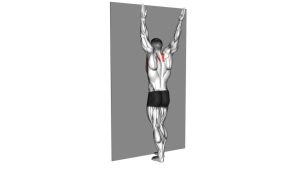
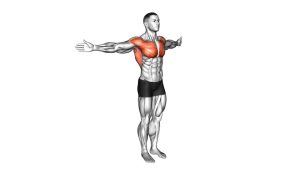
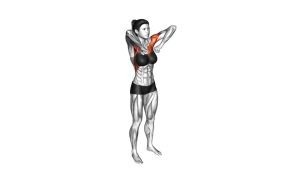
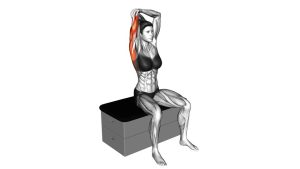
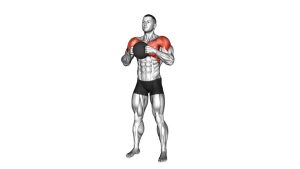
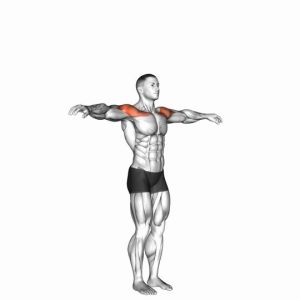
This exercise is best used as a dynamic warm-up or a light mobility drill before pressing, overhead work, upper-body training, or posture sessions. It trains the shoulders to move through a comfortable circular path without heavy loading, which makes it useful for beginners, general fitness, and movement prep. The motion should feel fluid and controlled—not rushed, jerky, or forced.
Quick Overview
| Body Part | Shoulders |
|---|---|
| Primary Muscle | Deltoids (front, side, and rear fibers) |
| Secondary Muscle | Rotator cuff, upper traps, serratus anterior, upper back stabilizers |
| Equipment | None |
| Difficulty | Beginner |
Sets & Reps (By Goal)
- Warm-up before training: 1–3 sets × 8–15 circles forward and 8–15 circles backward
- Mobility practice: 2–4 sets × 10–20 reps each direction with smooth tempo
- Activation before overhead work: 2–3 sets × 10–12 controlled reps each direction
- Desk-break movement: 1–2 easy sets × 8–10 reps each direction
Progression rule: Increase control, circle quality, and range gradually before increasing volume. Bigger circles are only better when you can keep them smooth and pain-free.
Setup / Starting Position
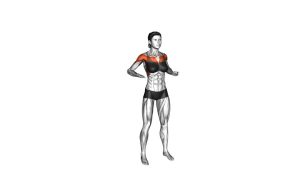
- Stand tall: Place your feet about hip-width apart and keep your weight evenly distributed.
- Brace lightly: Engage your core just enough to prevent leaning or swinging through the torso.
- Relax the shoulders: Keep the neck long and avoid shrugging.
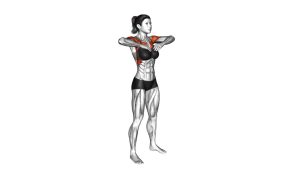
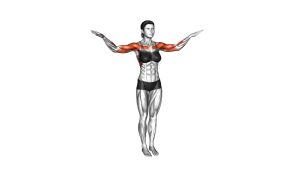
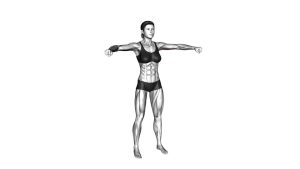
- Extend the arms: Raise both arms and prepare to trace controlled circles from the shoulder joint.
- Choose your range: Start with a smaller motion if your shoulders feel stiff or cold.
Tip: This drill works well at the beginning of an upper-body session, especially before presses, raises, pull-aparts, or overhead patterns.
Execution (Step-by-Step)
- Lift the arms into motion: Begin rotating both arms in a smooth circular path from the shoulders.
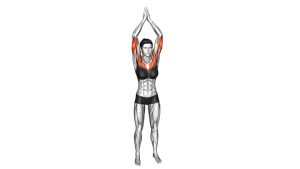
- Move through the front arc: Bring the arms upward and around in front with control.
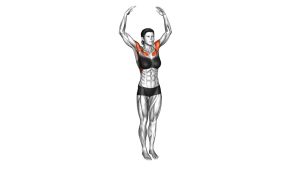
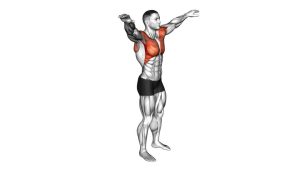
- Continue overhead: Let the arms travel through the top position without forcing the range.
- Complete the circle: Sweep the arms back down and return through the starting path.
- Maintain rhythm: Keep the motion continuous and even rather than jerky or rushed.
- Reverse direction: After finishing the reps, switch and perform the same number of circles in the opposite direction.
Pro Tips & Common Mistakes
- Start small: Small clean circles are better than large uncontrolled ones.
- Keep the elbows softly extended: Do not bend and fling the arms through the motion.
- Do not shrug: Let the shoulders move freely without pulling them up toward the ears.
- Keep the ribs down: Avoid leaning back to fake overhead mobility.
- Use both directions: Forward and backward circles help train shoulder control more completely.
- Make it a warm-up, not a max-effort exercise: This drill should wake the shoulders up, not fatigue them heavily.
FAQ
What is the Front and Back Arm Rotation good for?
It is mainly used to improve shoulder mobility, increase blood flow, and prepare the upper body for training. It works especially well before presses, shoulder sessions, and general upper-body workouts.
Should I do this exercise fast or slow?
Use a controlled, smooth tempo. Fast reps often turn the movement into swinging rather than true shoulder control.
How big should the circles be?
Only as big as you can make them without pain, shrugging, or arching your back. Start smaller and expand the range gradually.
Can beginners use this as a warm-up?
Yes. It is beginner-friendly and works well as a general shoulder warm-up because it requires no equipment and low joint stress.
What if my shoulders click during the movement?
Mild clicking without pain can happen in some people, but painful clicking or pinching is a sign to reduce the range or stop. Keep the movement controlled and pain-free.
Recommended Equipment (Optional)
- Shoulder Pulley — useful for gentle assisted shoulder mobility and rehab-style range-of-motion work
- Stretching Strap — helpful for shoulder mobility drills, controlled stretching, and positioning practice
- Resistance Bands Set — useful for adding warm-up resistance, pull-aparts, and shoulder activation work
- Lacrosse Massage Ball — useful for chest, rear-shoulder, and upper-back soft-tissue work before mobility drills
- Warm-Up Bands — a simple option for light upper-body activation before shoulder sessions
Tip: These tools are optional. The exercise itself works perfectly well with bodyweight only.