Landmine Shoulder-to-Shoulder Press: Form, Muscles Worked, Sets, Tips & FAQ
Learn the Landmine Shoulder-to-Shoulder Press with proper form, muscles worked, sets by goal, setup, execution tips, common mistakes, FAQs, and recommended equipment for safer shoulder training.
Landmine Shoulder-to-Shoulder Press
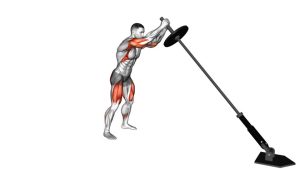
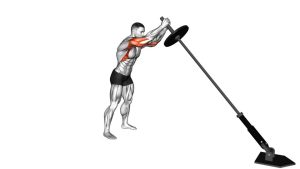
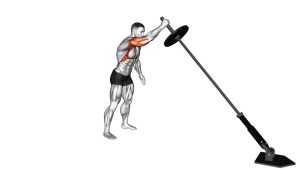
This exercise works best with smooth control rather than momentum. Each rep should travel in a clean arc: from one shoulder line, up and slightly forward, then across to the opposite side. You should feel the shoulders doing most of the work while the trunk stays braced and steady. The goal is not to throw the bar side to side, but to press and transfer it under control.
Quick Overview
| Body Part | Shoulders |
|---|---|
| Primary Muscle | Anterior deltoid |
| Secondary Muscle | Lateral deltoid, triceps, upper chest, serratus anterior, core stabilizers |
| Equipment | Barbell, landmine base or corner setup, weight plates |
| Difficulty | Beginner to Intermediate |
Sets & Reps (By Goal)
- Technique practice: 2–3 sets × 8–10 reps per side with light load and slow control
- Muscle building: 3–4 sets × 8–12 reps per side with 60–90 sec rest
- Shoulder strength: 4–5 sets × 5–8 reps per side with moderate-to-heavy load and 90–120 sec rest
- Conditioning / upper-body endurance: 2–3 sets × 12–15 reps per side with controlled rhythm
Progression rule: Increase load only when you can keep the bar path smooth, avoid torso sway, and finish every rep without shoulder discomfort.
Setup / Starting Position
- Anchor the bar: Place one end of the barbell in a landmine unit or securely into a corner setup.
- Load the free end: Add an appropriate plate and stand facing the bar.
- Take your stance: Set your feet about shoulder-width apart with knees soft and core braced.
- Grip the sleeve: Hold the end of the bar with both hands close together at chest-to-shoulder height.
- Start on one side: Position the bar slightly in front of one shoulder with elbows bent and chest tall.
Tip: A split stance can help some lifters feel more stable, but a square stance usually works well for strict control.
Execution (Step-by-Step)
- Brace first: Tighten your abs, keep your ribs down, and maintain a neutral spine.
- Press upward: Drive the bar up and slightly forward from one shoulder line.
- Reach without shrugging: Extend your arms near the top while keeping your shoulders packed and controlled.
- Guide across: Move the bar across the upper body toward the opposite shoulder in a smooth arc.
- Lower with control: Bring the bar down to the opposite side without dropping or twisting.
- Repeat continuously: Press from that side and continue the shoulder-to-shoulder rhythm for the target reps.
Pro Tips & Common Mistakes
- Keep the ribs stacked: Avoid flaring the ribs or arching the lower back during the press.
- Press, don’t throw: Control the transfer from shoulder to shoulder instead of using momentum.
- Stay tall through the torso: Minimize side bending and rotation.
- Use a full but pain-free range: Don’t force the bar higher if your shoulders pinch.
- Keep your hands centered: An even grip helps the bar move smoothly across the body.
- Start lighter than you think: This variation is more stable than a strict overhead press, but the transfer still challenges control.
- Common mistake: Turning it into a whole-body push press with too much leg drive.
- Common mistake: Letting the shoulders shrug excessively at the top.
FAQ
What muscles does the Landmine Shoulder-to-Shoulder Press work?
It mainly targets the anterior deltoids, while also training the lateral delts, triceps, upper chest, and core stabilizers.
Is this better than a regular overhead press?
It is not always “better,” but it is often more comfortable for lifters who prefer an angled pressing path. The landmine setup can feel friendlier on the shoulders than a straight vertical press.
Should I count reps per side or total reps?
Either method works, but counting per side is usually clearer. For example, 10 reps per side means each shoulder line receives 10 presses.
Can beginners do this exercise?
Yes. Beginners can start with a very light load and focus on smooth pressing mechanics, core bracing, and controlled transitions before adding weight.
What if I feel my lower back more than my shoulders?
That usually means you are leaning back too much or using too much weight. Reduce the load, brace harder, and keep your ribs down throughout the set.
Recommended Equipment (Optional)
- Landmine Attachment for Barbell — the main tool for creating the angled pressing path used in this exercise
- Viking Press Attachment — can improve comfort and hand positioning for shoulder-focused landmine pressing
- Barbell Weight Plates — lets you scale the resistance gradually as pressing strength improves
- Barbell Collars — helps keep the loaded plate secure during repeated pressing sets
- Shoulder Resistance Bands — useful for warm-ups, activation drills, and extra shoulder stability work
Tip: Prioritize a stable landmine setup first, then add accessories only if they improve comfort, loading options, or warm-up quality.