Barbell Single-Leg Split Squat: Form, Muscles Worked, Benefits & Tips
Learn the Barbell Single-Leg Split Squat for stronger quads, glutes, balance, and leg control with proper setup, reps, form tips, and mistakes.
Barbell Single-Leg Split Squat
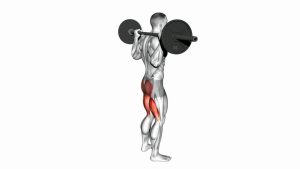
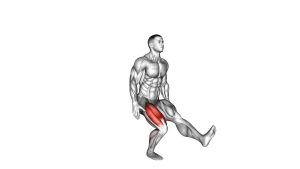
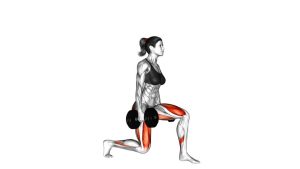
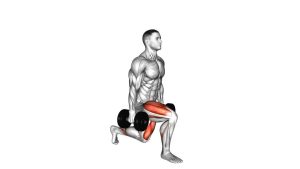
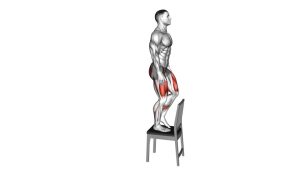
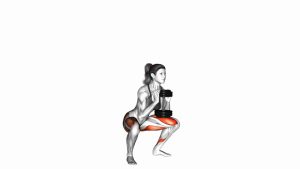
This exercise is excellent for building strong legs because each side works independently. The barbell adds a serious strength demand, while the split stance challenges stability and coordination. Compared with a standard bilateral squat, the Barbell Single-Leg Split Squat can expose side-to-side strength differences and help improve knee tracking, hip control, and athletic lower-body balance.
Quick Overview
| Body Part | Legs |
|---|---|
| Primary Muscle | Quadriceps |
| Secondary Muscle | Glutes, hamstrings, adductors, calves, core stabilizers |
| Equipment | Barbell, weight plates, squat rack |
| Difficulty | Intermediate |
Sets & Reps (By Goal)
- Strength: 3–5 sets × 4–6 reps per leg with heavier load and 90–180 sec rest.
- Muscle growth: 3–4 sets × 8–12 reps per leg with controlled tempo and 60–120 sec rest.
- Balance and control: 2–3 sets × 8–10 reps per leg using light-to-moderate load.
- Lower-body conditioning: 2–4 sets × 10–15 reps per leg with lighter load and shorter rest.
Progression rule: Add reps first, then increase load. Keep the same stance, same depth, and same control before making the bar heavier.
Setup / Starting Position
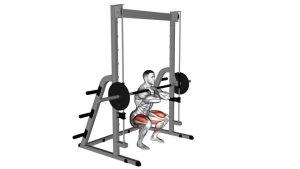
- Set the barbell: Place the bar on a rack at upper-chest height, then position it across your upper traps like a back squat.
- Unrack safely: Grip the bar firmly, brace your core, stand tall, and step back carefully.
- Find your split stance: Step one foot forward and the other foot behind you. Keep the stance long enough to allow a vertical lowering path.
- Plant the front foot: Keep the whole front foot flat with pressure through the midfoot and heel.
- Set your posture: Keep your ribs down, chest proud, spine neutral, and eyes forward.
- Brace before moving: Tighten your core lightly as if preparing for a squat, then begin the rep under control.
Tip: A slightly forward torso angle is normal, but it should stay controlled and consistent throughout the rep.
Execution (Step-by-Step)
- Start tall: Stand in your split stance with the barbell stable across your upper back.
- Lower straight down: Bend the front knee and allow the rear knee to travel toward the floor.
- Track the knee: Keep the front knee aligned with the toes. Do not let it cave inward.
- Control the bottom: Lower until the front thigh is near parallel or until you reach your cleanest comfortable depth.
- Drive through the front leg: Push the floor away using the front foot, focusing on the quad and glute of the working leg.
- Return to the top: Stand back up without bouncing, twisting, or shifting weight into the rear leg.
- Repeat evenly: Complete all reps on one side, then switch legs and match the same number of controlled reps.
Pro Tips & Common Mistakes
- Use the front leg as the main driver: The rear leg should help with balance, not push most of the weight.
- Do not step too narrow: A very narrow stance can make balance harder and increase knee wobble.
- Avoid bouncing at the bottom: Pause briefly or stay controlled before driving upward.
- Keep your knee aligned: The front knee should follow the direction of the toes.
- Do not overload too soon: Barbell split squats require more balance than machine-based leg work.
- Control your breathing: Inhale and brace before descending, then exhale as you drive up.
- Match both sides: Use the same stance length, depth, and rep tempo on each leg.
FAQ
What muscles does the Barbell Single-Leg Split Squat work?
It mainly targets the quadriceps, while also training the glutes, hamstrings, adductors, calves, and core stabilizers. Because it is unilateral, it also improves balance and left-to-right strength control.
Is the Barbell Single-Leg Split Squat the same as a Bulgarian split squat?
Not always. A Bulgarian split squat usually places the rear foot on an elevated bench. A regular split squat keeps the rear foot on the floor. If the rear foot is elevated in your version, it becomes closer to a Bulgarian-style variation.
Should I feel this more in my quads or glutes?
A more upright torso and forward knee travel usually create more quad focus. A slightly longer stance and controlled hip hinge can increase glute involvement. Both muscles should contribute, but the front leg should remain the main working side.
How deep should I go?
Lower until you can keep the front foot flat, knee aligned, torso controlled, and spine neutral. Many lifters aim for the front thigh near parallel, but clean control is more important than maximum depth.
Is this exercise good for beginners?
Beginners can learn the movement first with bodyweight or dumbbells. The barbell version is better for intermediate lifters because it requires more balance, bracing, and load control.
Recommended Equipment
- Olympic Barbell — essential for loading the split squat safely and progressively
- Weight Plates Set — allows gradual load increases for strength and muscle growth
- Squat Rack — helps you unrack and rerack the barbell safely
- Barbell Pad — optional comfort support for lifters sensitive to bar pressure
- Weightlifting Shoes — provides stable footing and a firm base for lower-body training
Tip: Prioritize stable shoes, a secure rack setup, and controlled loading. Heavy weight is only useful when balance, depth, and knee tracking stay clean.