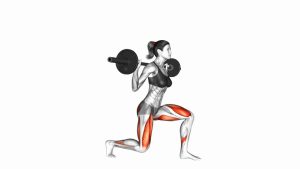
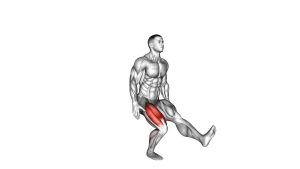
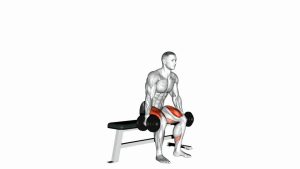
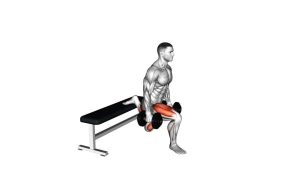
Dumbbell Step-Up: Proper Form, Muscles Worked, Sets, Tips & FAQ
Build stronger quads, glutes, and single-leg control with the Dumbbell Step-Up. Learn proper form, sets, mistakes, FAQs, and equipment tips.
Dumbbell Step-Up
This exercise is excellent for building functional leg strength, improving balance, and correcting left-to-right strength differences. It works best when the lead foot stays fully planted and the back leg does not push aggressively off the floor.
Quick Overview
| Body Part | Legs |
|---|---|
| Primary Muscle | Quadriceps and gluteus maximus |
| Secondary Muscle | Hamstrings, calves, gluteus medius, adductors, and core stabilizers |
| Equipment | Dumbbells and a stable bench, box, or step platform |
| Difficulty | Beginner to Intermediate |
Sets & Reps (By Goal)
- Strength: 3–5 sets × 5–8 reps per leg with heavier dumbbells and full control.
- Muscle growth: 3–4 sets × 8–12 reps per leg using a controlled tempo.
- Balance and control: 2–3 sets × 10–15 reps per leg with lighter dumbbells.
- Conditioning: 2–4 sets × 12–20 reps per leg with short rest periods.
Progression rule: Increase box height only after your knee stays aligned, your torso stays stable, and you can lower yourself without dropping or bouncing.
Setup / Starting Position
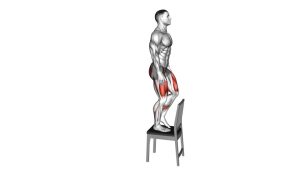
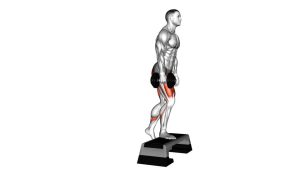
- Choose a stable platform: Use a bench, box, or step that does not slide or wobble.
- Hold the dumbbells: Keep one dumbbell in each hand with arms straight at your sides.
- Stand tall: Keep your chest lifted, ribs controlled, shoulders relaxed, and core lightly braced.
- Place the lead foot: Put your full foot on the platform, not just the toes.
- Set your knee line: Keep the knee tracking in the same direction as your toes.
Tip: A lower step is better for learning. A very high box can make the movement harder to control and may cause excessive hip shifting.
Execution (Step-by-Step)
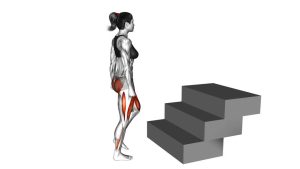
- Plant the lead foot: Place one foot firmly on the platform with the heel and midfoot secure.
- Brace your core: Keep your torso tall and avoid leaning too far forward.
- Drive upward: Push through the lead foot and extend the knee and hip to lift your body.
- Minimize back-leg push: Let the lead leg do most of the work instead of jumping from the floor.
- Stand tall at the top: Finish with hips extended and balance under control.
- Lower slowly: Step back down with control, keeping the lead leg active during the descent.
- Reset each rep: Regain posture and repeat before switching sides.
Pro Tips & Common Mistakes
- Drive through the full lead foot: Keep pressure through the heel and midfoot instead of rising onto the toes.
- Avoid pushing off the floor: The trailing leg should assist lightly, not launch the body upward.
- Control the lowering phase: Do not drop quickly from the platform.
- Keep the knee aligned: Avoid letting the knee collapse inward during the drive or descent.
- Use a stable box height: Choose a height that allows clean hip and knee control.
- Do not swing the dumbbells: Let the legs produce the movement, not momentum.
- Pause briefly at the top: This improves balance and prevents rushed, sloppy reps.
FAQ
What muscles does the Dumbbell Step-Up work?
The Dumbbell Step-Up mainly works the quadriceps and glutes. It also trains the hamstrings, calves, glute medius, adductors, and core muscles for balance and control.
Is the Dumbbell Step-Up better for glutes or quads?
It can target both. A lower step and more upright torso usually emphasize the quads more, while a slightly higher step with strong hip extension can increase glute involvement. Control and full-foot pressure matter most.
How high should the box be for step-ups?
Start with a height where your lead knee is around hip level or slightly below. If you cannot step up without pushing hard from the back leg or twisting your torso, the box is too high.
Should I alternate legs or finish one side first?
Both methods work. Alternating legs is useful for conditioning and coordination, while completing all reps on one side first is better for strength, hypertrophy, and focused single-leg control.
Why do I feel the back leg doing too much work?
This usually happens when the step is too high, the dumbbells are too heavy, or you are pushing off the floor. Focus on driving through the lead foot and lowering the load until the lead leg controls the movement.
Recommended Equipment
- Adjustable Dumbbells — ideal for progressive overload without needing many separate dumbbell pairs
- Plyometric Box — provides a stable platform for step-ups, box squats, and lower-body drills
- Adjustable Step Platform — useful for beginners because the height can be changed easily
- Weightlifting Shoes — improve foot stability and help maintain strong lower-body alignment
- Non-Slip Exercise Mat — helps create a safer training surface under a step platform or box
Tip: For best results, choose a platform that is stable, wide enough for full-foot placement, and appropriate for your current strength level.