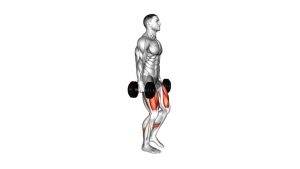
Dumbbell Goblet Squat: Proper Form, Muscles Worked, Sets, Tips & FAQ
Learn the Dumbbell Goblet Squat for stronger quads, glutes, and core. Includes proper form, sets, mistakes, FAQs, and equipment tips.
Dumbbell Goblet Squat
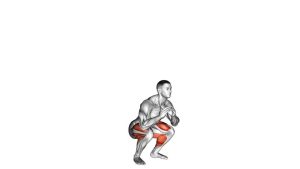
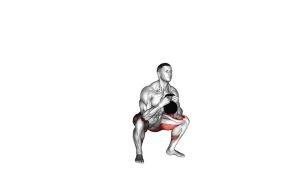
The Dumbbell Goblet Squat works best when the dumbbell stays close to the chest, the knees track in line with the toes, and the torso remains tall throughout the movement. Because the load sits in front of the body, this exercise naturally teaches better squat mechanics, improves bracing, and allows many lifters to reach a deeper squat position with more control.
Quick Overview
| Body Part | Legs |
|---|---|
| Primary Muscle | Quadriceps |
| Secondary Muscle | Glutes, adductors, hamstrings, calves, core, spinal erectors |
| Equipment | Dumbbell |
| Difficulty | Beginner to Intermediate |
Sets & Reps (By Goal)
- Beginner technique: 2–3 sets × 8–10 reps with a light dumbbell and slow control.
- Muscle growth: 3–4 sets × 8–15 reps using a moderate load and full range of motion.
- Strength focus: 4–5 sets × 5–8 reps with a heavier dumbbell while keeping clean posture.
- Conditioning: 2–4 sets × 12–20 reps with a lighter dumbbell and steady breathing.
- Warm-up / movement prep: 1–3 sets × 8–12 reps before heavier squat or leg training.
Progression rule: Add reps first, then increase dumbbell weight. Do not increase load if your knees cave inward, your heels lift, or your lower back loses position at the bottom.
Setup / Starting Position
- Choose the dumbbell: Select a weight you can control without leaning forward or rounding your back.
- Hold the dumbbell vertically: Cup the top head of the dumbbell with both hands and keep it close to your chest.
- Set your stance: Stand with feet about shoulder-width apart or slightly wider.
- Turn toes slightly out: Point the toes outward just enough to allow the knees to track naturally.
- Brace your core: Keep ribs down, chest lifted, and spine neutral before starting the descent.
- Relax the shoulders: Keep elbows pointing downward and avoid shrugging the weight upward.
Tip: If your ankles feel restricted, use a slightly wider stance or elevate the heels lightly. The goal is to stay balanced while keeping the dumbbell close to the body.
Execution (Step-by-Step)
- Start tall: Stand upright with the dumbbell against your chest and your elbows angled down.
- Begin the squat: Bend the knees and hips together, letting the hips drop between the legs instead of pushing far backward.
- Track the knees: Keep the knees moving in the same direction as the toes throughout the descent.
- Keep the chest lifted: Maintain a tall torso and prevent the dumbbell from drifting away from the chest.
- Reach your depth: Lower until your thighs are at least near parallel, or as deep as you can go with a neutral spine and planted heels.
- Drive up strongly: Push through the midfoot and heels to stand back up.
- Finish with control: Extend the hips and knees fully without leaning back or over-squeezing the lower back.
Pro Tips & Common Mistakes
- Keep the dumbbell close: A drifting dumbbell pulls you forward and makes the squat harder to control.
- Do not collapse the knees: Push the knees gently outward so they stay aligned with the toes.
- Avoid heel lift: Keep pressure through the full foot, especially the midfoot and heel.
- Do not round the lower back: Stop your depth where your spine can stay neutral.
- Use controlled tempo: Lower for 2–3 seconds, pause briefly, then drive up smoothly.
- Do not turn it into a good morning: The torso may lean slightly, but the chest should not collapse toward the floor.
- Breathe with control: Inhale and brace before descending, then exhale as you stand up.
- Choose smart depth: Deep squats are useful only when your hips, knees, ankles, and spine can maintain good alignment.
FAQ
What muscles does the Dumbbell Goblet Squat work?
The Dumbbell Goblet Squat mainly works the quadriceps. It also trains the glutes, adductors, hamstrings, calves, and core muscles because the body must stay stable while holding the dumbbell in front.
Is the Dumbbell Goblet Squat good for beginners?
Yes. The goblet position is beginner-friendly because it encourages an upright torso and helps many people learn proper squat depth. Start with a light dumbbell and focus on clean knee tracking, balance, and bracing.
How deep should I squat?
Squat as deep as you can while keeping your heels down, knees aligned with your toes, and spine neutral. For many lifters, this means thighs near parallel or slightly below parallel.
Why do my heels lift during goblet squats?
Heel lift may happen because of limited ankle mobility, stance issues, or shifting too far forward. Try a slightly wider stance, turn the toes out a little, slow the descent, or use a light heel elevation while improving ankle control.
Can I build muscle with Dumbbell Goblet Squats?
Yes. Goblet squats can build muscle when performed with enough load, controlled reps, and progressive overload. For best results, use 8–15 reps, full range of motion, and gradually increase weight or volume over time.
What is the biggest mistake in the Dumbbell Goblet Squat?
The most common mistake is letting the chest collapse and the dumbbell drift forward. This reduces control and increases stress on the lower back. Keep the weight close, brace the core, and move with a tall torso.
Recommended Equipment
- Hex Dumbbell — ideal for standard goblet squats and progressive lower-body strength training.
- Adjustable Dumbbell — useful for changing resistance without needing multiple dumbbells.
- Weightlifting Shoes — provide a stable base and slight heel lift for better squat depth.
- Resistance Bands — helpful for warm-ups, glute activation, and knee-tracking practice.
- Exercise Mat / Gym Flooring — improves floor grip and comfort during home leg workouts.
Tip: The most important equipment is a dumbbell you can control through the full range of motion. Choose stability and clean technique before choosing heavier weight.