45-Degree Sled Leg Press: Proper Form, Muscles Worked, Sets, Tips & FAQ
Learn the 45-Degree Sled Leg Press for stronger quads, glutes, and legs. Includes setup, form cues, sets, mistakes, FAQs, and equipment.
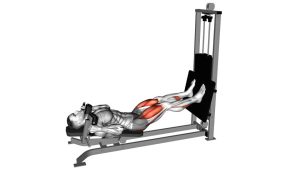
45-Degree Sled Leg Press
This exercise is effective because it allows you to load the legs heavily while reducing the balance demand of free-weight squats. A clean repetition should look smooth, controlled, and stable from start to finish. Keep your back against the pad, maintain full-foot pressure on the platform, and avoid bouncing out of the bottom position.
Quick Overview
| Body Part | Legs |
|---|---|
| Primary Muscle | Quadriceps |
| Secondary Muscle | Glutes, hamstrings, calves, hip adductors |
| Equipment | 45-degree sled leg press machine |
| Difficulty | Beginner to Intermediate |
Sets & Reps (By Goal)
- Muscle growth: 3–5 sets × 8–15 reps with controlled tempo and full-foot pressure.
- Strength focus: 4–6 sets × 4–8 reps using heavier loads while keeping perfect control.
- Beginner practice: 2–3 sets × 10–12 reps with light-to-moderate weight.
- Quad emphasis: 3–4 sets × 10–15 reps with feet slightly lower on the platform.
- Glute emphasis: 3–4 sets × 8–12 reps with feet slightly higher on the platform.
Progression rule: Add reps first, then increase weight gradually. Do not increase load if your knees cave inward, your heels lift, or your hips roll off the pad.
Setup / Starting Position
- Sit firmly into the machine: Place your back, hips, and head comfortably against the support pads.
- Place your feet on the platform: Start around shoulder-width apart with toes slightly turned outward.
- Set the foot height: Use a mid-platform position for balanced quad and glute activation.
- Grip the handles: Hold the side handles to keep your torso stable and prevent hip shifting.
- Unlock the sled safely: Extend the legs slightly, release the safety handles, and prepare to lower with control.
A lower foot position usually increases quad demand. A higher foot position usually increases glute and hamstring contribution. Choose the position that matches your goal while keeping the knees comfortable.
Execution (Step-by-Step)
- Brace your torso: Keep your ribs down, back flat, and hips stable against the pad.
- Lower the sled slowly: Bend the knees and allow the platform to come toward you under control.
- Stop at a safe depth: Lower until your knees are comfortably bent without your lower back rounding.
- Drive through the full foot: Push through the heels and midfoot while keeping the toes in contact with the platform.
- Extend with control: Press the sled upward until the legs are nearly straight, but keep a slight bend in the knees.
- Repeat smoothly: Keep the movement consistent and avoid bouncing, rushing, or locking out hard.
Pro Tips & Common Mistakes
- Use full-foot pressure: Do not press only through the toes. Keep the heels grounded throughout the movement.
- Avoid deep hip tuck: If your pelvis rolls upward at the bottom, reduce your depth slightly.
- Do not lock the knees: Stop just before full lockout to keep tension on the muscles and reduce joint stress.
- Control the eccentric: Lower the sled for 2–3 seconds instead of letting it drop quickly.
- Match foot placement to your goal: Lower feet bias quads; higher feet bias glutes and hamstrings.
- Do not overload too early: Heavy weight with poor depth and knee control reduces exercise quality.
- Keep your head and shoulders relaxed: Avoid pushing your neck forward or shrugging during hard reps.
FAQ
What muscles does the 45-Degree Sled Leg Press work?
The main target is the quadriceps. The glutes, hamstrings, calves, and hip adductors also assist, especially when using a deeper range of motion or a higher foot placement.
Is the 45-degree leg press good for beginners?
Yes. It is beginner-friendly because the machine guides the movement and supports the back. Beginners should start with light weight, learn safe depth, and keep the knees tracking with the toes.
Should I lock my knees at the top of the leg press?
No. Keep a slight bend in the knees at the top. Hard lockouts can shift stress away from the muscles and may place unnecessary pressure on the knee joints.
Where should I place my feet on the platform?
A mid-platform, shoulder-width stance is a good starting point. Place the feet slightly lower to emphasize the quads, or slightly higher to involve the glutes and hamstrings more.
How deep should I lower the sled?
Lower the sled as far as you can while keeping your hips and lower back firmly supported. If your pelvis tucks under or your back rounds, you have gone too deep for your current mobility.
Recommended Equipment
- Weightlifting Shoes — stable footwear that helps keep pressure through the full foot during leg presses.
- Knee Sleeves — useful for warmth, comfort, and light knee support during lower-body training.
- Weightlifting Belt — optional support for heavier sets when proper bracing is already established.
- Gym Training Log Book — helps track sets, reps, weight, and progressive overload over time.
- Resistance Bands — useful for warm-ups, glute activation, and knee-tracking drills before leg training.
Tip: Equipment should support better technique, not replace it. Prioritize controlled reps, safe depth, and consistent progression before adding heavier loads.